What Happens When the World's Slimmiest Creatures Crash a Highway Party?
Highway Slime Saga Unveils Nature’s Most Efficient Escape Artist: The Hagfish
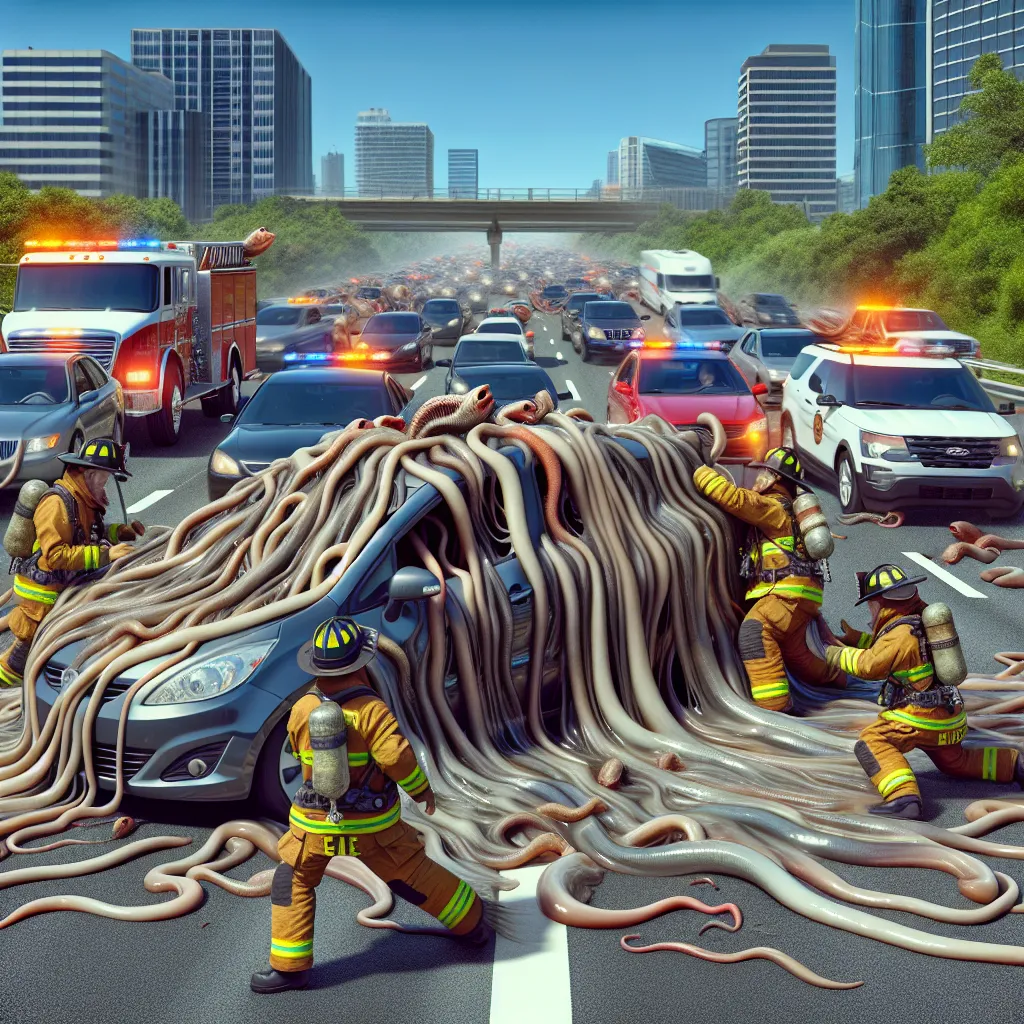
In 2017, a truck accident led to a Prius getting covered with thousands of kilograms of live hagfish, aka slime eels. The highway turned into a messy scene, filled with wriggling fish and thick slime that took the fire department seven hours to clean up.
Hagfish, known as Earth’s slimiest animals, have a unique way of defending themselves. Imagine this: a hagfish detects a dead fish using its keen sense of smell and tastebud-like organs on its skin. It takes a bite, but a shark swoops in and attacks. Now, the shark’s bite could be fatal for most creatures, but not for the hagfish. Its body is made of flexible cartilage instead of bones, and its skin is loosely attached, allowing its vital organs to move out of harm’s way.
But the hagfish’s real secret weapon is its slime. It has around a hundred slime glands along its body. When threatened, it contracts the muscles around these glands, releasing a combination of mucus and thread cells into the water. These cells expand dramatically, creating liters of slime almost instantly. This slime can clog a shark’s gills, causing the predator to release its hold on the hagfish.
Once free, the hagfish finds itself surrounded by its own slime. It has a clever way to clean up—by tying itself into a knot and effectively wiping the slime off its body. Afterward, it resumes its meal. It even ties itself into knots to gain leverage when pulling apart tougher parts of a carcass.
Scientists are interested in hagfish slime because it could inspire more sustainable materials. Unlike many athletic and safety fibers made from non-renewable sources, hagfish slime threads are both strong and soft, offering a potential alternative to materials like nylon. Plus, the slime’s properties are being studied for military uses, like stopping boats by sliming their propellers.
Hagfish have some other amazing traits. They have four hearts, can survive 36 hours without oxygen, and help clean the seafloor by cycling essential nutrients. Hagfish have been around for over 300 million years, even before dinosaurs, and have survived multiple mass extinctions. Clearly, they know a thing or two about staying slimy and thriving.