What Secrets Lie Behind the Question 'What Time Is It?'
Chronicles Unveiled by the Hands of Time
We glance at the clock multiple times a day, but have you ever wondered about the origins of telling time? Why do we care so much about the time, and how did we end up with so many time zones?
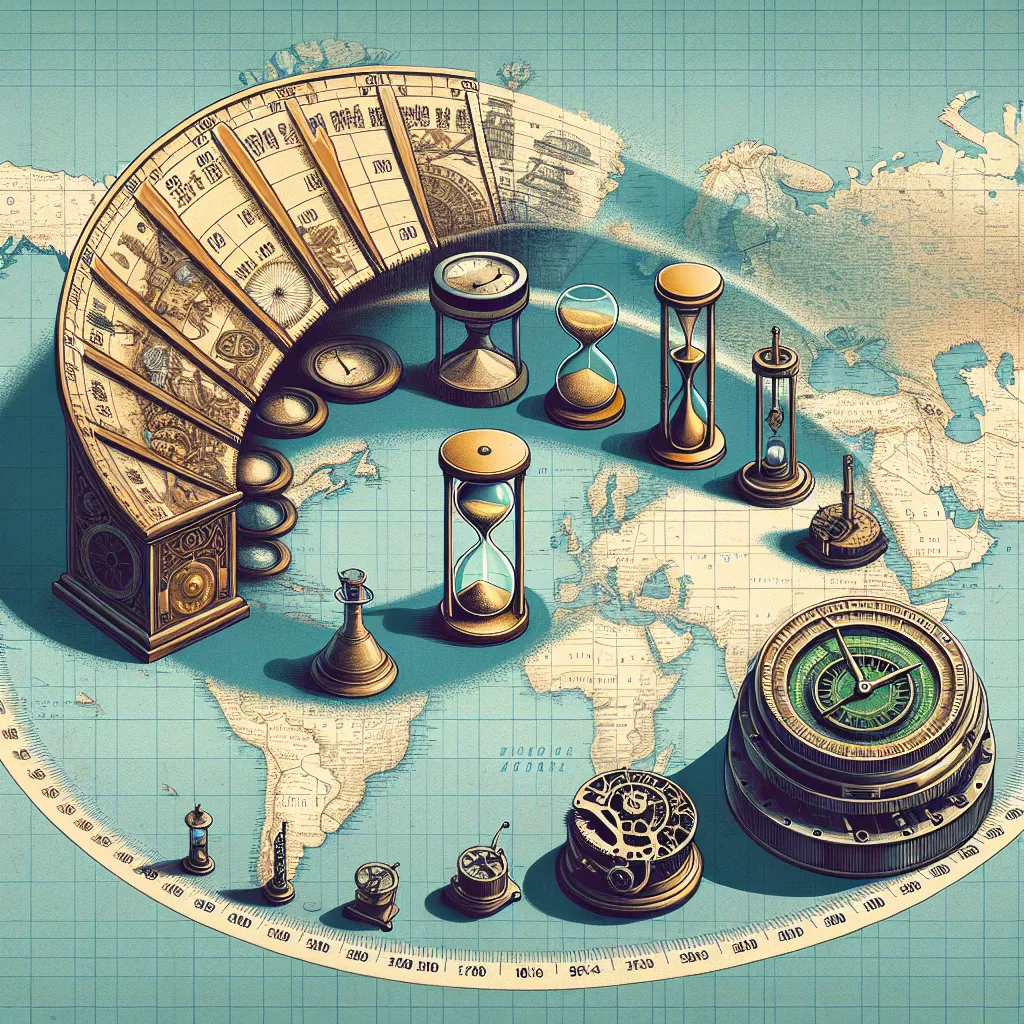
The first way humans told time was with a sundial, which dates back nearly 5,000 years. Sundials worked by casting a shadow with a stick, known as a gnomon. While pretty cool, these ancient timepieces had a big flaw—they needed sunlight. No sun, no time.
Over the years, other methods like burning candles and incense sticks, and using hourglasses emerged. Hourglasses, filled with sand pouring at a steady rate, became popular in the 14th century, especially on ships where their reliability trumped other devices.
The 13th century brought a game changer—the mechanical clock. Using the swing of a pendulum or the vibration of a quartz crystal, it heralded a new era of precise timekeeping. Today, our scientific time is based on atomic clocks working across the globe, collectively known as international atomic time.
But why bother tracking time? Time governs our daily routines and enables us to communicate effectively worldwide. Imagine trying to coordinate without a time system—it’d drive farming, social interactions, and business into chaos. Just look back at the 19th-century American railroad system, where each train ran on its own local “standard” time. The result? Confusing and overlapping schedules that turned train travel into a logistical nightmare.
Time zones thankfully emerged to solve these issues. A time zone is an area with a uniform standard time, making global communication much simpler. With 40 time zones spanning 26 hours apart, a single calendar date can last 50 hours on Earth.
So next time you check your watch, remember—the simple question, “What time is it?” carries a lot more history and intricacy than meets the eye.