Did Obama Tap into the Secrets of America's Shifting Voter Landscape?
Navigating Historical Change: Barack Obama's Historic Election and the Underlying Racial Dynamics
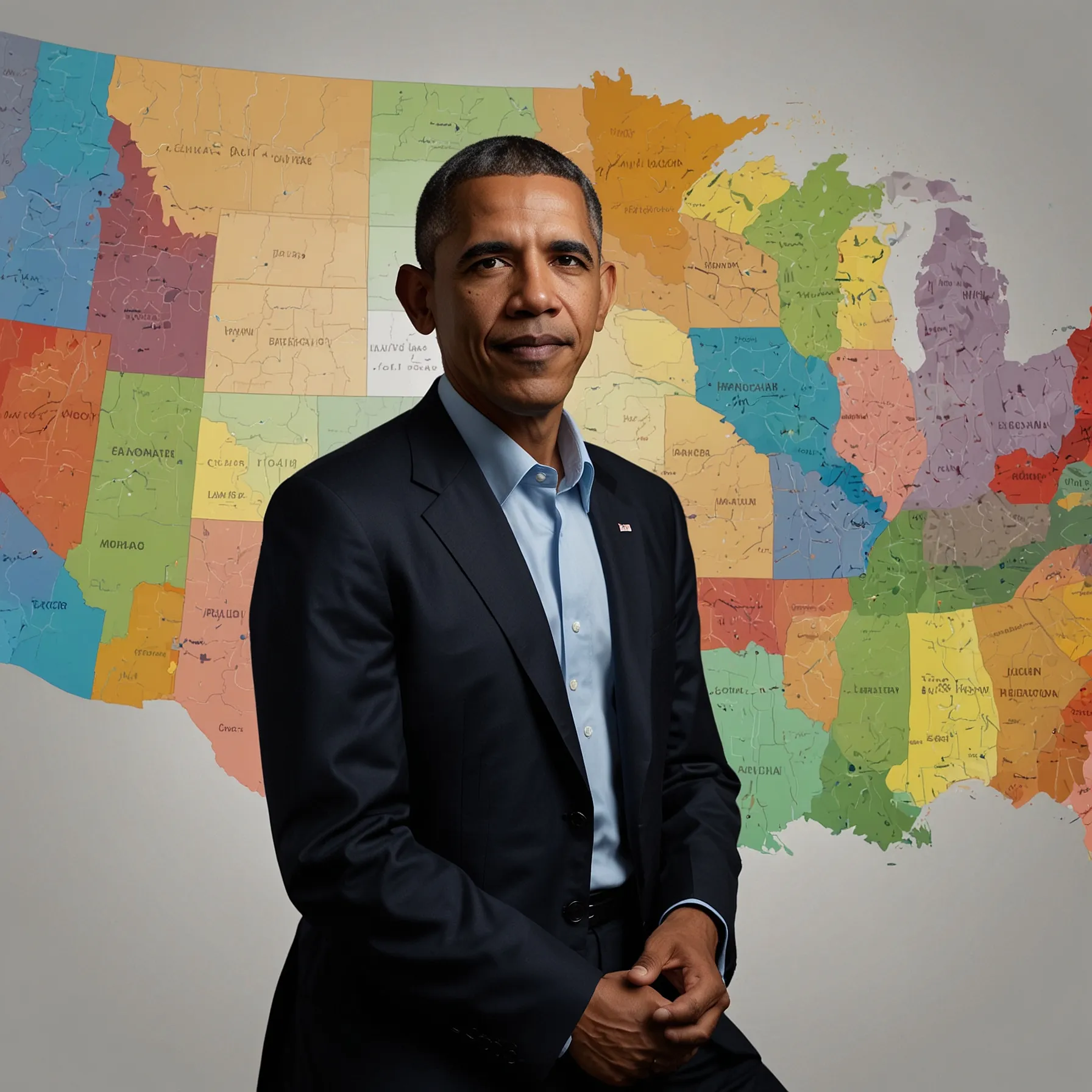
For the first time in U.S. history, a predominantly white voting group cast their ballots for an African-American presidential candidate, Barack Obama. This milestone saw Obama win 375 electoral votes and around 70 million popular votes, more than any other presidential candidate in history. Comparing Obama’s performance to John Kerry’s four years earlier, it was evident that many states transitioned to being more Democrat-friendly. While Obama did not outperform Kerry in every state, notably in places like Massachusetts (John Kerry’s home state) and Arizona (John McCain’s home state), there were significant improvements in most regions.
The map shows most states trending blue, except for parts of the country like Arkansas, Tennessee, Oklahoma, and West Virginia. In 1996, Bill Clinton, the last Democrat from Arkansas, had much more significant support in this region than Obama did. The overarching question arises: Why did Obama struggle in these areas?
The common perception is that places like Arkansas have negative connotations, often being labeled with stereotypes and assumed to be unwelcoming to a candidate like Obama. Was it about race? Exit polls in 37 states addressed this head-on by asking voters if the race of the candidate influenced their vote. In places like Louisiana, about one in five white voters admitted race was a significant factor against voting for Obama. If even half of those voters had supported Obama, he would have comfortably won those states.
The correlation between racially motivated voting and education levels is crucial. States with fewer years of schooling showed higher rates of racially influenced votes. For instance, the Appalachians and Ozarks regions are less educated and more rural, also showing stronger racially based voting patterns.
Neighborhood demographics play an important role too. According to a General Social Survey by the University of Chicago, rural communities, where fewer interactions occur with different racial groups, maintain stronger racial biases. Only about 30% of rural residents reported having neighbors of a different race, compared to 80% in urban areas.
Attitudes towards racial issues also varied based on neighborhood diversity. Those living in homogenous neighborhoods were twice as likely to oppose interracial marriage or question voting for an African-American president. This suggests that exposure to diverse communities can alter prejudices.
To address racism, fostering interaction between diverse racial groups is vital. Diverse, sustainable cities facilitate daily interactions among different ethnicities. Encouraging educational exchanges can also bridge these divides. For instance, students from New York could spend a semester in Arkansas, fostering mutual understanding and coexisting positively.
In summary, understanding the root causes and manifestations of racism makes it a problem we can design solutions for. Increased interaction and exposure to diverse communities are essential steps towards mitigating racial biases. With predictable patterns, we can shape strategies to address even the most ingrained societal issues like racism.