Is the Universe Racing Towards Another Big Bang?
Cosmic Orchestra: Dark Energy's Role in the Ever-Accelerating Symphony of the Universe
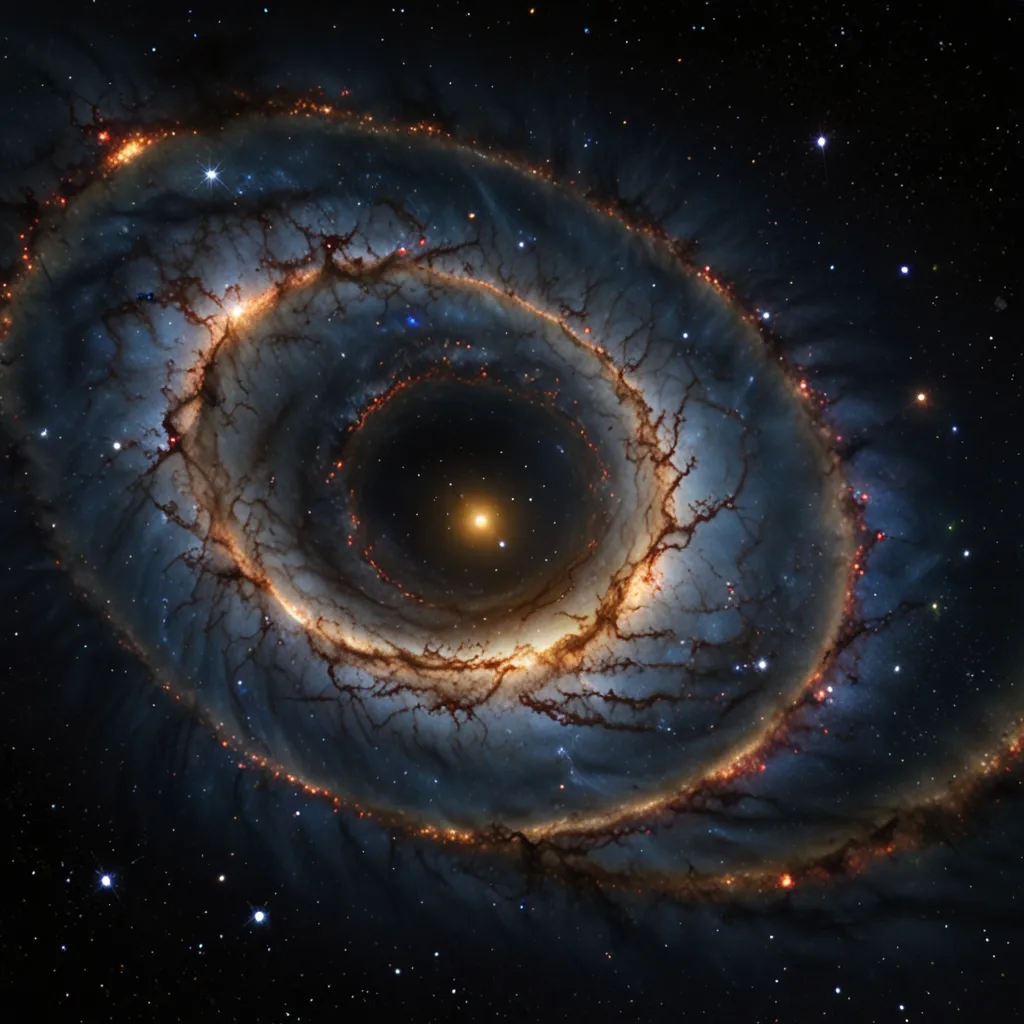
Almost 14 billion years ago, the universe started from a point smaller than the tip of a pen. If you find it hard to believe that such a tiny point could explode, I’ve got news for you: that explosion is still happening. Scientists initially thought this Big Bang explosion would slow down over time due to gravity, just like a real-world explosion slows down because of air friction and gravity.
In the late 1990s, two teams of scientists used the Hubble Space Telescope to measure this slowdown. They focused on Type 1A Supernovae, which emit the same luminosity regardless of their location in the universe. These Supernovae serve as standard candles, helping scientists measure the universe’s expansion. But the results shocked them. Each time they rechecked the data, the results were the same: the universe’s expansion isn’t slowing down or even staying steady—it’s accelerating.
This acceleration was a complete surprise to astronomers and physicists. It implies an enormous amount of mysterious energy driving this expansion, which scientists have named Dark Energy. Using Einstein’s equation ( E = mc^2 ), it turns out this dark energy is more than ten times the energy of all the visible matter in the universe. In fact, 70% of the universe is comprised of dark energy, making it a significant force of nature.
What is this dark energy? The leading theory suggests it is a property of space itself, a kind of anti-gravity that originates from the fabric of space. As space expands, more of this anti-gravity force comes into existence, creating a positive feedback loop that accelerates the universe’s expansion.
So, what does this mean for us? Right now, we don’t directly feel the effects of dark energy. But in trillions of years, if humanity is still around, space will expand so rapidly that it will overpower all gravity. Our Milky Way, solar system, sun, Earth, and even atoms and particles will break apart. The universe will be destroyed, leaving only pure energy dissipating into cold darkness across a vast expanse trillions of light-years wide.
And what happens after that? Perhaps another Big Bang… who knows?