What Single Event Plunged the World Into a Global Conflict?
Chain Reactions: How a Single Shot Unraveled Europe's Delicate Balance
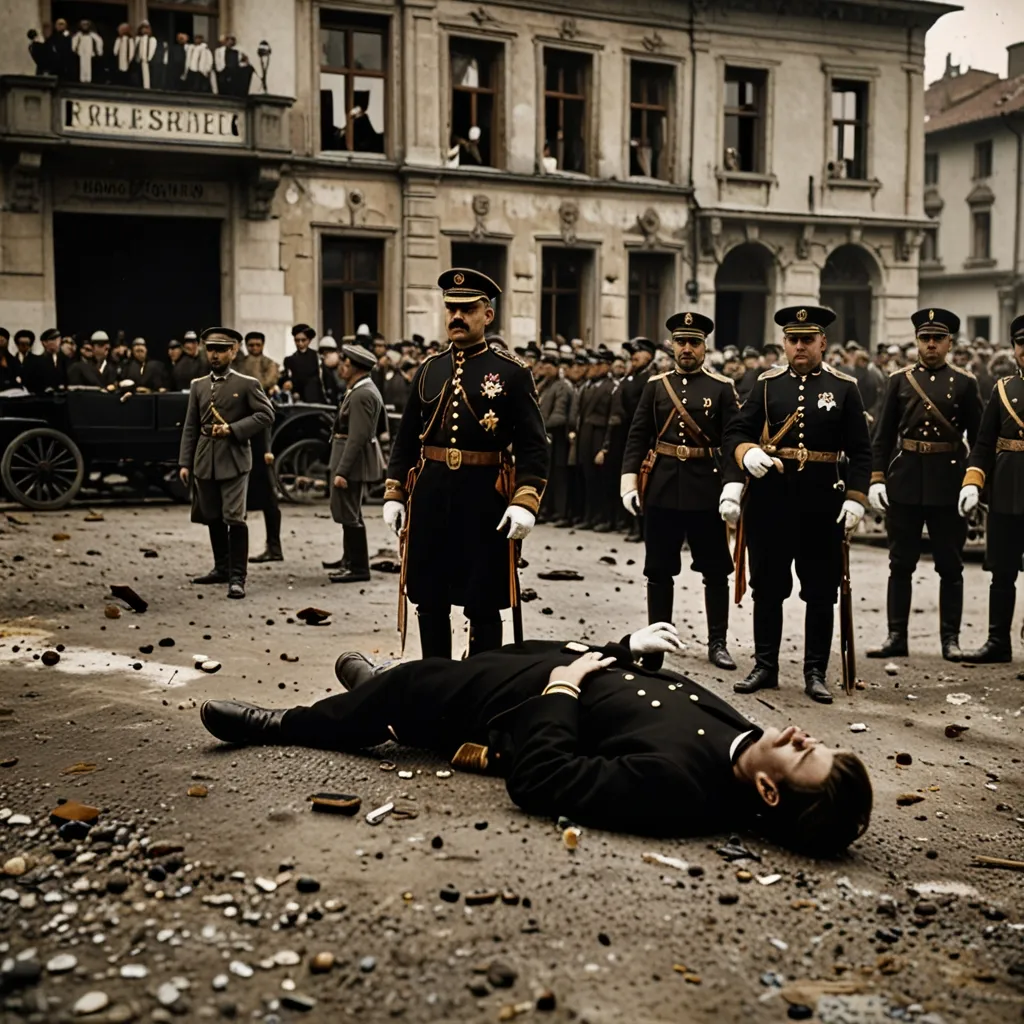
World War I, one of the most devastating conflicts in history, was sparked by a single event that set off a chain reaction of political and military actions. This event was the assassination of Archduke Franz Ferdinand, the heir to the Austro-Hungarian throne. On June 28, 1914, Franz Ferdinand and his wife, Sophie, Duchess of Hohenberg, were visiting Sarajevo, the capital of Bosnia and Herzegovina, which was then a province of Austria-Hungary.
The visit was intended to strengthen ties between Austria-Hungary and Bosnia, but it ended in tragedy. As the royal couple’s motorcade was making its way through the city, a group of Bosnian Serb nationalists, who were seeking to unite Bosnia and Herzegovina with Serbia, had planned an assassination. One of the nationalists, Gavrilo Princip, stepped forward and fired two shots from a pistol. Franz Ferdinand and his wife were both killed instantly.
The assassination sent shockwaves throughout Europe. Austria-Hungary, already wary of the growing influence of Serbia, saw this as an opportunity to crush the nationalist movement once and for all. On July 23, 1914, Austria-Hungary issued an ultimatum to Serbia, which included demands that Serbia prevent further anti-Austrian activities and dissolve the Black Hand society, a group of Bosnian Serb nationalists.
Serbia accepted some of the demands but not all, which led Austria-Hungary to declare war on July 28, 1914. This declaration of war triggered a series of alliances that had been formed over the years. Russia, bound by a treaty of mutual defense with Serbia, began to mobilize its military in response to Austria-Hungary’s declaration of war. Germany, allied with Austria-Hungary, declared war on Russia on August 1, 1914.
France, allied with Russia, was next to be drawn into the conflict. Germany declared war on France on August 3, 1914, and invaded neutral Belgium, which led Britain to declare war on Germany on August 4, 1914. Italy, though initially allied with Germany and Austria-Hungary, remained neutral at the start of the war but later joined the Allies in 1915.
The complex system of alliances and the rapid escalation of events turned what could have been a regional conflict into a global war. The assassination of Archduke Franz Ferdinand was the spark that ignited the powder keg of tensions and rivalries that had been building in Europe for decades. The war would go on to last four years, resulting in the loss of millions of lives and a profound impact on the world order.