What Secrets Does Little Bighorn's Battlefield Still Hold?
When Visions and Bravery Shook the American Frontier
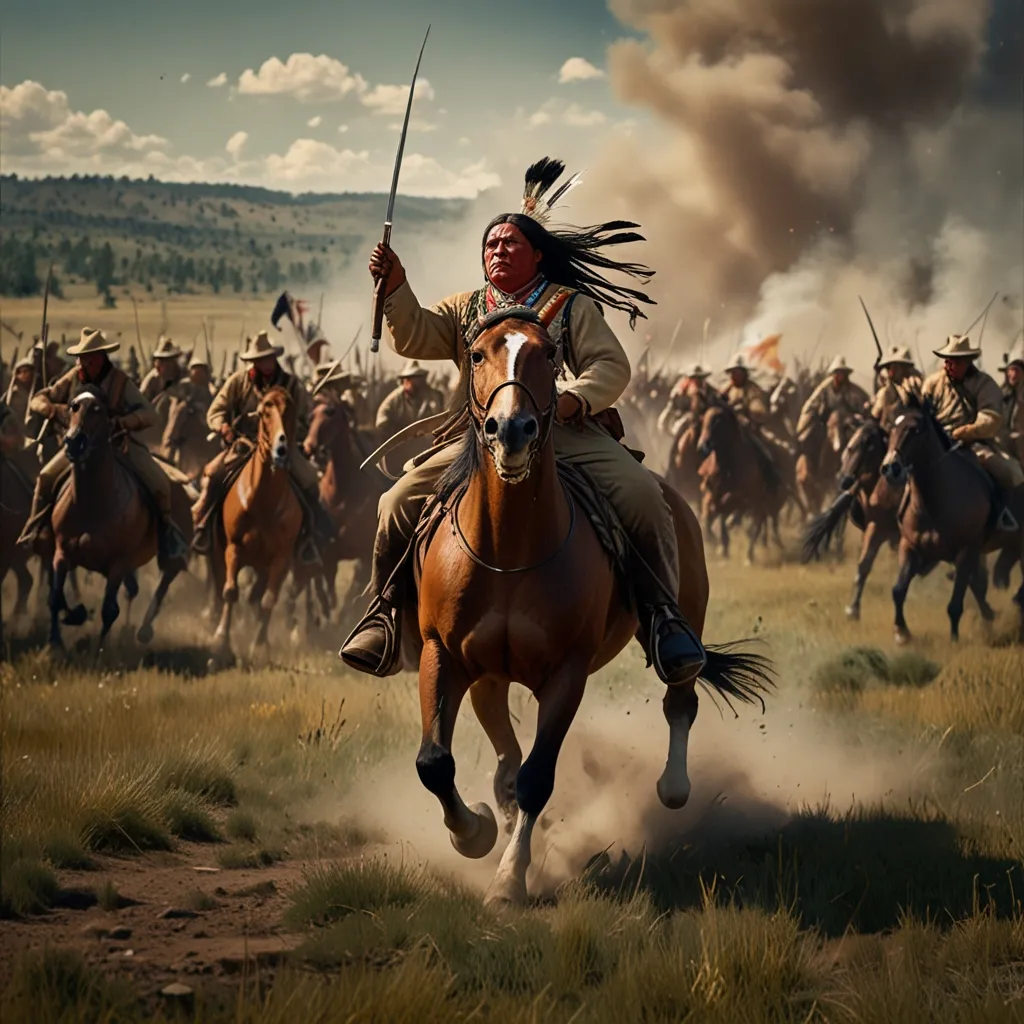
The Battle of Little Bighorn, also known as Custer’s Last Stand, was a pivotal event in American history that took place on June 25-26, 1876. This battle was a clash between the combined forces of the Lakota Sioux, Northern Cheyenne, and Arapaho tribes and the 7th Cavalry Regiment of the United States Army. The Native American leaders who led the Lakota Sioux and Cheyenne warriors in this fight were Sitting Bull and Crazy Horse.
Sitting Bull, a charismatic Lakota leader, was known for his prophetic visions and his call for resistance against U.S. expansion. He had a significant following among the Lakota and Northern Cheyenne, who were determined to protect their lands and way of life. Sitting Bull’s leadership was instrumental in rallying the tribes and preparing them for the battle ahead.
Crazy Horse, on the other hand, was a skilled warrior and leader of the Oglala band of Lakota. He was renowned for his bravery and tactical prowess. Crazy Horse played a crucial role in the battle, leading the warriors with strategic precision and ensuring the defeat of Custer’s troops.
The battle took place along the Little Bighorn River in Montana Territory. The U.S. Army, led by Lieutenant Colonel George Armstrong Custer, had underestimated the number of Native American warriors they would face. Custer’s forces were vastly outnumbered, with estimates suggesting that there were around 2,000 Sioux and Cheyenne warriors, many of whom were armed with superior repeating rifles.
The battle was intense and chaotic. Custer’s men were quickly overwhelmed, and he was killed along with many of his soldiers. The Native American warriors, inspired by their leaders, fought fiercely to defend their families and lands. The battle resulted in a significant defeat for the U.S. Army, with 268 soldiers killed and 55 severely wounded.
Despite their victory, the Native American tribes soon faced increased pressure from the U.S. government. The aftermath of the battle saw a surge in military presence in the area, leading to the eventual surrender of many Native American leaders. The Battle of Little Bighorn remains a symbol of the clash between two vastly different cultures and the resilience of Native American communities in the face of overwhelming odds.
Today, the Little Bighorn Battlefield National Monument commemorates this historic event, honoring both the Native American warriors and the U.S. soldiers who fought there. The battle continues to be a subject of study and reflection, offering insights into the complex history of the American West and the enduring legacy of its people.