What Weird Trick Lets Animals Survive Their Own Deadly Poisons?
When Nature Fights Itself: An Evolutionary Showdown of Toxic Survival Skills
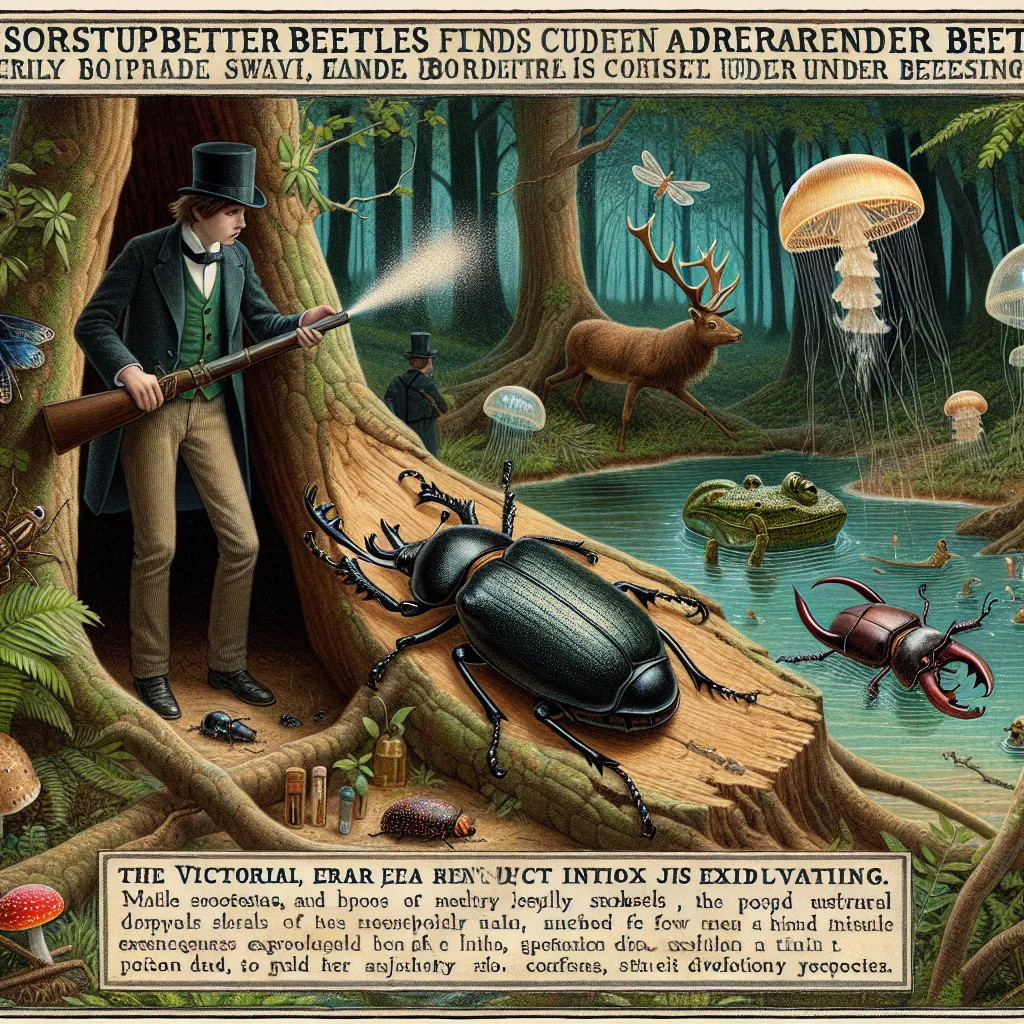
One day at Cambridge, a young Charles Darwin peeled some old bark off a tree and discovered two rare beetles. Holding one insect in each hand, he spotted a third and, in a burst of instinctive resourcefulness, put one of the beetles in his mouth to free a hand. Suddenly, a jet of hot, bitter fluid shot into his mouth, scalding his tongue. The culprit? The bombardier beetle. This beetle is just one of many animals, including frogs, jellyfish, salamanders, and snakes, that use toxic chemicals to defend themselves. But how do these creatures avoid poisoning themselves with their own toxic brew?
The answer is pretty cool: They either store these harmful compounds securely or develop resistance to them. Bombardier beetles, for example, keep the ingredients for their toxic spray in two separate compartments. When threatened, they mix these chemicals, causing a reaction that propels a burning liquid out of their bodies. This fluid passes through a tough chamber that shields the beetle from its own weapon.
Jellyfish follow a similar pattern, storing their venom in little harpoon-like structures called nematocysts. Venomous snakes also have special compartments for their toxins, which are delivered through their fangs. Some snakes, like rattlesnakes, even produce proteins that neutralize their venom if it gets into their own bloodstream.
Poison dart frogs take a different route. These tiny animals get their toxic power from alkaloids, bitter compounds they acquire by eating mites and ants. One of their most dangerous alkaloids, epibatidine, is incredibly potent—just a tiny amount can be lethal to humans. But these frogs are immune to their own poison because they have altered the structure of the molecular “locks” in their brains, which prevents the toxic “keys” from causing harm.
Interestingly, it’s not just the poisonous and venomous animals that develop resistance. Their predators and prey can evolve resistance too. For instance, garter snakes that feast on toxic salamanders have genetically adapted to tolerate their prey’s poisons. This leads to an evolutionary arms race: the most toxic salamanders survive, as do the snakes with the greatest resistance.
This arms race is a repeating theme in nature. Grasshopper mice can handle scorpion venom thanks to changes in their nervous systems. Horned lizards snack on venomous harvester ants, using specialized blood plasma to neutralize the ants’ sting. Sea slugs eat jellyfish nematocysts and repurpose them for their own defenses by preventing their activation with special mucus.
Even the bombardier beetle, which gave Darwin such a nasty surprise, can be swallowed by toads and typically spit out unharmed hours later. The toads somehow manage to survive the bombardier beetle’s corrosive spray, although scientists still aren’t sure how they do it. The natural world is full of mysteries like this, wrapping us up in its intricate, evolutionary embrace.