Can We Unlock The Universe's Secrets with Loop Quantum Gravity?
Unraveling Cosmic Threads: The Allure of Loop Quantum Gravity and the Pre-Big Bang Universe
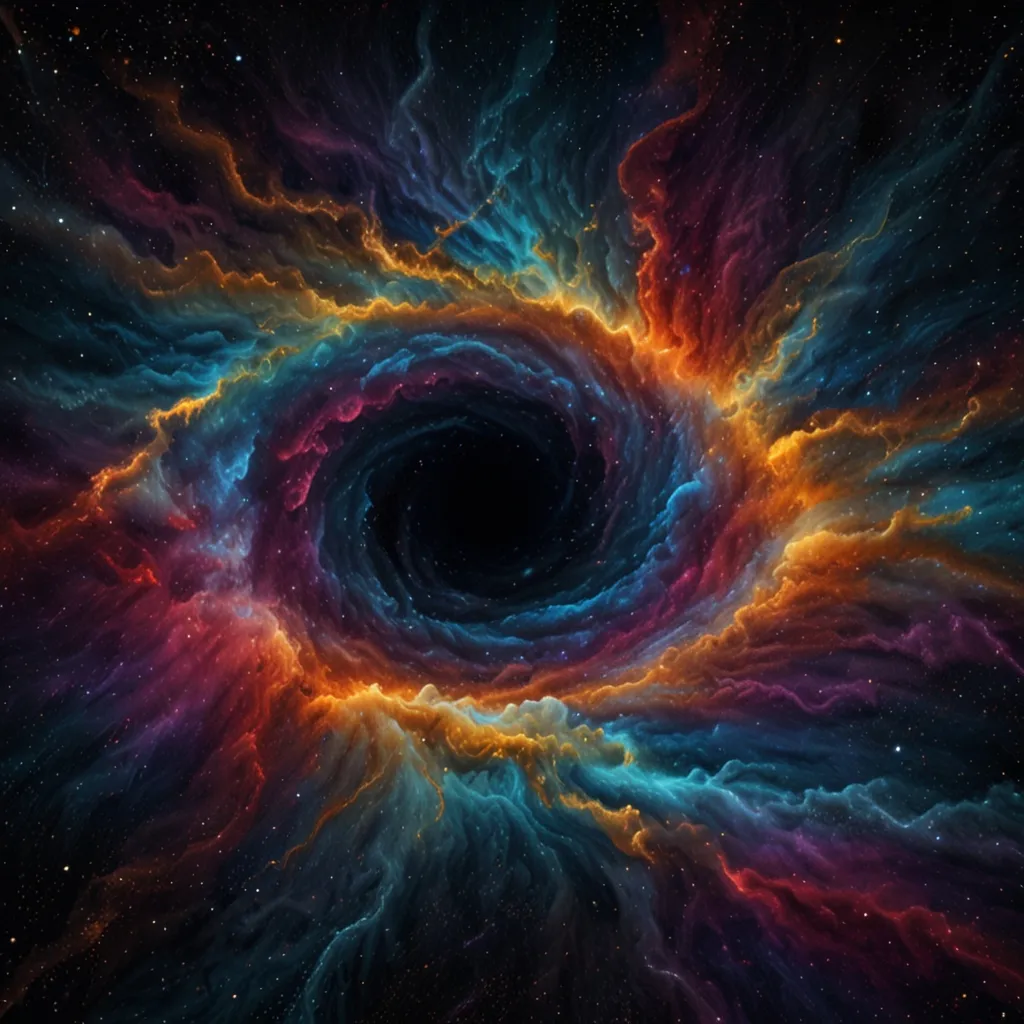
The universe is filled with mysteries, and among the most intriguing is the so-called “theory of everything.” This elusive concept aims to explain all particles and forces, uncovering the details of nearly every phenomenon, past and present. Scientists have been pursuing this theory for decades, but as of now, it remains out of reach. However, a potential breakthrough is on the horizon: a theory that not only seeks to unravel the fabric of space and time but also aims to solve one of the greatest cosmic puzzles—what existed before the Big Bang?
Currently, the most comprehensive framework we have is the Standard Model of particle physics. Though impressive, this model has a significant flaw—it doesn’t account for gravity. To cover gravity, we rely on Einstein’s general theory of relativity. A true theory of everything must bridge the gap between quantum mechanics and general relativity. This is where “Loop Quantum Gravity” (LQG) comes into play.
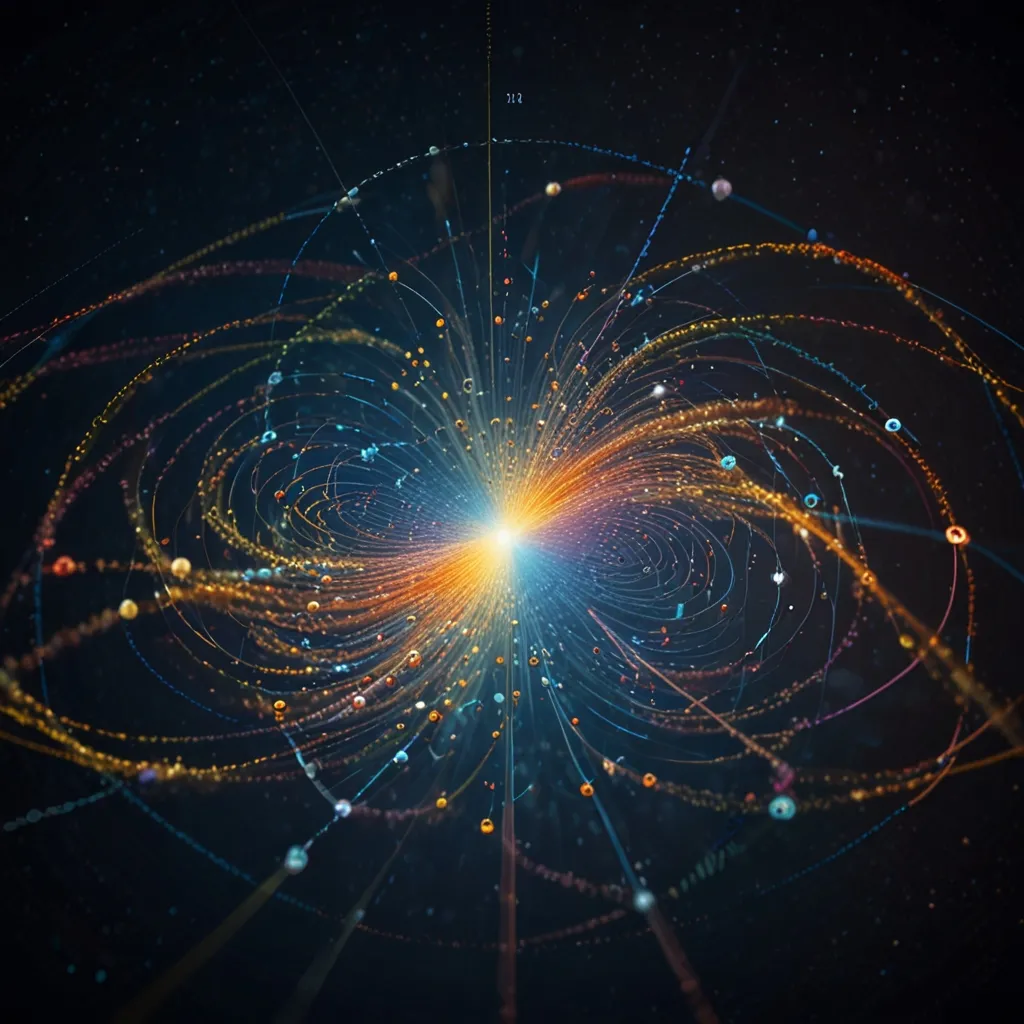
LQG offers a fascinating premise: it suggests that space-time is not continuous as Einstein proposed. Instead, it is made up of discrete units or quanta. Imagine how your sweater looks smooth from afar but reveals its threads and loops up close—that’s akin to LQG’s view of space-time. According to this theory, at the smallest scales, space-time is quantized. It’s a departure from other theories, like string theory, where space functions as a backdrop. In LQG, the space-time fabric itself is composed of quantized loops, like the fundamental threads in your clothes.
These space-time quanta are incredibly tiny. For scale, LQG postulates that there are about 10^99 quanta in just one cubic centimeter of space. These quantities are so small and numerous that they dwarf the number of cubic centimeters in the entire visible universe. Time also has a minimum unit, ticking like a digital clock rather than flowing smoothly like a river. These quantum “ticks” are vital to how the theory explains gravity and the movement of particles.
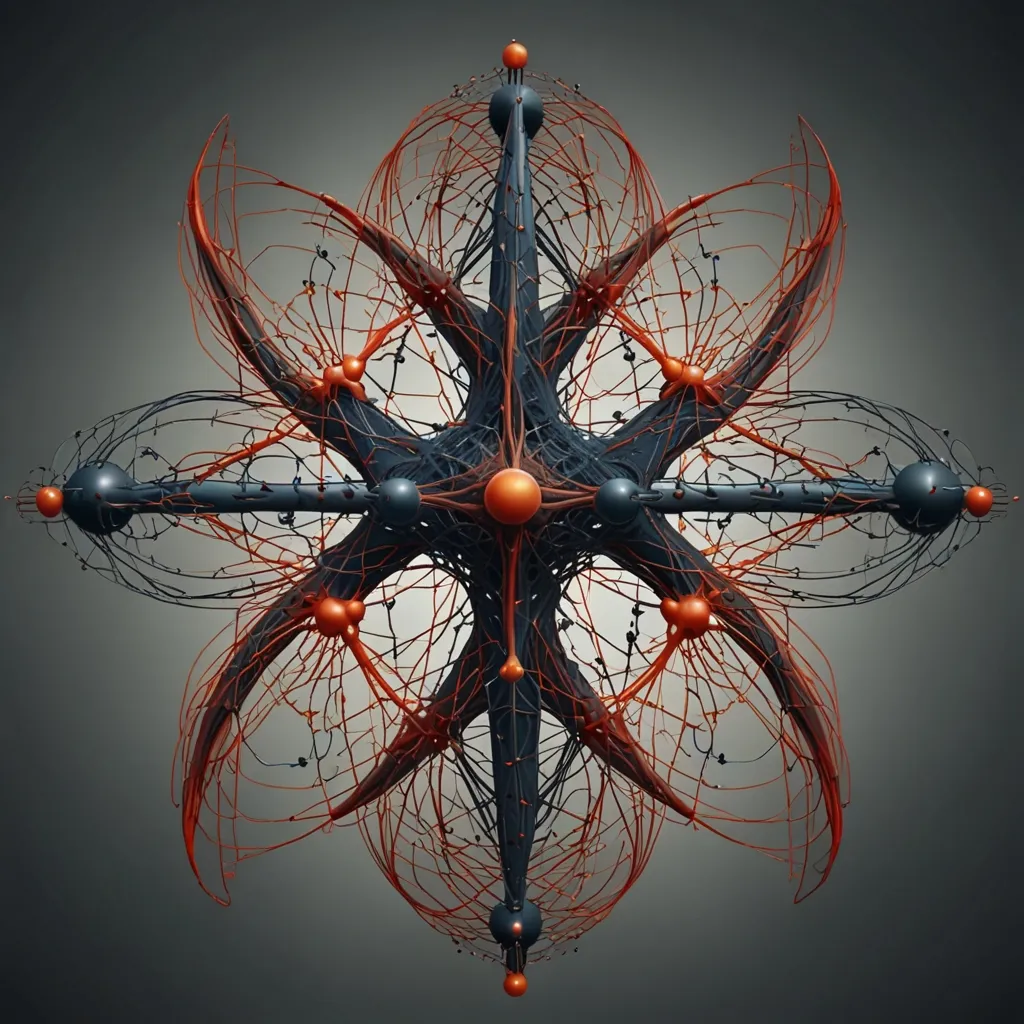
In LQG, space and time are intertwined in what are called spin networks and spin foam. A spin network, comprising loops and nodes, defines space geometry. When these networks shift, time progresses in quantized steps. When mass and energy are introduced to this framework, they distort space and time. This distortion manifests as gravity. It’s a remarkably complex yet elegant explanation.
Perhaps the most thrilling aspect of LQG is its potential to clarify pre-Big Bang conditions. Traditional theories suggest the universe began from a singularity—an infinitely small and dense point. However, LQG dismisses this notion. There is a minimum possible volume of space (10^-99 cubic centimeters), which carries a maximum energy density. Once this maximum is hit, any additional energy would “bounce” off rather than compress further, akin to a water-saturated sponge repelling more water.
This theory leads to the concept of a “Big Bounce” instead of a Big Bang. The idea is that the universe existed in a prior state of expansion, followed by a contraction. Upon reaching the minimum volume, it bounced, leading to the expansive explosion we perceive as the Big Bang. Thus, the universe’s current expansion might be the result of a previous universe contracting and then bouncing back.
While LQG has tremendous potential, it’s not yet the definitive theory of everything. It still requires empirical confirmation and further mathematical development, particularly to accommodate dark energy and dark matter. Nevertheless, LQG brings us closer to understanding the cosmos than previous theories have.
In summary, Loop Quantum Gravity stands as a strong contender in the quest to uncover a theory of everything, potentially reshaping our understanding of the universe and its origins. With further research and development, who knows what other cosmic secrets it might unravel?