Ever Wonder How Geckos, Elephants, and Mushrooms Share Secrets?
Universal Blueprint: The Cellular Symphony Connecting All Life
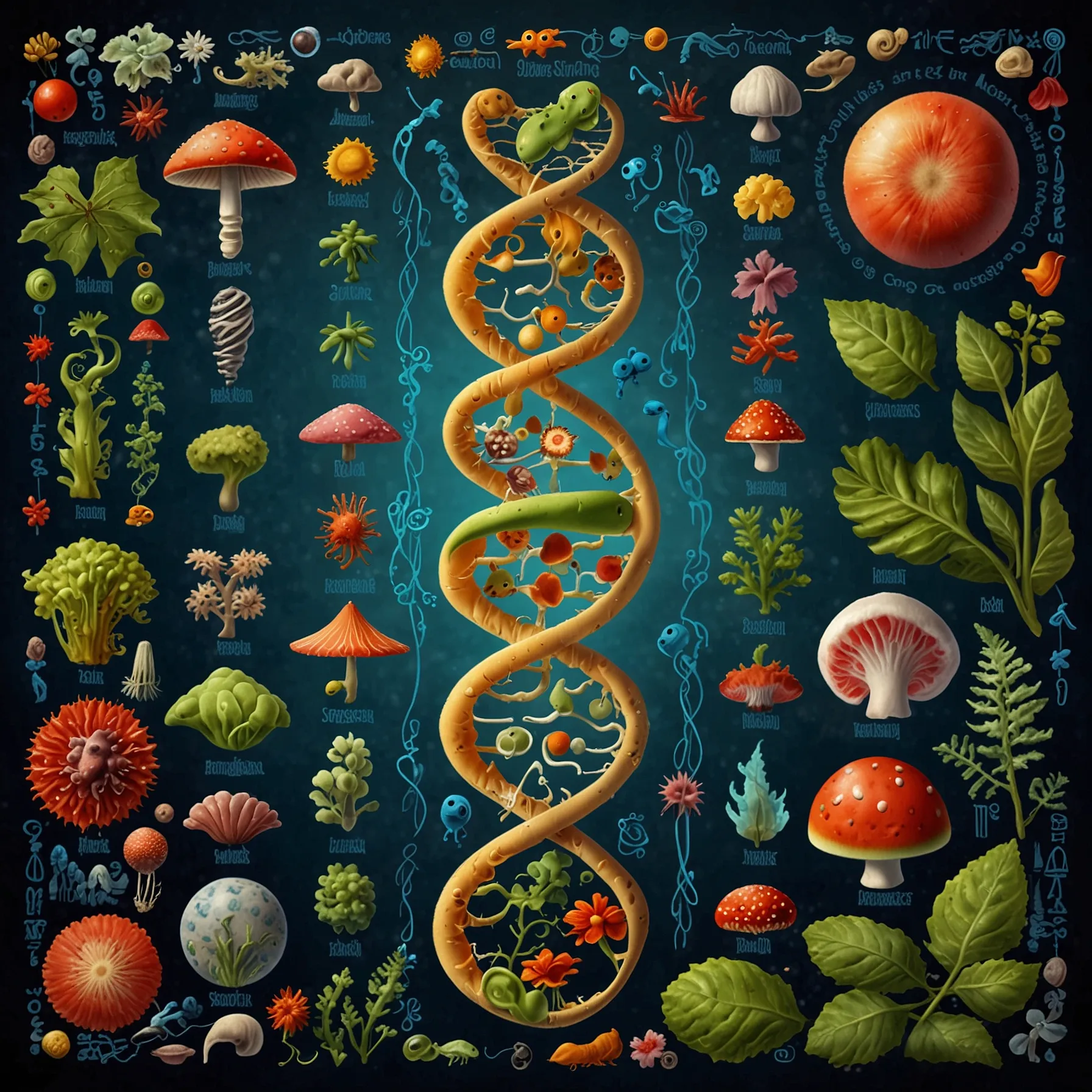
Geckos, grasshoppers, worms, and watermelons. Elephants and Escherichia Coli. Humans and mushrooms. All these fascinating forms of life seem vastly different, yet they share a common thread in how they’re built and function. It all boils down to cells and the information they contain.
Every living thing on Earth is made of cells, and each cell holds all the info needed to make, duplicate, and change itself. This info is tucked away in DNA, or Deoxyribonucleic Acid. DNA is made of simpler molecules known as nucleotides. The sequence of these nucleotides determines the differences between a human and a mushroom.
These nucleotides have a few key atoms like carbon, oxygen, hydrogen, nitrogen, and phosphorus. Each of the four types of nucleotides attaches to a common backbone–a sugar called deoxyribose and a phosphate group. Think of it as a long chain where the order of nucleotides makes a big difference.
But how does this relatively simple molecule control the diverse properties of millions of organisms? Think of DNA as a huge information library. This library only has one purpose: directing the construction of various protein molecules. These proteins are the building blocks and operators of cells—they manage growth, reproduction, and function.
Here’s where genes come in. Imagine genes as books in the DNA library. Each gene is a segment of DNA. When the body needs something specific, like insulin, certain cells signal the pancreas (where insulin is produced) to open the “insulin book” in DNA and start making insulin proteins. Once there’s enough insulin, another signal tells the pancreas to close the book. Simple, right?
Genes are responsible for a range of visible and invisible traits—eye color, skin color, hair color, bone growth, blood type, number of limbs, and even lifespan. Humans have about 25,000 to 40,000 genes, while worms, plants, and fruit flies have about 12,000 to 20,000 genes. Some of these genes are very different, but some are pretty similar to ours.
Changes in nucleotide sequences sometimes happen due to random or environmental damage. This shifts or removes nucleotides, altering the gene, and thus the protein it codes for. Most of these changes—mutations—are minor, causing little effect. Some might be damaging, but a few could actually benefit the organism.
These small DNA changes, occurring over millions of years, lead to the vast differences among living things. From geckos to grasshoppers. Worms to watermelons. Elephants to Escherichia Coli. And yes, from humans to mushrooms.