Did You Know We're Boiling Like Frogs in the Climate Crisis?
When The Heat's On, Be The Frog That Jumps
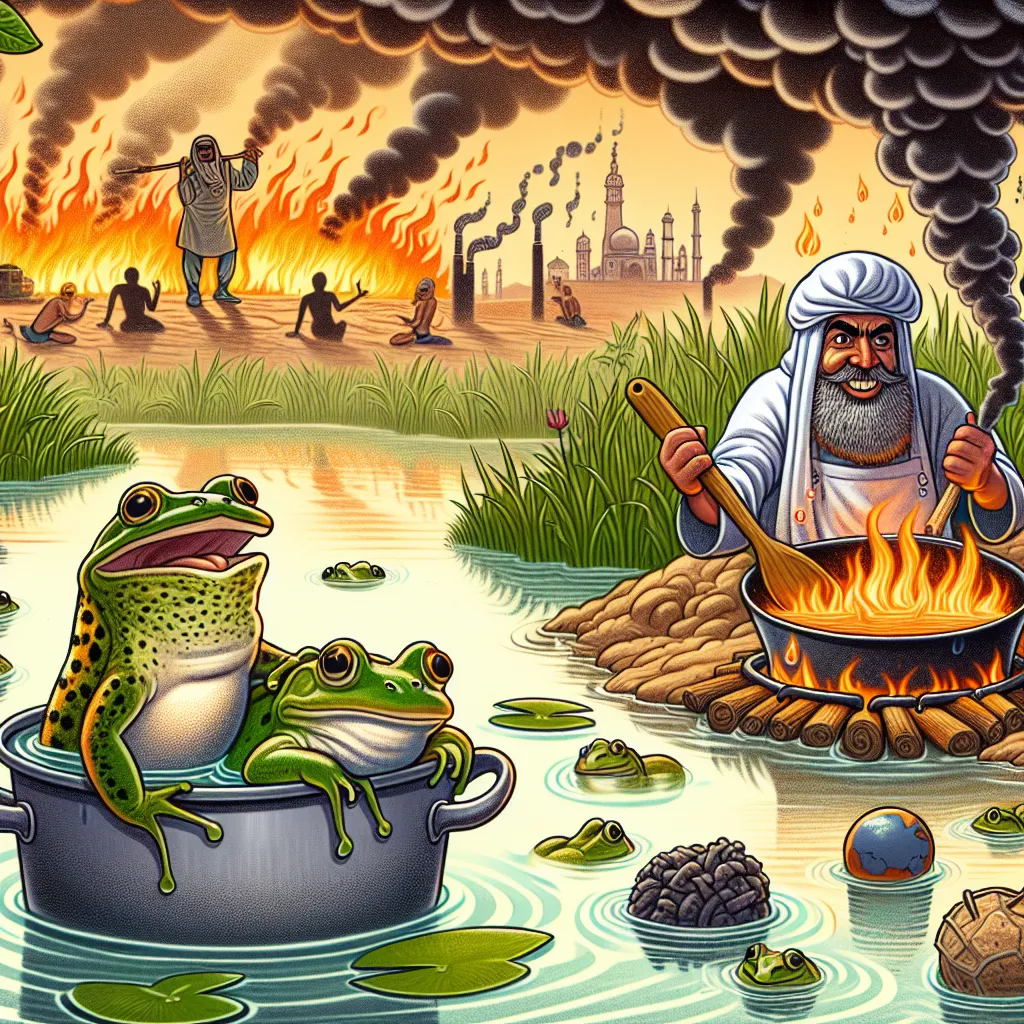
Two frogs were enjoying their day in the swamp when suddenly, they were snatched up and taken to a kitchen by a menacing chef. One frog got tossed into boiling water and immediately jumped out, escaping instantly. The chef then filled another pot with water and put the second frog in, but without turning on the heat right away. As the chef slowly raised the temperature, the frog relaxed in the gradually warming water and didn’t realize the danger until it was too late. Interestingly, this story isn’t accurate for real frogs, which would leap out of gradually heated water. However, humans behave differently.
Humans often stay put as the situation gets worse, unwilling to recognize the change or take action. This analogy fits perfectly with our climate crisis. Since the 1850s, the global average temperature has risen by one degree Celsius. While one degree might not seem like much, it’s quite significant, as specific regions have warmed even more. For example, parts of the Arctic are already four degrees warmer. If global temperatures rise by another degree, cold Arctic nights could get ten degrees warmer, and the hottest days in Mumbai might become five degrees hotter.
This predicament is largely due to our reliance on fossil fuels like coal, oil, and gas, which are packed with carbon from ancient organic matter. When burned, these fuels emit carbon dioxide, which builds up in our atmosphere and traps heat. The sunlight that warms our Earth ends up getting trapped by these greenhouse gases, mainly carbon dioxide and methane, making our planet warmer.
If we continue emitting greenhouse gases at our current rate, scientists predict a four-degree increase in global temperatures by 2100 compared to pre-industrial levels. They’ve determined that an increase of 1.5 degrees—just half a degree more than where we are now—would mark a point where the adverse effects of climate change become very severe. To avoid this, we aim to lower our greenhouse gas emissions to net zero, which means emitting as much as we can remove.
Reaching net zero isn’t about sequestering all the carbon we emit; that would be too costly and impractical. Instead, we need to transition from fossil fuels to cleaner energy sources, a process that takes time. Meanwhile, we must mitigate damage by removing some of the existing carbon from the atmosphere.
We can’t jump out of this heating pot like the frogs, but unlike them, we have the ability to take action and lower the temperature.