Ray Kurzweil, a renowned futurist, is famous for his impressive prediction accuracy. Back in 1984, he foresaw the rise of the internet, even predicting its widespread use via wireless technologies in the 21st century—a time when the internet was unheard of by most. Now, he’s making some bold predictions for the next 30 years, including a transformative event called the singularity. But what exactly is this, how will it unfold, and what will it mean for humanity?
Kurzweil’s knack for accurate forecasts stems from his understanding of technological progression. While most people think in a linear fashion, Kurzweil bases his predictions on exponential growth. Take DNA mapping, for instance. In 1990, scientists set out to map the human genome, estimating a 15-year timeline. By 1997, only 1% was mapped, leading to predictions it would take another century to complete. However, Kurzweil observed that the technology was doubling in capability each year. Remarkably, by 2003, the entire genome was sequenced.
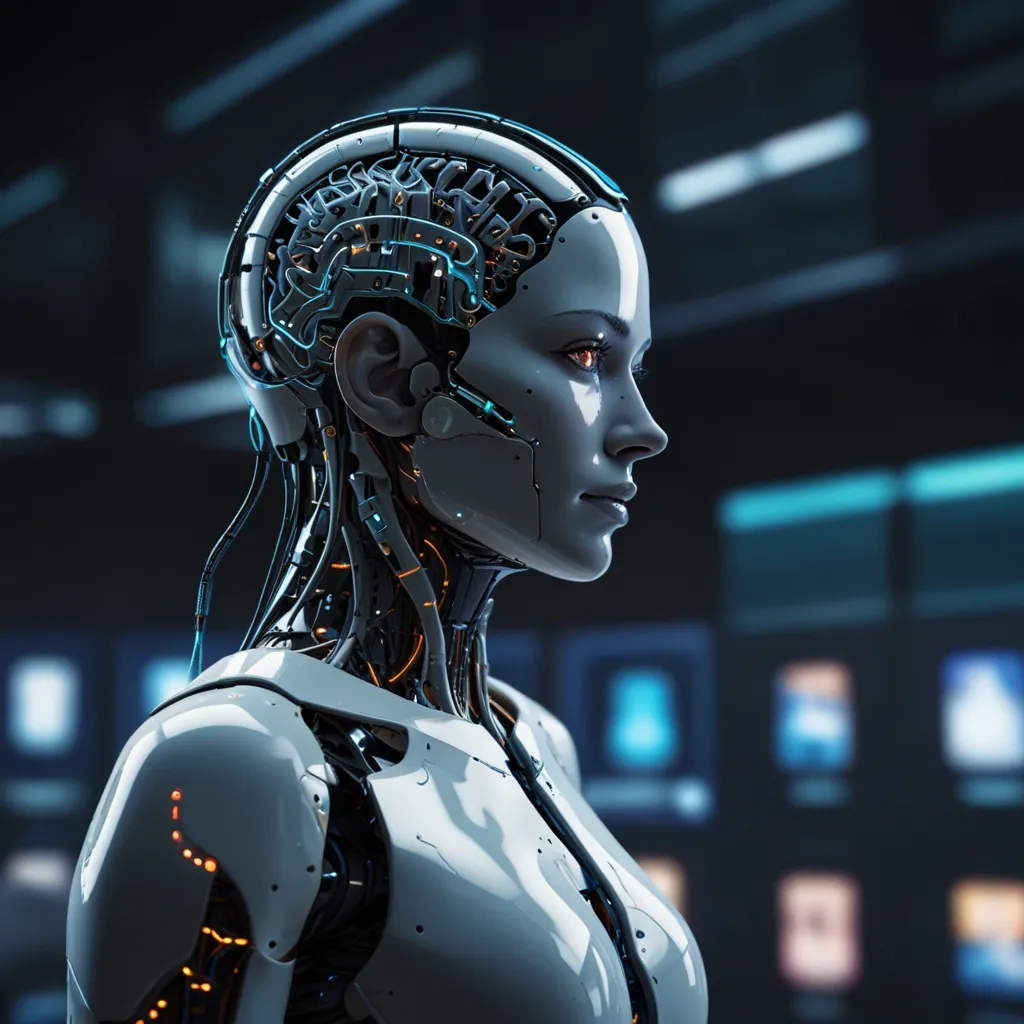
Fast forward to Kurzweil’s current predictions, which some might find far-fetched. By 2030, he expects artificial intelligence (AI) to match human intelligence. By 2045, this AI could surpass the combined brainpower of the entire human population. This anticipated “intelligence explosion” is referred to as the singularity.
But how would this singularity occur? While human intelligence evolves slowly, computers are advancing rapidly, doubling in smarts every two years. By 2030, Kurzweil predicts, these machines will outsmart us. They will then be capable of creating even smarter versions, resulting in a continuous loop of increasing intelligence.
Not everyone is optimistic about this future. Figures like Bill Gates and Elon Musk worry it might spell the end of humanity, as we could end up creating something superior to ourselves. However, Kurzweil has a different vision. He believes we will merge with these super-intelligent entities rather than compete against them.
This merging process, or “mind meld,” is already beginning in rudimentary forms. For example, Parkinson’s patients are using brain implants to help alleviate their symptoms. Kurzweil envisions a future where by the 2030s, we could enhance our memory and intelligence through brain chips, connecting our brains to a vast “cloud” of knowledge.
Imagine accessing the combined expertise of all humans instantly. Think of learning new skills or gaining education just by downloading the required knowledge directly into your brain, much like how Trinity from The Matrix learns to fly a helicopter instantly. By 2045, we might be able to do just that.
Today, learning involves a lengthy process of finding, reading, comprehending, retaining, and practicing information. Kurzweil suggests a future where this process is streamlined into instantaneous brain downloads. Want to play golf like Tiger Woods? Just download the skills directly to your brain and, muscle permitting, you’re good to go.
In essence, Kurzweil predicts that superintelligence won’t be a separate entity. Instead, we might enhance our biology with cybernetic systems, giving us superhuman intelligence and abilities. This intriguing future scenario offers a glimpse into a world where human potential could be exponentially amplified by technology.