Is Humanity's Search for Extraterrestrial Life a Cosmic Wild Goose Chase?
Eavesdropping on an Empty Universe: The Lonely Reality of Our Search for Extraterrestrial Life
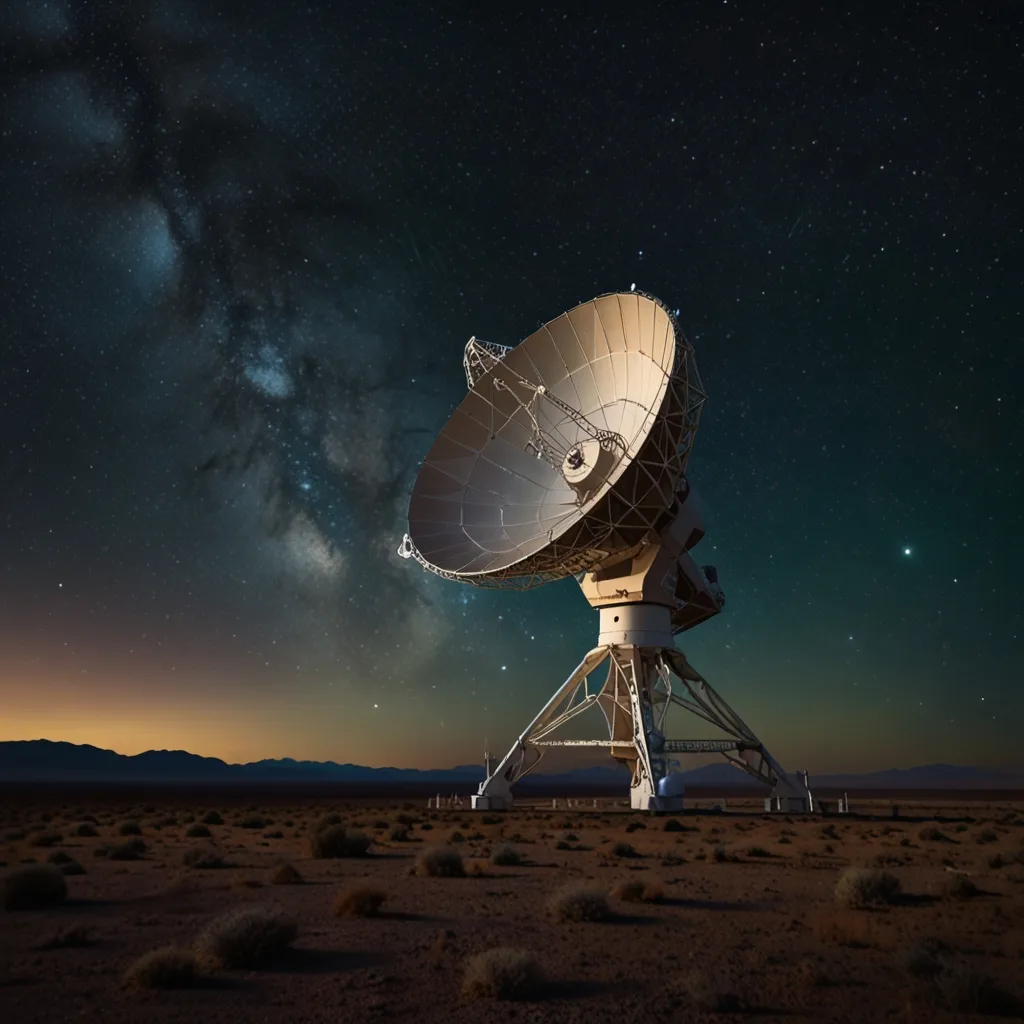
For the past fifty years, a government-funded initiative known as SETI, the Search for Extraterrestrial Intelligence, has been scouring the universe with radio telescopes, hoping to detect signs of intelligent life. Despite their tireless effort, they have found nothing. This raises an unsettling question: Are these numerous scientists on a fool’s errand? Surprisingly, the answer might be yes, and here’s why.
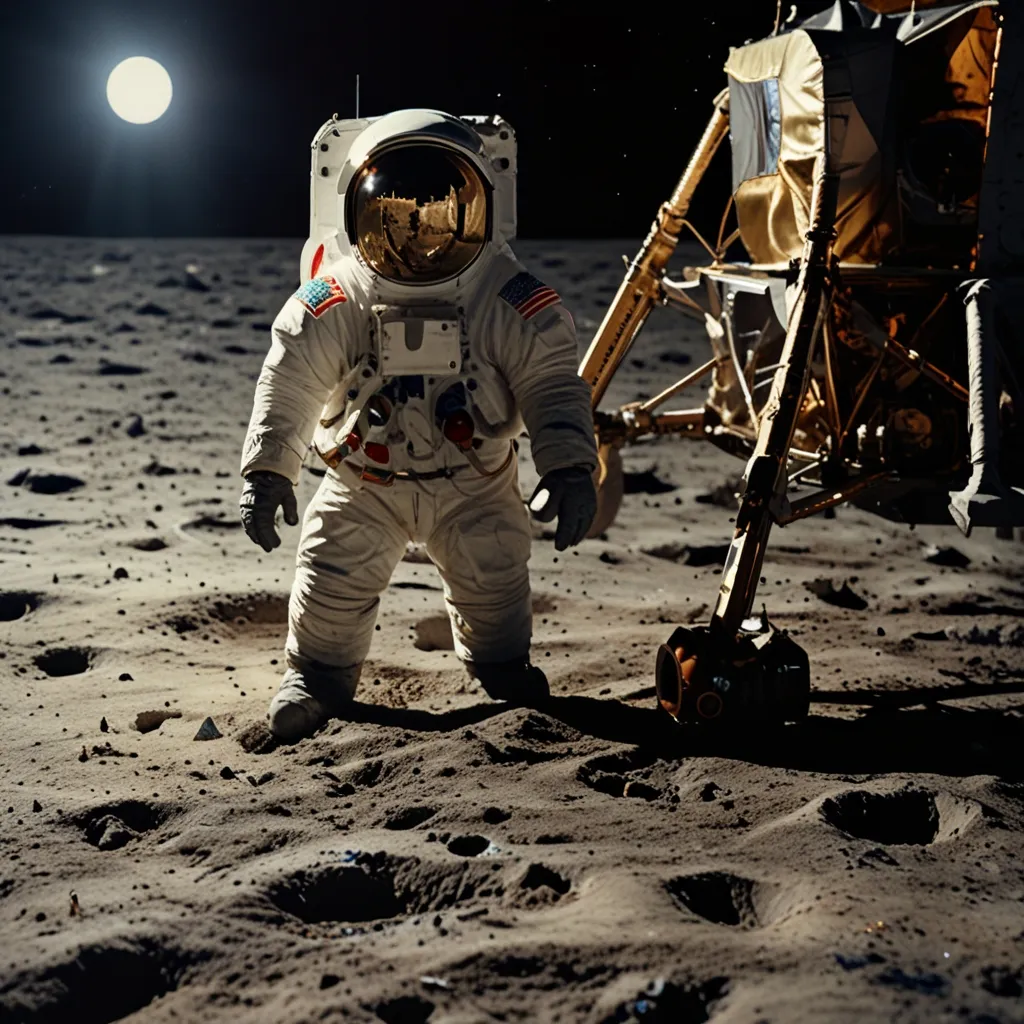
Firstly, Earth itself is a unique occurrence. Our planet boasts an unusually large moon, born from a cataclysmic collision with another celestial body. This violent impact caused Earth to melt, pulling molten iron into its core. This crucial event endowed Earth with a strong magnetic field, which shields us from deadly solar radiation that would otherwise obliterate life. Moreover, our moon stabilizes Earth’s orbit and has taken hits from meteors that could have decimated our planet. Such a beneficial set of circumstances could be exceedingly rare in the cosmos.
Another reason comes from a massive extinction event about 500 million years ago, which eradicated over 80% of life on Earth. Remarkably, a tiny, two-inch creature called Pikaia, our earliest vertebrate ancestor, survived. Had this little creature perished, we wouldn’t be here to ponder our existence.
Consider the dominance of mammals, which only occurred because dinosaurs, who ruled Earth for over a hundred million years, were wiped out by a six-mile-wide asteroid. Without this lucky cosmic dart, we wouldn’t have emerged from the shadows.
We owe our upright stance and tool-using capability to ancient apes in East Africa. Millions of years ago, arid conditions forced these tree-dwellers to adapt to grasslands, resulting in an evolutionary leap in brain size and complexity. Had this climate shift happened elsewhere, the outcome might have been different.
Finally, the most compelling evidence lies in the sheer number of species that have existed on Earth. Out of millions of different life forms over our planet’s 4 billion-year history, high intelligence has only evolved once. This suggests that intelligence isn’t an inevitable byproduct of evolution. If it were, we would likely see multiple intelligent species at different stages of Earth’s history.
In conclusion, it’s entirely possible that humanity is eavesdropping on a cosmic void because there is no one else to talk to. We find ourselves alone—imperfect inhabitants of a small, rocky planet orbiting an unremarkable star in an ordinary galaxy, at just one point in a vast universe. All we have is each other.