Imagine if our brains could reboot, replacing damaged cells with new, enhanced ones. It may sound like a sci-fi dream, but it’s a real possibility that scientists are exploring. Could our brains someday self-repair?
It’s long been known that embryonic cells in developing brains produce new neurons, the tiny units making up brain tissue. These neurons spread out to various brain parts, organizing themselves into intricate structures. Until recently, it was believed that this cell production stops soon after initial growth. This led to the conclusion that neurological conditions like Alzheimer’s and Parkinson’s, or damage from strokes, were irreversible.
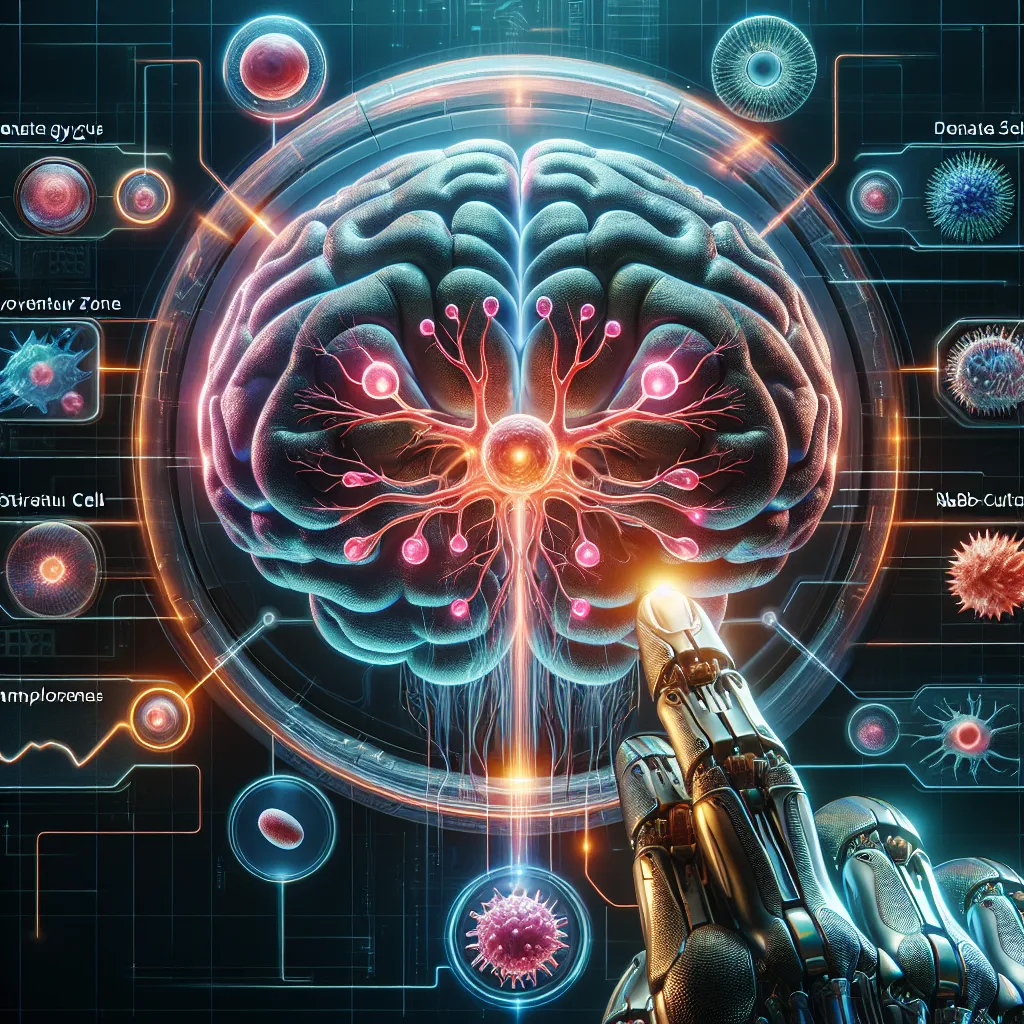
However, recent discoveries have shown that adult brains do continue to produce new cells in at least three specific areas. This process, called neurogenesis, involves special brain cells known as neural stem cells and progenitor cells, which create new neurons or replace old ones. The three brain regions where neurogenesis occurs are the dentate gyrus ( linked to learning and memory), the subventricular zone (potentially supplying neurons to the olfactory bulb for communication between nose and brain), and the striatum (involved in movement control).
Scientists are still figuring out exactly what role neurogenesis plays in these regions and why this ability is limited to them. But the existence of this mechanism opens up exciting possibilities. Could we use it to heal brain damage like new skin mending a wound or a bone knitting itself back together?
Currently, certain proteins, and molecules that mimic them, can be administered to the brain to encourage neural stem cells and progenitor cells to produce more neurons in these areas. This technique needs refinement to boost efficiency and cell survival rates. Yet, research indicates progenitor cells might migrate to injury sites and create new neurons there. Another promising method involves transplanting healthy human neural stem cells, cultured in labs, into damaged tissue, similar to skin grafts.
Experiments are underway to see if transplanted cells can divide, differentiate, and produce new neurons in injured brains. There’s also progress in teaching other brain cells, like astrocytes or oligodendrocytes, to act like neural stem cells and start generating neurons too.
Will our brains be able to self-repair a few decades from now? It’s hard to say, but this is becoming a major goal in regenerative medicine. With the human brain housing around 100 billion neurons, we are still decoding the complex network of this incredible biological machine. Each day, neurogenesis research brings us one step closer to hitting that reboot switch.