Could We Run the Government by Lottery?
Imagining Governance by Lottery: Reviving Athenian Democracy for Today's World
Hey, congrats! You’ve just won the lottery, but there’s no cash or fancy cruise waiting for you. Instead, you’ve landed a spot in your country’s national legislature. And guess what? All your new colleagues were selected the same way.
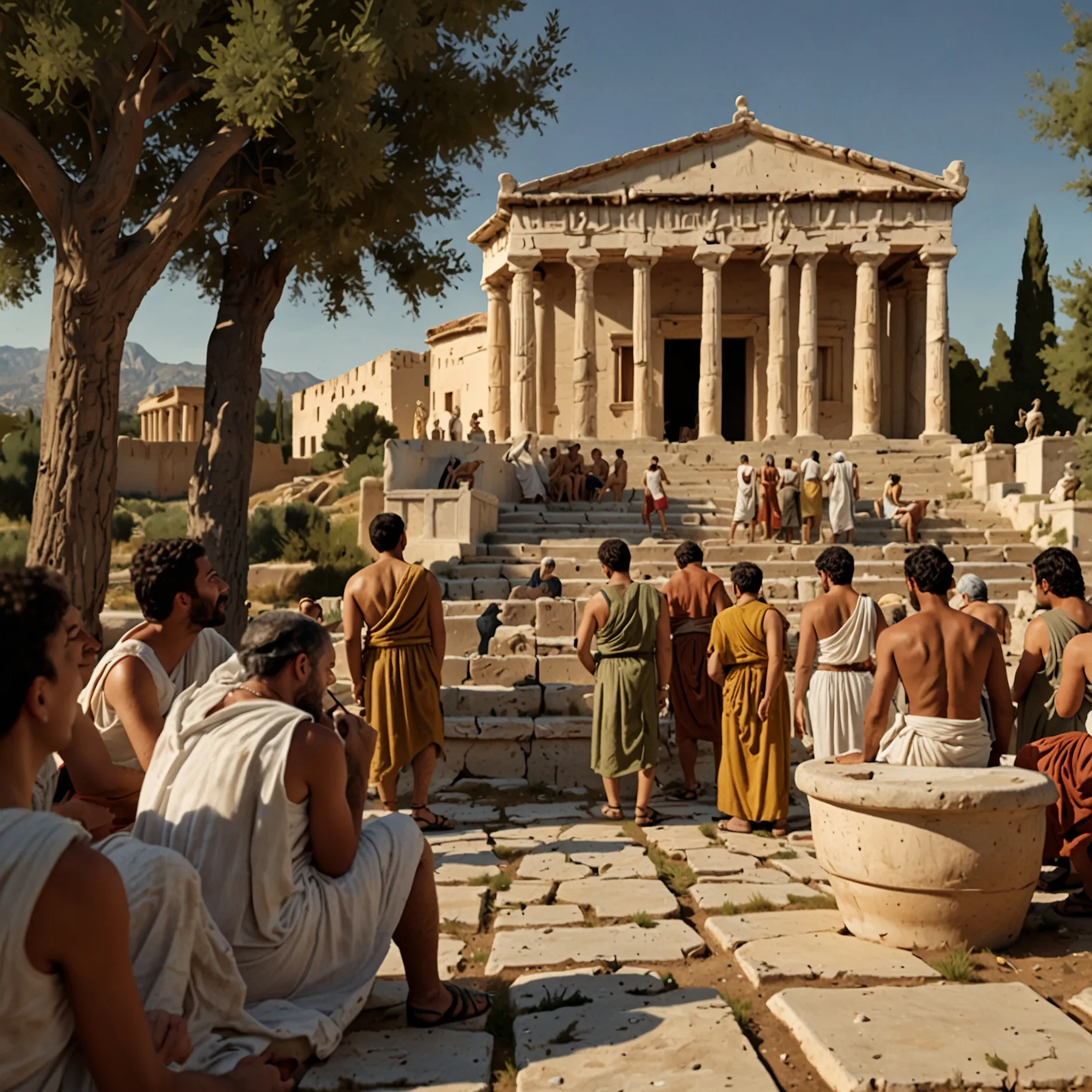
Is this a weird way to run a government? Maybe. But it’s rooted in ancient Athenian democracy. While we think of elections as the heart of democracy, the Athenians had a different idea. They relied heavily on lottery systems to fill most public offices.
In 5th Century BC Athens, democracy wasn’t about electing leaders to make decisions for you. It was a direct democracy where any eligible citizen could participate. About 30,000 citizens could attend assembly meetings, and if 6,000 showed up, anyone could propose a law or bring up an issue.
Of course, managing 6,000 voices at once isn’t practical. So, Athens had a 500-member council called the Boule to set agendas and evaluate proposals. They also had jurors and magistrates to handle legal matters. And these positions? They were all filled by random lottery, a process known as sortition.
Only a few positions, like generals, required elections because they needed specific expertise. These roles were seen as aristocratic, rule by the best, rather than democratic, rule by the many.
Democracy in Athens came after long political struggles. Power, once held only by nobles, was shared with ordinary citizens. Civic participation wasn’t a privilege, but a duty. Sortition and term limits prevented the formation of political elites or parties.
However, by today’s standards, Athenian democracy wasn’t all-inclusive. Women, slaves, and foreigners couldn’t be citizens, and with age restrictions, only 10-20% of the population could participate. Philosophers like Plato criticized this system as anarchic, but nowadays, democracy is highly valued, even if its forms vary widely.
Modern democracies usually elect qualified leaders to avoid chaos, but this system has its flaws, like the influence of money and career politicians with their own agendas. Could bringing back sortition lead to better, more diverse governments? Or do today’s political roles need specialized knowledge?
You might not get a random call to govern your country, but you could still end up on a jury or a citizens’ assembly, keeping the spirit of sortition alive.