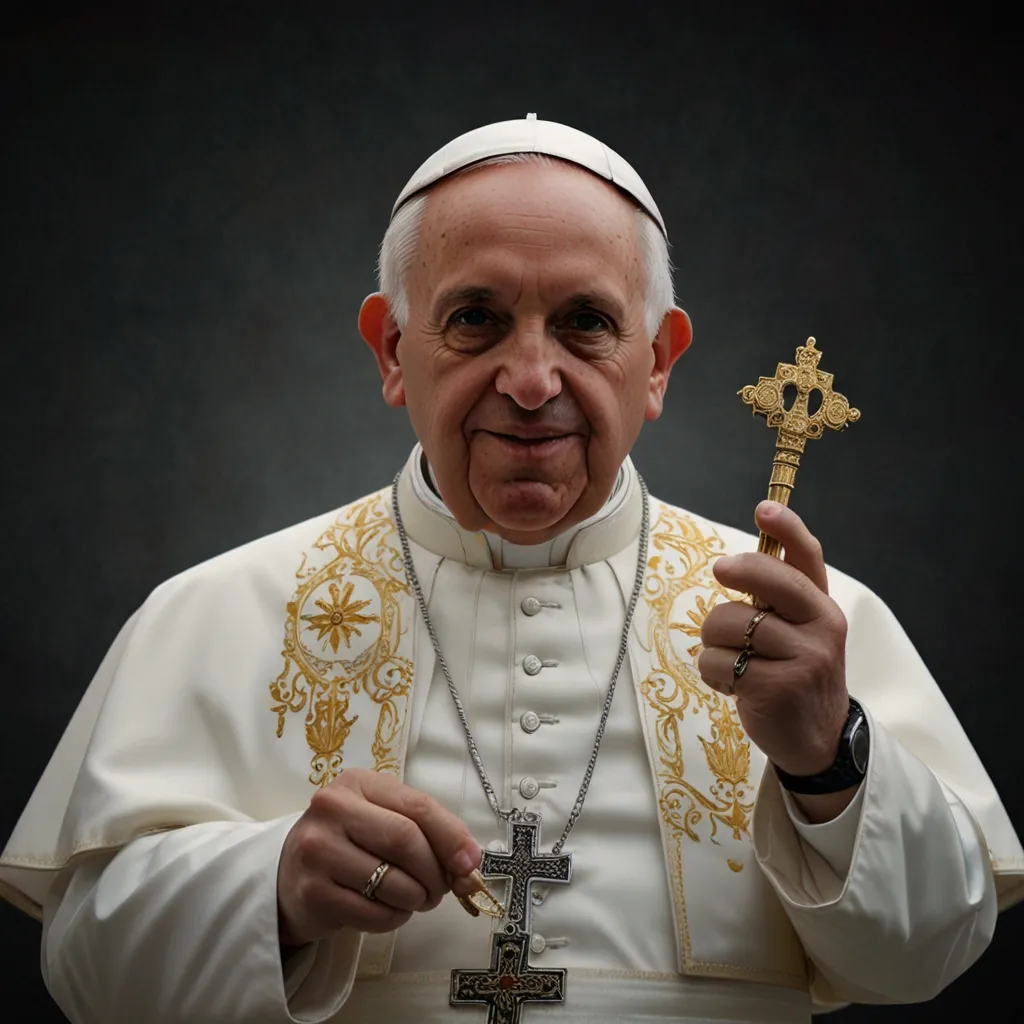
The Pope is the big honcho of the worldwide Catholic Church and the head honcho of the Holy See. The word “Pope” comes from the Greek word “pappas,” which means “father,” showing the Pope’s fatherly role to Catholics everywhere. The Pope also carries titles like the Bishop of Rome, the Supreme Pontiff, and the Successor of St. Peter, one of Jesus’ main guys, considered the first Pope.
In Catholic teachings, the Pope is seen as St. Peter’s successor, who got some special VIP authority from Jesus. This comes from parts of the New Testament, like when Jesus gave Peter the “keys to heaven” (Matthew 16:19). This makes the Pope the boss of all bishops and the lead guy on faith, morals, and church rules.
The Pope’s role has morphed a lot over time. Early on, the Pope’s power wasn’t as centralized. The Church was just finding its feet, and the Pope’s shout-outs were rare but super important. Over time, as the Church expanded, so did the Pope’s sway. By the fourth century, Rome’s top spot was a done deal, and the Pope’s role got more solid.
In the Middle Ages, the Pope kept a steady hand on the wheel after the Western Roman Empire crumbled. Popes like Gregory I ran the Church with firm reform and discipline. They didn’t just stick to religious matters; the Pope also played in the political sandbox, like when Pope Leo III crowned Charlemagne emperor in 800, setting a big-time precedent.
The Middle Ages also had a rough patch, known as the “Saeculum obscurum” or the Dark Age of the Papacy, with the papacy caught up in political brawls leading to corruption and shaky times. But things bounced back with reforms, especially under Pope Leo IX, who hit the road to fix moral issues in the Church, bringing back its good name.
Today, the Pope is still a key player on the world stage. Take Pope Francis, for example. He’s really changed how many people see the Catholic Church with his humility, kindness, and compassion. He’s a loud voice for social justice and the environment, making him a hit among Catholics and others alike.
The Pope’s job is packed with duties. He calls the shots on faith and morality for Catholics everywhere. He’s got the Roman Curia, the central team of the Holy See, to help him out. Plus, as the head of state, he’s got diplomatic ties with countries around the globe.
Not everyone is on board with everything the Pope says. The idea that the Pope has top authority over the global Church is a sticking point with other Christian groups. But lots of people respect the moral guidance that recent Popes have provided, helping smooth over some of those old disagreements.
All in all, the Pope is central to Catholicism as the spiritual leader of the global Catholic Church and the head of the Holy See. His power, rooted in tradition and doctrine, has grown to include religious and political roles, making him a key figure in both the Church and the world.