religion

Did Ancient Greek Philosophers Have a Mystical Side?

Echoes of Greece: Mystic Wisdom Intertwined with Rational Thought
Did Ancient Greek Philosophers Have a Mystical Side?

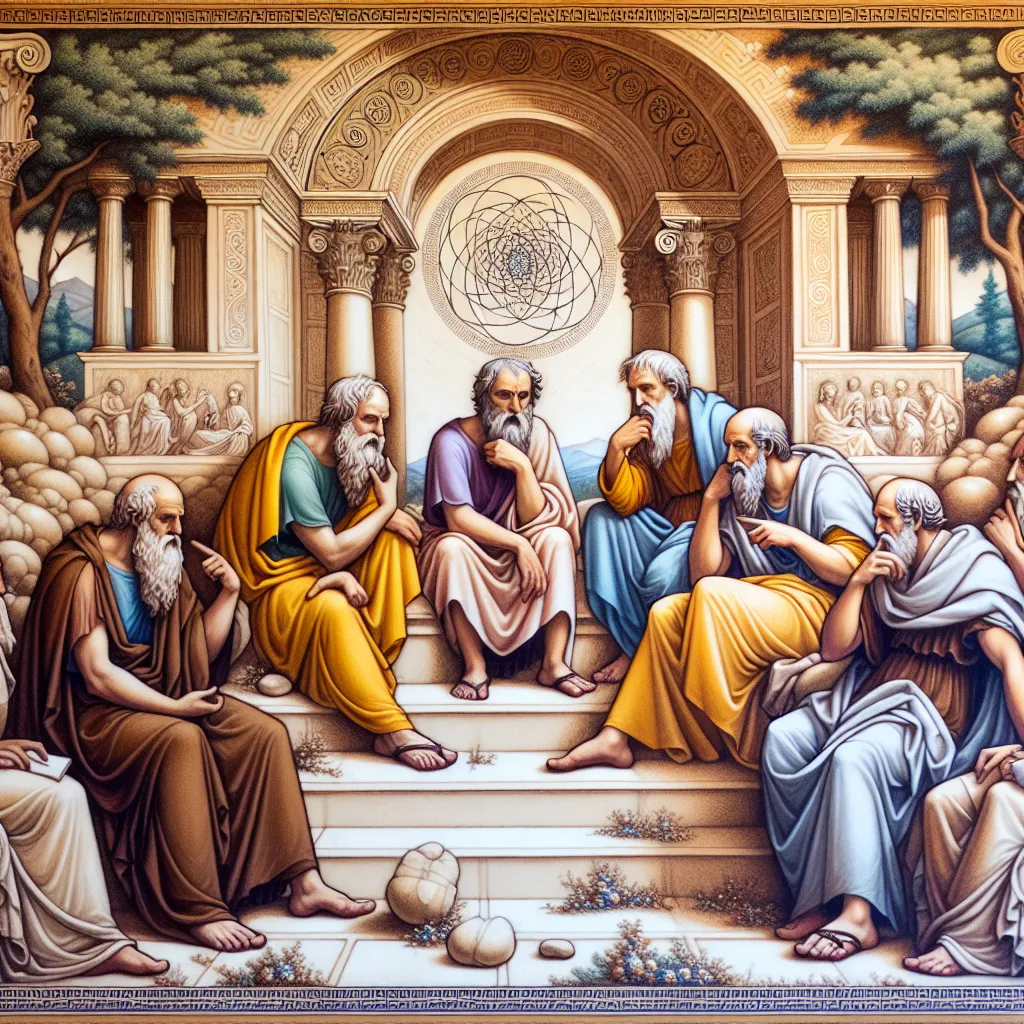
When we think of the great minds of ancient Greece, names like Socrates, Plato, and Aristotle often spring to mind. These figures have become emblematic of Greek intellectual legacy, symbolizing an era of rationality and scientific exploration. It’s easy to simplify their contributions as purely rational—a kind of precursor to our current enlightened age. This view, however, misses an important part of the picture.

Ancient Greece wasn’t just a cradle of pure scientific thought; it was also a land brimming with mysticism and religious practices. Many of the same philosophers who pioneered logic and reason were equally invested in mystical experiences and spiritual practices. In their quest for truth, they often saw these mystical paths as even more profound than mere intellectual reasoning.

Socrates, Plato, and Aristotle weren’t just cold, calculating thinkers. They engaged deeply with concepts that we might now consider mystical or religious. Their philosophies weren’t strictly grounded in what we would today term “scientific method.” In fact, their broader approach included practices and beliefs that intertwined with religion and mysticism.

So, while it’s tempting to see ancient Greece solely as a birthplace of rationality, this view is far too simplistic. The blend of mystical and rational thought in their work shows a richer, more intricate historical legacy. Understanding this duality gives us a more complete picture of their contributions and the complexities of their search for truth.

Similar Posts
Blog Image
Cargo Cults: When WWII Planes Became Gods in the Pacific Islands

Cargo cults in Melanesia emerged after World War II when islanders encountered Western technology. They built mock airfields and mimicked military rituals, hoping to attract goods. This phenomenon highlights cultural misunderstanding, the impact of globalization, and human attempts to make sense of rapid change. It serves as a cautionary tale about superficial imitation and the importance of genuine cultural understanding.

Blog Image
Uncovering the Hidden Meanings of Religious Symbols: From Cross to Crescent

Explore the deep meanings behind religious symbols. Discover how these sacred icons connect faith, history, and culture. Uncover the universal truths that unite diverse beliefs. Learn more about spiritual symbolism today.

Blog Image
Is Religion the Hidden Key to Understanding Global Politics Today?

Religion's Deep Currents: Shaping Politics, Reflecting Universal Struggles

Blog Image
Nowruz: Ancient Persian New Year Ritual Blends Tradition and Renewal

Nowruz, the Persian New Year, celebrates spring's arrival with ancient Zoroastrian roots. It features the haft-sīn table, house cleaning, and bonfire jumping. Lasting 13 days, it includes family visits and outdoor festivals. Nowruz spans Central and Western Asia, symbolizing cultural identity and renewal. It blends tradition with modern practices, connecting people to nature and their heritage.

Blog Image
What If Everything You See Is Just God in Disguise?

Embrace the Oneness: Mystical Poetic Reflections from Andalucia's Soul

Blog Image
What Do You Really Know About the Hidden Branch of Islam?

Exploring the Nuanced Spectrum of Islam Through the Lens of Ibadi Tradition and History