Is the Ricot Valley Hiding the Secrets of a Forgotten Islamic Mysticism?
The Ricot Valley Resonates with Echoes of Radical Islamic Mysticism and Hermetic Traditions
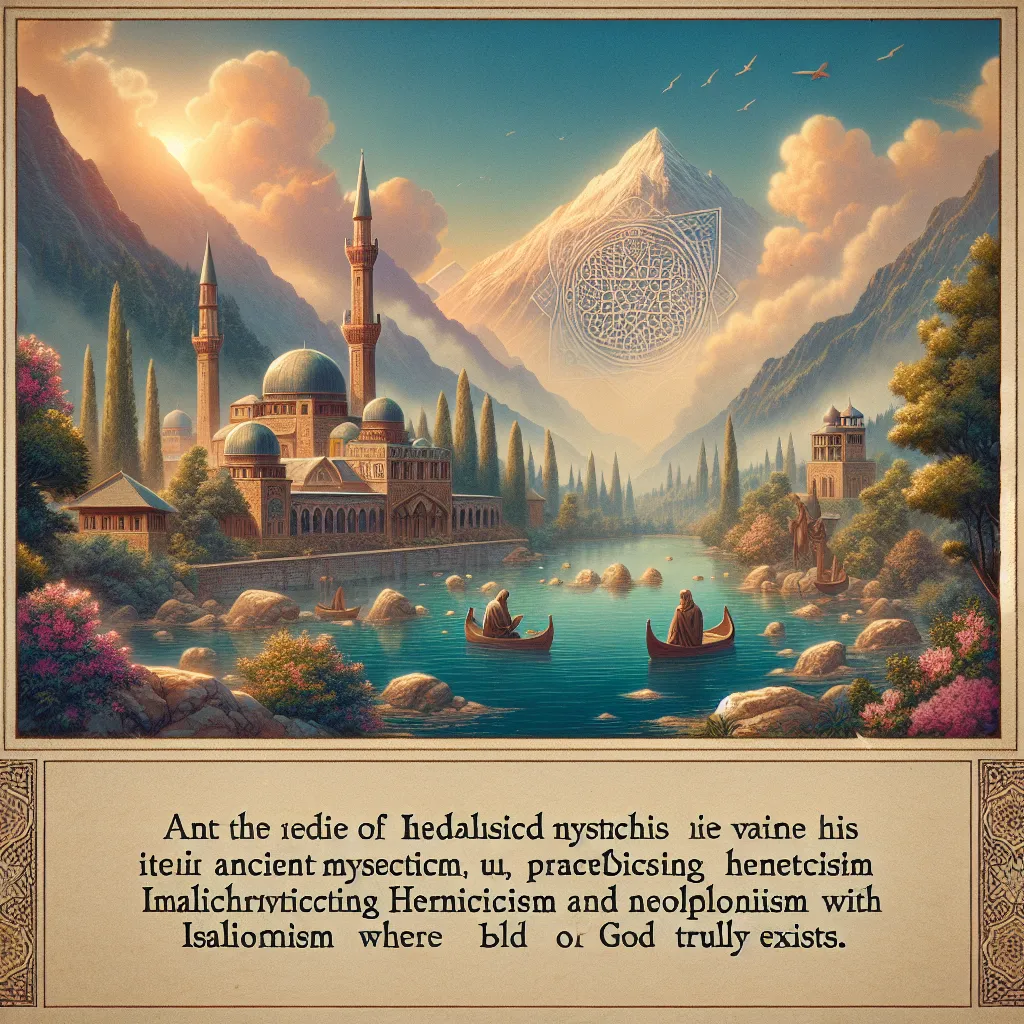
Nestled among breathtaking landscapes, the Ricot Valley, also known as Wadi Ricot in Arabic, plays host to one of the most fascinating chapters in Islamic mysticism. This scenic spot was a vital hub for a unique school of thought in the Middle Ages. Here, mystics blended traditional Islamic teachings with Hermeticism and Neoplatonism. Their radical philosophy, often referred to as absolute unity, centered on the idea that only God truly exists, and everything else is just an illusion—an expression of non-dualism or radical monism.
Historian Ibn Khaldun, though critical, recognized the Ricot Valley as a focal point for this monistic philosophy, seeing it as heretical. Much of this movement’s origins trace back to Abu Abdullah Al-Shi, a judge from Seville, who propagated these controversial ideas. He eventually left Seville for North Africa, where his teachings continued to influence his followers.
Among Al-Shi’s most notable students was Ibn Madin, who settled in the Ricot Valley and carried forward the teachings. Significant figures like Ibn Sabin, born in this valley, became pivotal to this mystical movement. A polymath, Ibn Sabin mastered various sciences, from Islamic law to geometry, and produced impactful writings. His ideas were notably influenced by Hermetic and Neoplatonic traditions, blending these with Islamic thought.
Intriguingly, the valley is noted for its association with Hermeticism—a set of esoteric beliefs linked to Hermes Trismegistus, a figure combining the Greek god Hermes and the Egyptian god Thoth. These teachings included elements of astrology, alchemy, and a deep interconnectedness of all things, suggesting that the microcosm (human being) mirrors the macrocosm (universe).
The influence of Hermeticism in Islam is evident from the early days, with connections seen in the teachings of the Sabians of Haran, who might have practiced a blend of heavenly and Hermetic beliefs. Hermetic writings were integrated into Islamic scholarship, legitimized further by identifying Hermes Trismegistus with the Quranic prophet Idris or the biblical Enoch.
Ibn Sabin’s works, particularly “Budd,” reflect these Hermetic principles, merging them with Islamic teachings to create a universal wisdom tradition. This school of thought, while radical, emphasized the oneness of existence, encapsulated by the simple yet profound realization: it is only God, God alone, and nothing else.
This monism often invites comparisons with Ibn Arabi’s school of thought, which also preached a form of unity of being. Though similar, Ibn Sabin’s ideology posited a more radical interpretation, seeing the world’s multiplicity as purely illusory.
The Ricot Valley, with its serene and unchanged landscapes, offers a poignant reminder of this mystic school’s history. Walking through these mountains and valleys, one can almost hear the echoes of those who once proclaimed: “Allah fakat”—God only. Their connection to this land adds a profound layer of mysticism to its natural beauty, making it a truly remarkable place to reflect on these ancient philosophical ideas.