Where in the World is the Internet Hiding?
Unseen Threads: The Unassuming Network Holding Our Digital World Together
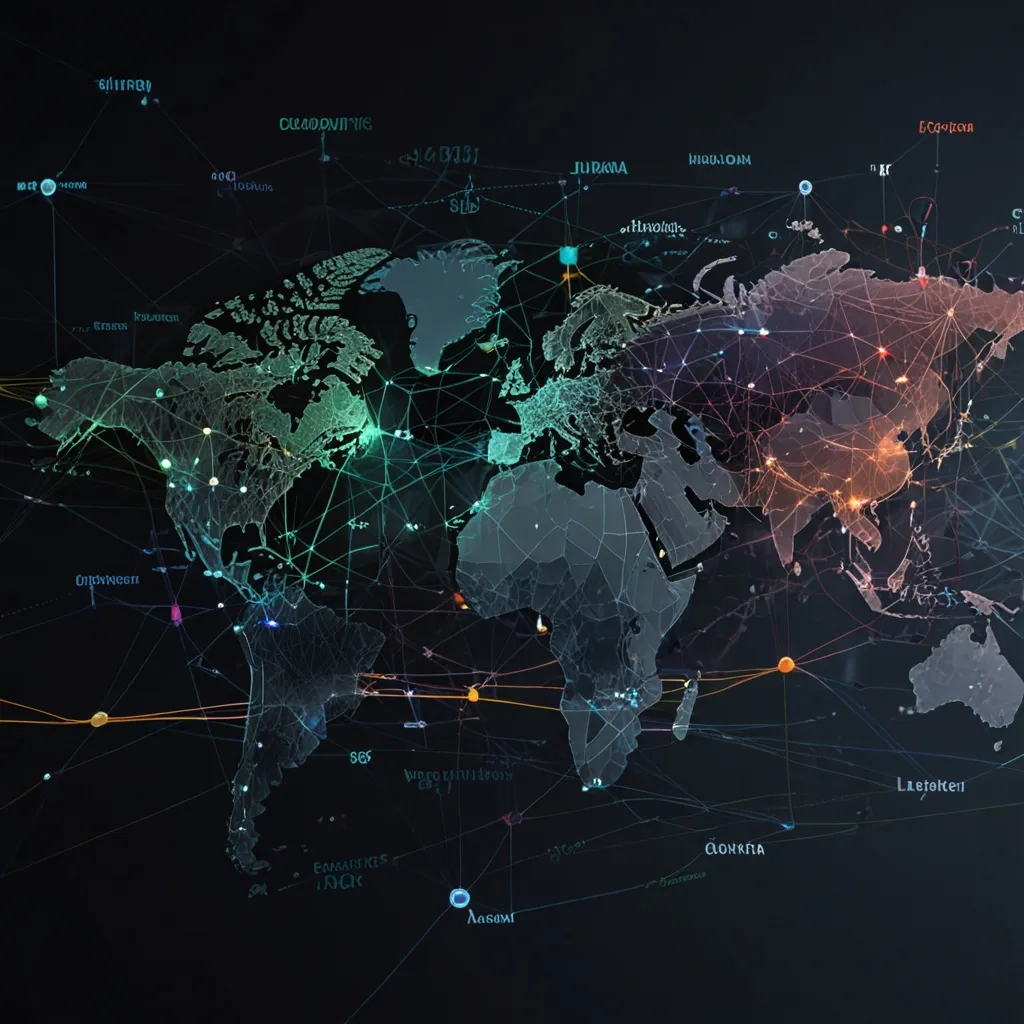
Imagine a world without the Internet. Hard, right? Yet, just three decades ago, it wasn’t a part of our daily lives. Today, it’s an essential element for over 4 billion people worldwide. From connecting us to our favorite shows to enabling information exchange on a global scale, the Internet is indispensable.
But where exactly is this powerhouse technology located? Unlike a television broadcast, the Internet isn’t housed in a single place. The story of its origins and function reveals why.
Back in 1969, the U.S. Defense Department’s research arm, DARPA, created the Internet with a specific purpose. It was designed as a decentralized network to ensure communication continuity during a war. If one part got destroyed, others would continue to operate. This principle of redundancy is foundational to the Internet’s resilience.
Today, the Internet is a sprawling network of servers. These specialized computers are housed in data centers around the globe, connected by a backbone of fiber optic cables and exchange points, often in major cities. This vast web of connectivity allows us to access the World Wide Web—a user-friendly doorway to the Internet.
When you type a web address, like amazon.com, into your browser, it seeks out the server hosting that site’s files using a unique IP address. An IP address is a series of numbers that pinpoint the location of a specific server on the network. Your browser then translates these files into human-readable content using HTML, a language that organizes text, images, videos, and other media for your viewing pleasure.
By 2018, around 75 million servers were hosting content worldwide. These data centers are typically unassuming structures that you’d likely overlook. Despite being ubiquitous, control over the Internet isn’t held by any single entity. Major tech companies like Microsoft, Google, Apple, and Mozilla influence how we experience the web because they create the most popular browsing tools.
Staggeringly, the Internet is accessed by nearly 5 billion devices. But have you ever wondered about the Internet’s physical weight? Google estimates its total memory capacity at 5 million terabytes. If you could weigh the electrons carrying all this data, they would amount to a mere 0.2 millionths of an ounce—about the weight of a grain of sand.
In essence, the Internet is a marvel of digital signals and interconnected systems that bind our world together, all without adding much physical weight to our planet.