Could We Decode the Language of a Lost Civilization?
Ancient Whispers: The Silenced Voices of the Indus Valley Civilization
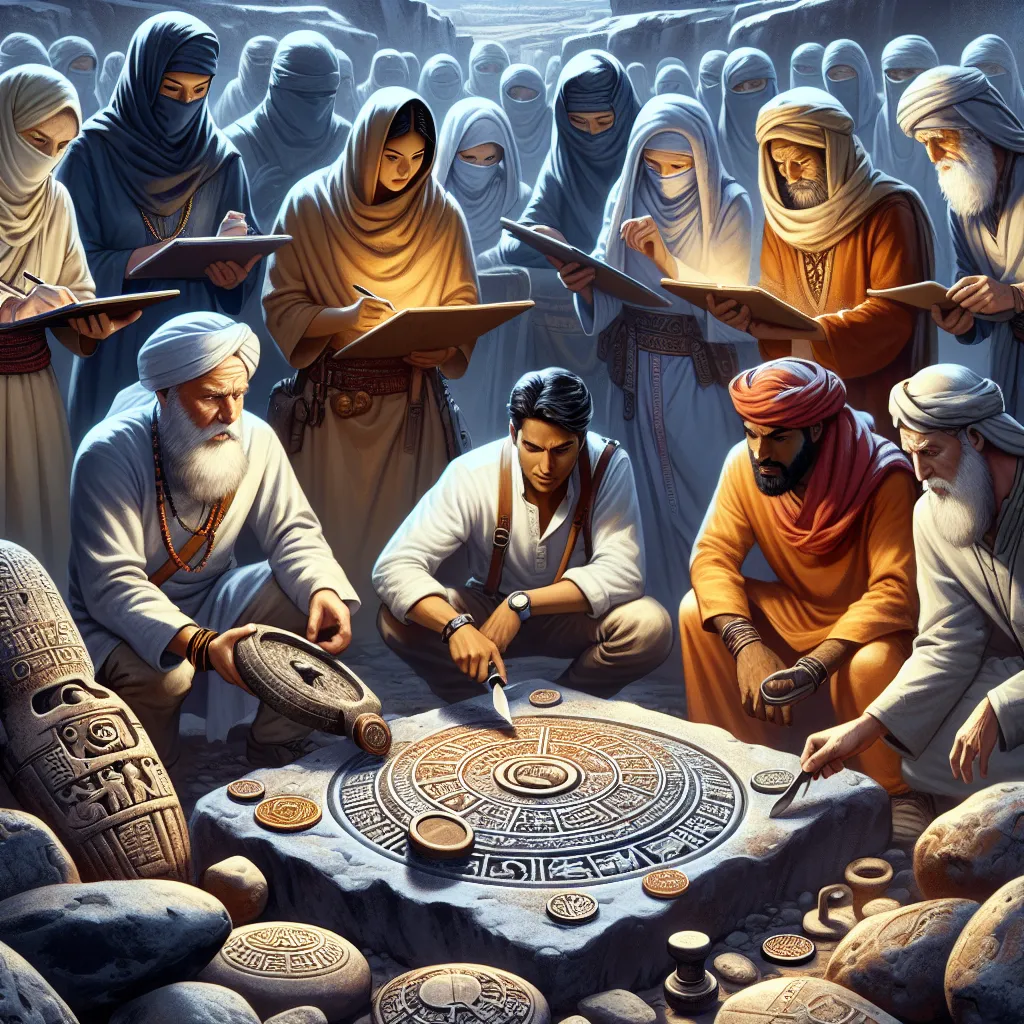
Imagine it’s 4,000 years from now, and everything we know about today’s civilization has vanished. No books, no electronics, no social media. Archaeologists in the future unearth remnants of our world, like strange pieces of plastic and metal with unfamiliar symbols. These artifacts would tell them about our lives, just as we try to decode the mysteries of the Indus Valley Civilization, which existed 4,000 years ago.
This ancient civilization was much larger than its Egyptian and Mesopotamian counterparts, covering parts of present-day Pakistan, northwestern India, Afghanistan, and Iran. Contrary to what one might expect from a vast civilization, archaeologists didn’t find grand monuments or powerful kings. Instead, they uncovered small objects like stone seals, copper tablets, and pottery, many adorned with an unknown script.
The writing on these artifacts has baffled experts for years. Despite numerous symbols found mostly on seals, our understanding remains limited because the script is undeciphered. Scholars propose different theories about this script. Some believe the symbols are mere pictograms without linguistic meaning, similar to modern-day traffic signs. Others argue it represents an ancient Indo-European language like Sanskrit. A third group suggests it’s a form of the Dravidian language family, spoken in southern India today.
Deciphering the Indus script isn’t just about solving an intellectual puzzle; it’s tied deeply to the cultural and historical identities of South Asia. Yet, our efforts face significant hurdles. There’s no “Rosetta Stone” to help decode the script, and most texts are incredibly short. However, researchers have made some progress. For instance, determining the direction of writing showed that scribes wrote from right to left, revealed by the cramped symbols at the end of lines.
Languages have patterns, and the Indus script appears to follow suit. For example, certain symbols commonly begin a text, much like specific letters frequently follow others in English. By using computer models to analyze these patterns, researchers found they could predict some missing symbols with reasonable accuracy, which could be useful in reconstructing damaged texts.
When comparing the randomness, or “entropy,” of different sequences, the Indus script falls in the middle range, similar to other linguistic scripts. This suggests it might function like a language, despite the controversy and debate this finding sparked. Further, some texts found outside the Indus region, like in present-day Iraq, exhibit unusual patterns. This anomaly suggests the script could have been used to write multiple languages, much like the English alphabet is used for both English and Dutch.
So, could we ever fully understand the Indus script? The answer remains elusive, but ongoing research offers glimmers of hope. For instance, consider the Rebus principle, where pictures represent words. Some symbols may stand for sounds rather than their literal pictures. If we crack this code, it could reveal names or other meaningful texts.
Some linguists, like Asko Parpola, have made strides in interpreting sequences of symbols, hypothesizing links to horoscopes and star constellations in Dravidian languages. While promising, these readings aren’t yet validated. But as more symbols make sense, we edge closer to unraveling this ancient mystery.
Understanding the Indus script would reanimate a civilization that has so far remained silent. This isn’t just an academic pursuit—it’s a bridge to our shared heritage, connecting us to our ancient ancestors. Deciphering this script would enable the Indus people to speak to us across millennia, offering insights into their world and ours. And I’m as eager as anyone to hear what they have to say.