What Mind-Blowing Future Predictions Are About to Become Reality?
When Sci-Fi Becomes Reality: Predictions You Won’t Believe Could Actually Happen
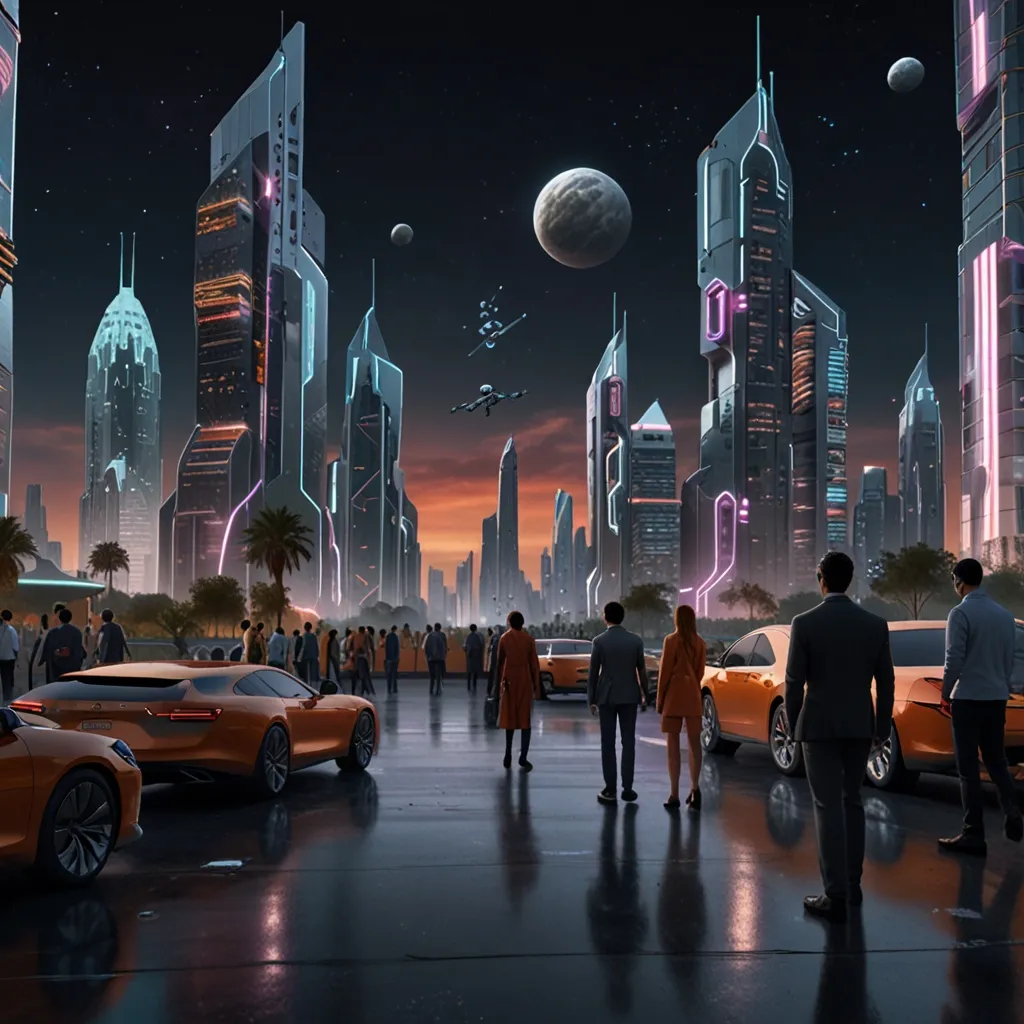
Predicting the future is famously challenging. Technology rarely advances at a steady pace; instead, it accelerates, often outpacing our wildest imagination. Despite this unpredictability, past predictions that seemed outlandish at the time have proven remarkably accurate.
Take Jules Verne, for example. In 1865, he predicted that humans would travel to the moon, specifying that three people would launch from Florida and even describing weightlessness in space. He had no way of knowing any of this 150 years ago. Similarly, in 1909, Nikola Tesla foresaw the widespread use of personal wireless devices, a vision that aligns uncannily with today’s smartphones and tablets.
These predictions were dismissed as absurd when they were made but have since come true. Now, let’s explore some predictions from today’s leading thinkers that may seem just as far-fetched.
For one, Nadia Solomon from the University of Geneva predicts that CGI will eventually replace most actors in movies, with only main characters and top stars performing live. This trend has already begun, as seen with movies like Avatar.
Another interesting forecast is that we may stop shopping for groceries in person. Drones could deliver food and other items directly to our homes. Amazon’s Prime Air is already testing this concept, having made its first successful drone delivery in the UK in 2016.
Professor Benjamin Clark from the University of Oregon predicts that self-driving cars will become the norm, reducing the need for personal car ownership. Companies might sponsor rides, and in exchange, passengers will listen to ads during their trips. These autonomous vehicles could be more affordable than owning a car.
In a futuristic twist, scientists are working on smart contact lenses that could allow us to access the internet, check emails, and watch movies. Samsung has already developed a prototype, currently being tested on rabbits.
Melanie Walker, a medical advisor to the World Bank, believes that hospitals may become obsolete. We’ll treat ourselves at home with help from telemedicine and tiny nanorobots designed to fight diseases inside our bodies. We might even use 3D printers to create biological organs.
The renowned scientist Stephen Hawking predicted that due to climate change, epidemics, and population growth, Earth could become virtually uninhabitable by 2115, necessitating human relocation to other planets.
Bill Gates envisions that robots and AI will displace millions of jobs within the next 20 years. To manage this transition, he proposes taxing corporations that use robots and applying these funds to human retraining programs.
Ray Kurzweil, a well-known futurist, believes that within 30 years, we may be able to communicate with deceased relatives through virtual reality. By using nanobots to extract memories and thoughts, and then feeding this data into a computer, AI software could mimic the personalities of our departed loved ones, enabling lifelike interactions.
According to nanotech pioneer J. Storrs Hall, by 2045, nanoscale robots called foglets could transform into any object on command, much like the shifting robots in Terminator 2 and Terminator 3.
Lastly, British futurist Ian Pearson predicts that by 2050, neurotechnology will allow people to communicate through thoughts. By embedding computer chips in our brains, we could connect to a quantum cloud and share thoughts directly, fundamentally changing human interaction.
These predictions may sound far-fetched today, but so did many past predictions that have since come true. What do you think? Will these futuristic visions come to pass, or are they just speculative fiction?