Did you know that if you lined up all the blood vessels in your body, they’d stretch an astonishing 95,000 kilometers? Every day, these vessels carry the equivalent of over 7,500 liters of blood, although it’s the same four or five liters being recycled, delivering oxygen and essential nutrients like glucose and amino acids to the body’s tissues.
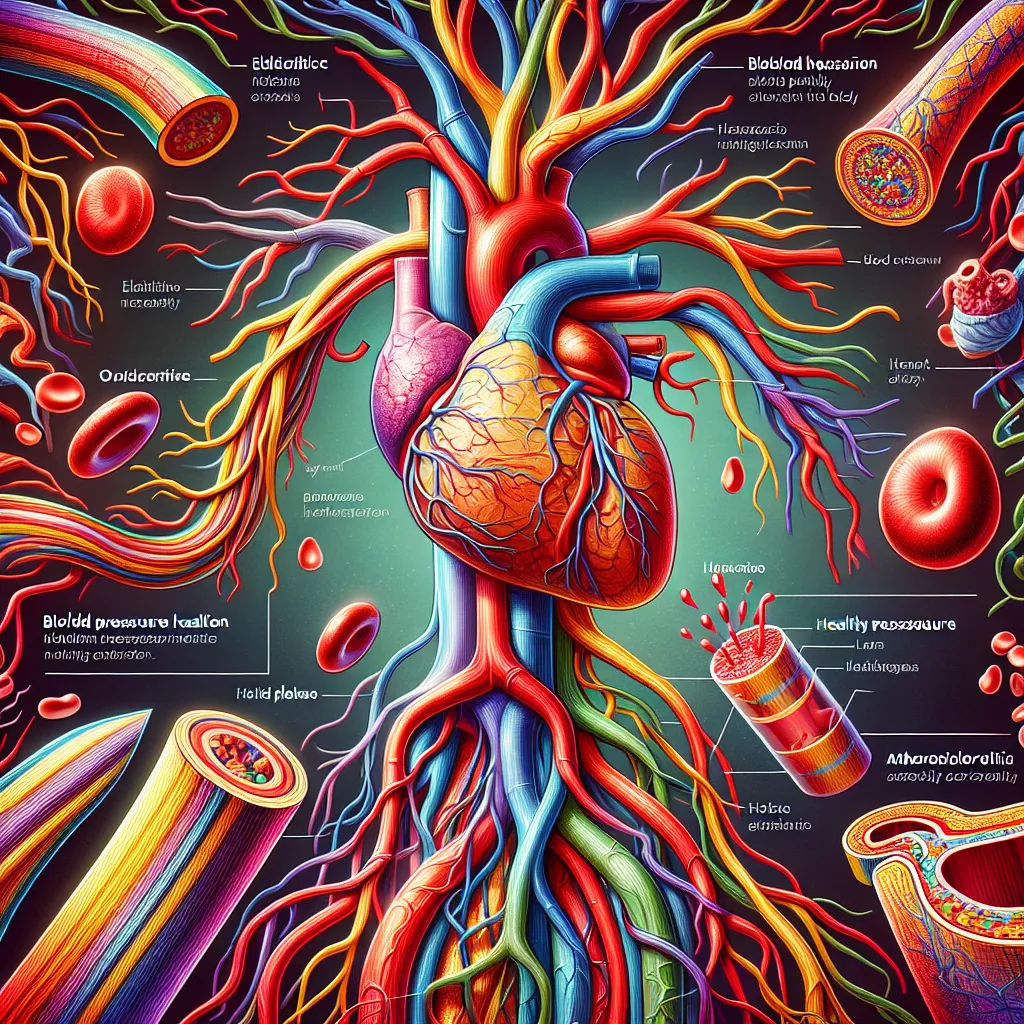
As blood flows through the arteries and veins, it exerts pressure on their muscular walls, known as blood pressure. This pressure fluctuates with the heartbeat. When the heart contracts to pump blood, known as systole, the pressure peaks—this is systolic blood pressure. During rest between beats, or diastole, the pressure drops to its lowest point, called diastolic pressure. For a healthy person, systolic pressure ranges between 90 and 120 millimeters of mercury, and diastolic pressure falls between 60 and 80. A normal reading is slightly below 120 over 80.
Our blood vessels, much like a plumbing system, can face increased force due to various factors. Thicker blood needs more pressure to move, making the heart work harder. A high-salt diet can also raise blood pressure by increasing blood volume through water retention. Stress causes the release of hormones like epinephrine and norepinephrine, which constrict blood vessels, further ramping up pressure.
Though blood vessels can usually handle these ups and downs thanks to elastic fibers in their walls, persistent high blood pressure—known as hypertension, which is consistently above 140 over 90—can lead to serious issues. The additional strain can cause small tears in the arterial walls. These tears then attract inflammation responders like white blood cells, along with fat and cholesterol, eventually forming a plaque that hardens the arteries, a condition called atherosclerosis.
Atherosclerosis can be dangerous. If a plaque ruptures, a blood clot can form and block the artery, cutting off oxygen and nutrients to cells downstream. In coronary arteries, this might trigger a heart attack as heart muscle cells start to die. If it happens in the brain, it results in a stroke. A procedure called an angioplasty can clear clogged vessels by threading a wire to the blockage and inflating a balloon to widen the passage. Sometimes a stent is added to keep the vessel open.
While arteries face constant pressure and the fluid they transport can be quite sticky, they are built to endure. The average healthy heart beats around 70 times a minute, totaling at least 2.5 billion beats over a lifetime. Despite the monumental task, your arteries are well-equipped to handle the stress.