How Did a Team Achieve the Impossible With Brad Pitt in Benjamin Button?
Transcending Boundaries in Cinema: The Digital Birth of Benjamin Button
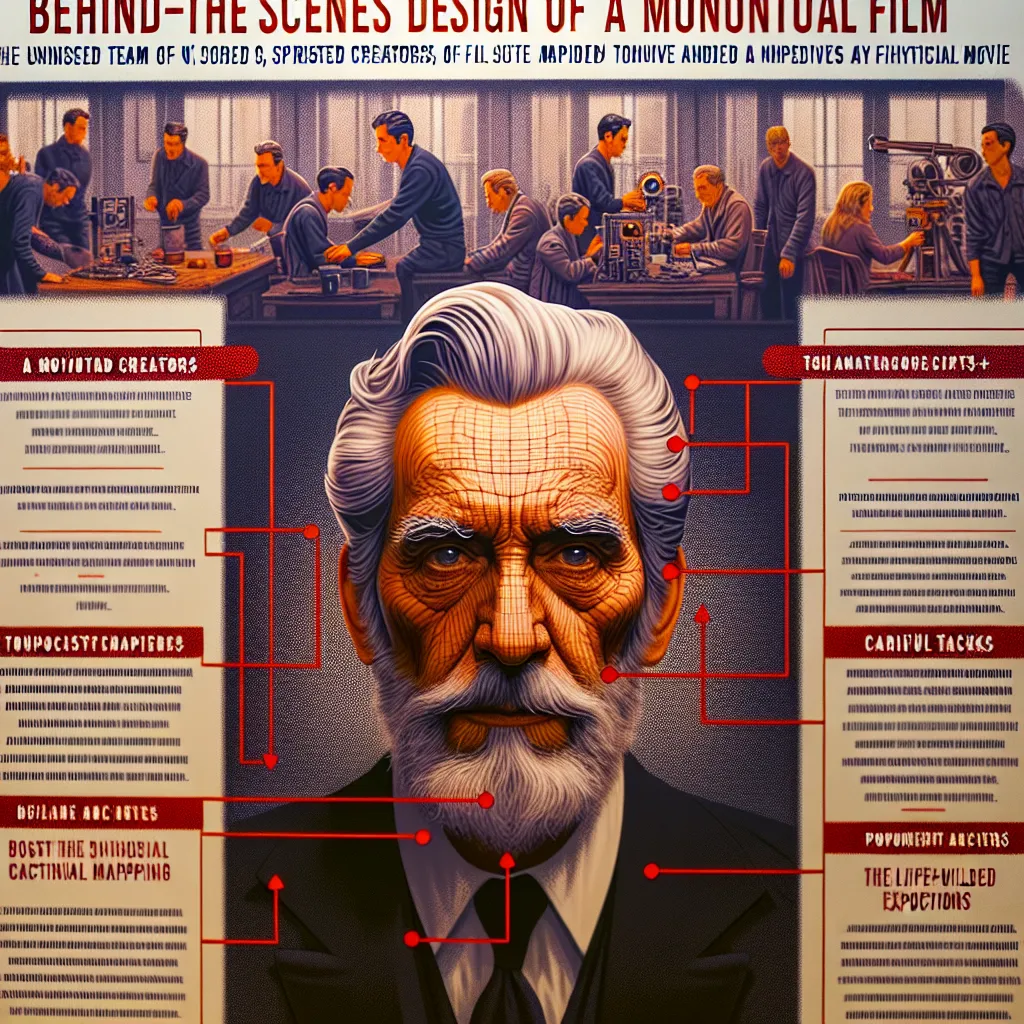
Imagine being part of a team of artists, technologists, and filmmakers, all working on a cinematic project that pushes the boundaries of what’s possible in visual effects. For four years, a dedicated group poured their hearts and minds into “The Curious Case of Benjamin Button,” a film that achieved a groundbreaking feat in computer visualization.
The story of Benjamin Button—based on an F. Scott Fitzgerald short story—follows a man who ages in reverse, born old and growing younger as the years go by. Initially, the project seemed unattainable. When pitched in the early ’90s, even Ron Howard, the director at the time, had to admit defeat as the technology simply wasn’t there. Fast forward a decade, and the infamous David Fincher takes the reins. Fincher is a man of bold visions and a refusal to accept limits.
Here’s where it gets wild: Brad Pitt, the global icon himself, had to appear as Benjamin from old age down to his youthful days, and all this without swapping actors or relying on prosthetic makeup. The sophisticated solution? Fully digitize Brad Pitt’s head for the first hour of the film. This wasn’t just any digital render; it was about capturing human essence down to the smallest tick and wrinkle.
To pull off this ambitious task, the team first delved into motion capture, a technology where reflective markers are placed on a person’s body to capture their movements. However, they quickly realized that wasn’t enough. The sophisticated nuances of skin and muscle movement were lost between those markers. So, they ditched the old methods and adopted ‘Contour’, creating a detailed 3D surface capture of faces.
The breakthrough moment came when they used Contour to capture a complete 3D database of Brad Pitt’s facial movements, effectively mapping his every expression. But capturing Brad’s youthful expressions wasn’t enough—they needed to age him by nearly half a century. This is where legendary makeup artists Rick Baker and Kazu Suji stepped in, creating life-like busts of an aged Brad Pitt. These were scanned into the computer, resulting in a faithful replica aged to perfection.
The next challenge was filming. Actors donning blue hoods replaced Brad’s body across various scenes, which allowed for easy editing. Brad then carefully mimicked these scenes in a controlled environment, capturing his intricate facial performances. This footage was painstakingly analyzed and used to drive the digital model of Benjamin, preserving the authenticity of Brad Pitt’s performance.
Creating Benjamin wasn’t just about getting the face right. The eyes, often said to be the window to the soul, demanded focused attention for two years. The mouth and even the tongue had separate teams to ensure authenticity in speech and expression. This meticulous attention to detail transcended the digital creation, making Benjamin not just a visual effects marvel but a believable human character.
The culmination was an emotion-captured journey where the digital Benjamin exhibited lifelike performances, able to walk, talk, run, and even cry as naturally as any human. Over 155 people worked tirelessly for two years, accomplishing what once seemed impossible—and, in doing so, forever changing the landscape of visual effects.