How Do Carbon Bubbles in Your Breakfast Fuel Your Day?
The Marvelous Carbon Dance Behind Your Morning Crunch
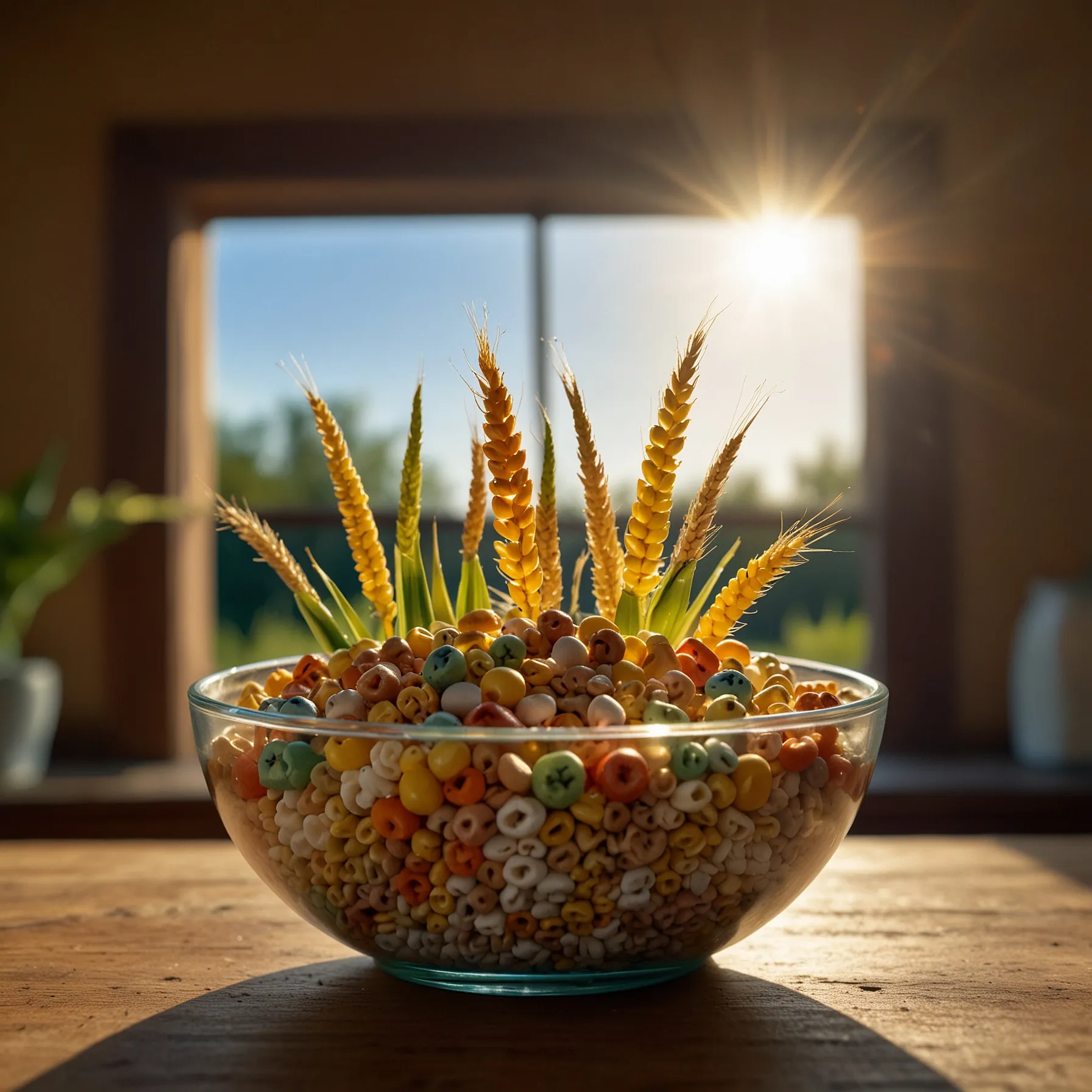
Imagine starting your day with a big bowl of Carbon Crunchies. As you shovel down spoonfuls, you’re buzzing with energy. But have you ever wondered how that energy makes its way into your cereal?
It all starts with plants like wheat or corn, which are packed with sugars. These sugars are formed thanks to carbon, which plants absorb as carbon dioxide (CO2) from the air. So how does a plant turn CO2 gas into glucose, a six-carbon solid? The answer: photosynthesis.
Photosynthesis operates in two main phases. First, sunlight is captured and turned into energy in the form of ATP (adenosine triphosphate). In the second phase, known as the Calvin cycle, this energy is utilized to convert CO2 into sugar. Think of it as nature’s tiny, sustainable factory.
The raw materials are CO2 and ribulose biphosphate (RuBP), a five-carbon molecule. The enzyme rubisco kicks off the process by joining a carbon from CO2 to the RuBP chain, creating a six-carbon structure. This quickly splits into two three-carbon phosphoglycerates (PGAs).
ATP and another molecule called NADPH then energize and modify these PGAs into glyceraldehyde 3-phosphates (G3Ps). To make glucose, which requires six carbons, the Calvin cycle needs six CO2 molecules, creating twelve G3Ps and thus enough carbon to build glucose and regenerate RuBPs.
Out of twelve G3Ps, two go on to form glucose, while the remaining ten are repurposed to recreate RuBPs. This regeneration is crucial to keep the cycle running smoothly, ensuring a continuous supply of sugar for energy, like that powering you through your breakfast.
Nature’s cycles, such as the Calvin cycle, are incredibly efficient, constantly reusing and recycling materials to make the most of available resources. This efficiency is why cycles, rather than linear processes, dominate nature. They create valuable feedback loops that sustain life by maximizing resource use.
Your bowl of cereal stands as a testament to the natural cycles converting carbon dioxide and sunlight into the energy fueling your day. So next time you munch on those Carbon Crunchies, appreciate the complex, cyclical dance of nature that brought them to your table.