science

How Did a Newlywed’s Kitchen Accident Revolutionize First Aid?

From Wedding Woes to Household Heroes: The Unexpected Journey of Earle and His Iconic Band-Aid

How Did a Newlywed’s Kitchen Accident Revolutionize First Aid?

In the bustling 1920s, Johnson and Johnson was already making a name for itself with its groundbreaking sterile cotton gauze dressings. These dressings were sealed against germs, a first in the industry. Earle Dickson, an employee at the company, had just gotten married. His new wife had a knack for getting minor cuts and burns during her daily chores.

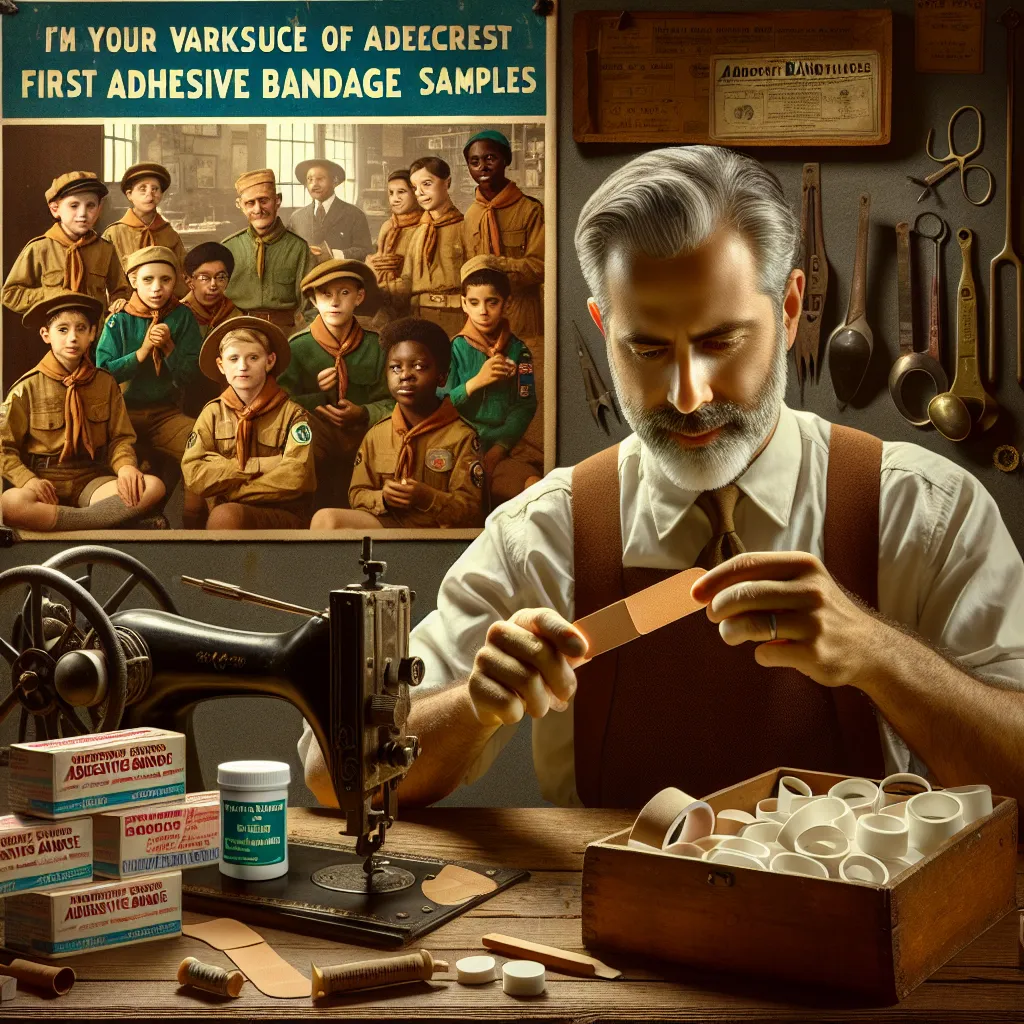
The gauze dressings from Johnson and Johnson were too large for these small injuries. Earle, thinking on his feet, cut a small piece of the sterile gauze and attached it to her finger with an adhesive strip. He found himself making these small bandages so often for his wife that he decided to come up with a better solution.

Earle created a method to produce these bandages more efficiently. To prevent the adhesive parts from sticking together, he lined them with a crinoline fabric. This clever innovation did not go unnoticed by Johnson and Johnson, and they began producing Earle’s invention.

To introduce this new product to the public, they made a smart marketing decision. They started distributing free Band-Aids to Boy Scout Troops all across America. This strategy worked wonders, and Band-Aids quickly became a household staple.

Since then, it’s estimated that Johnson and Johnson has produced more than 100 billion Band-Aids, solidifying their place in first-aid history.




Similar Posts
Blog Image
Could You Imagine Living Without Words? How Aphasia Reveals the Power of Language

Connecting the Threads of Language: Aphasia’s Hidden Battleground

Blog Image
Is Our Universe Teetering on the Edge of a Quantum Catastrophe?

Our Universe Walks a Tightrope Between Existence and Annihilation

Blog Image
Virtual Reality: Beyond Gaming - Transforming Therapy, Robotics, and Daily Life

Virtual reality evolves beyond gaming, revolutionizing therapy, robotics, and remote operations. It offers immersive experiences, helps overcome phobias, and enables control of complex machinery. VR's potential spans healthcare, manufacturing, and everyday life.

Blog Image
Ever Wonder How Geckos, Elephants, and Mushrooms Share Secrets?

Universal Blueprint: The Cellular Symphony Connecting All Life

Blog Image
Did You Know the Treadmill Was Invented as a Form of Punishment?

From Punishment to Popularity: The Unexpected Evolution of the Treadmill

Blog Image
HyEdit: The Next Evolution in Genome Editing Technology

HI-Edit combines haploid induction with CRISPR, revolutionizing crop breeding. It accelerates trait development, enhances sustainability, and promises drought-resistant, disease-fighting plants. This technique could transform agriculture, addressing global food challenges efficiently and eco-friendly.