Did Vikings Simplify Our Quirky English Plurals?
When Vikings Streamlined Our Quirky Language: The Evolution of English Plurals
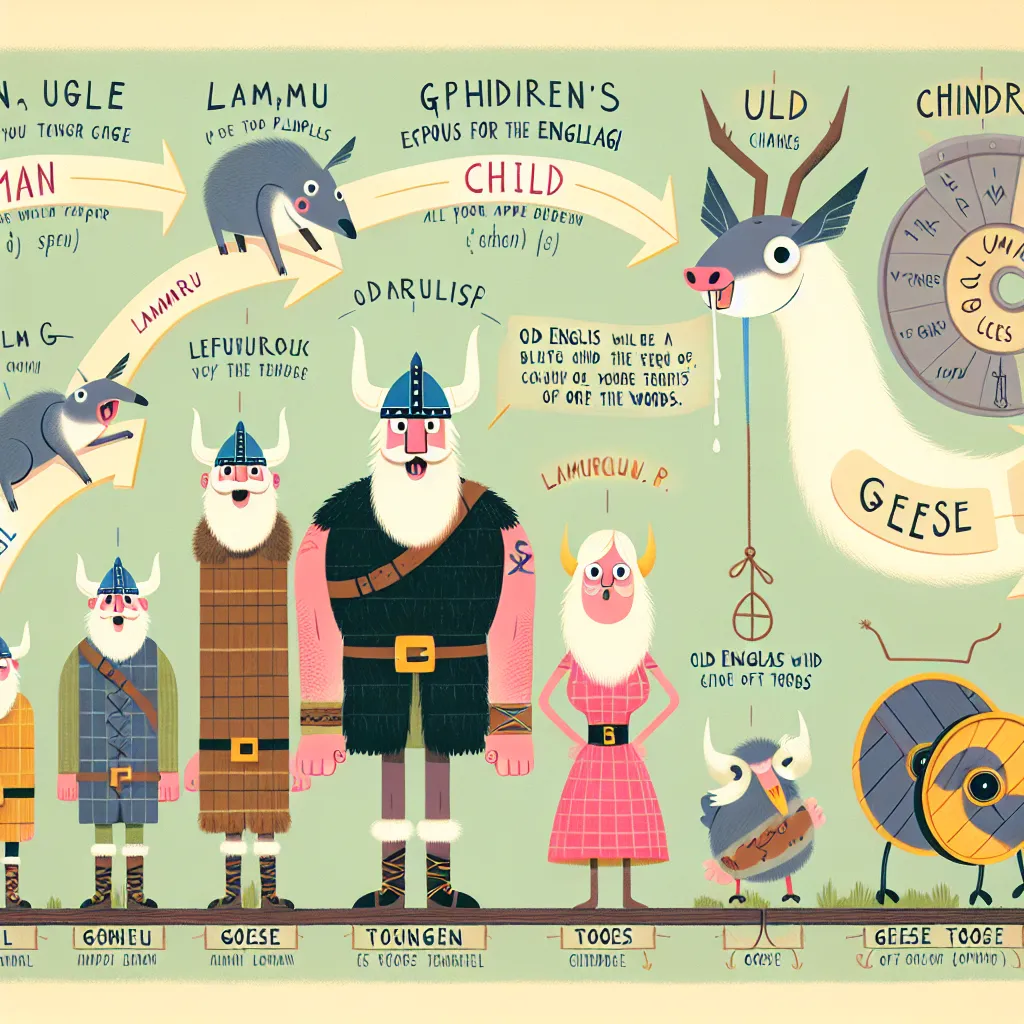
English is a quirky language—for example, adding an ‘S’ to make something plural usually works fine. One cat becomes two cats. Simple, right? But then, you come across exceptions like man to men, and woman to women. And geese, not gooses. Our language has a lot of these odd quirks!
A thousand years ago, English was even harder to learn. It and German were effectively the same language way back then. Over time, however, they drifted apart, each developing its own strange rules. In Old English, objects had genders—forks were female, spoons were male, and tables were neutral. This meant knowing the gender of every little thing, on top of the word’s meaning.
Nowadays, we only deal with a few bizarre plurals. Yet, in Old English, many plurals were strange and unpredictable. Imagine a world where lots of goats were called ‘gat’ or a bunch of oak trees were ‘ack.’ Instead of simply adding ‘S’ for plurals, Old English folks had to remember specific words. Often, the ending change wasn’t straightforward. For instance, one child becomes children today; back then, lambs were ‘lambru,’ eggs were ‘eggru,’ and so on. Sometimes, a word didn’t change at all, like ‘sheep.’ They had ‘house’ for more than one house, and ‘toungen’ for tongues!
But why did all these odd rules change? Blame the Vikings. When they invaded England in the 8th century, they brought their Norse language. Being adults, they had trouble mastering English’s strange rules, just like learning any new language as an adult. They found it easier to simplify things. For plurals, they stuck an ‘S’ at the end of most words. Over time, as they married and settled, their streamlined version mingled with Old English, transforming it to what we use today. Now, nobody says ‘doora’ for doors or ‘handa’ for hands. Most plurals became simpler, though some stuck around due to habitual use, like children and teeth.
Thanks to the Vikings, English today is much more logical. Just imagine if, for a week or two, we had to revert back—it’d be a wild ride!