Baldur, the son of Odin and Queen Frigg, was a beloved god in Asgard. Known as the God of truth and light, his presence in the hall of Breidablik brought comfort to everyone. But Baldur was troubled by nightmares predicting his own death.
Queen Frigg, determined to protect him, traveled across the nine realms to gain promises from all living things to not harm her son. She succeeded, except for one small oversight: mistletoe. It seemed too insignificant to be a threat.
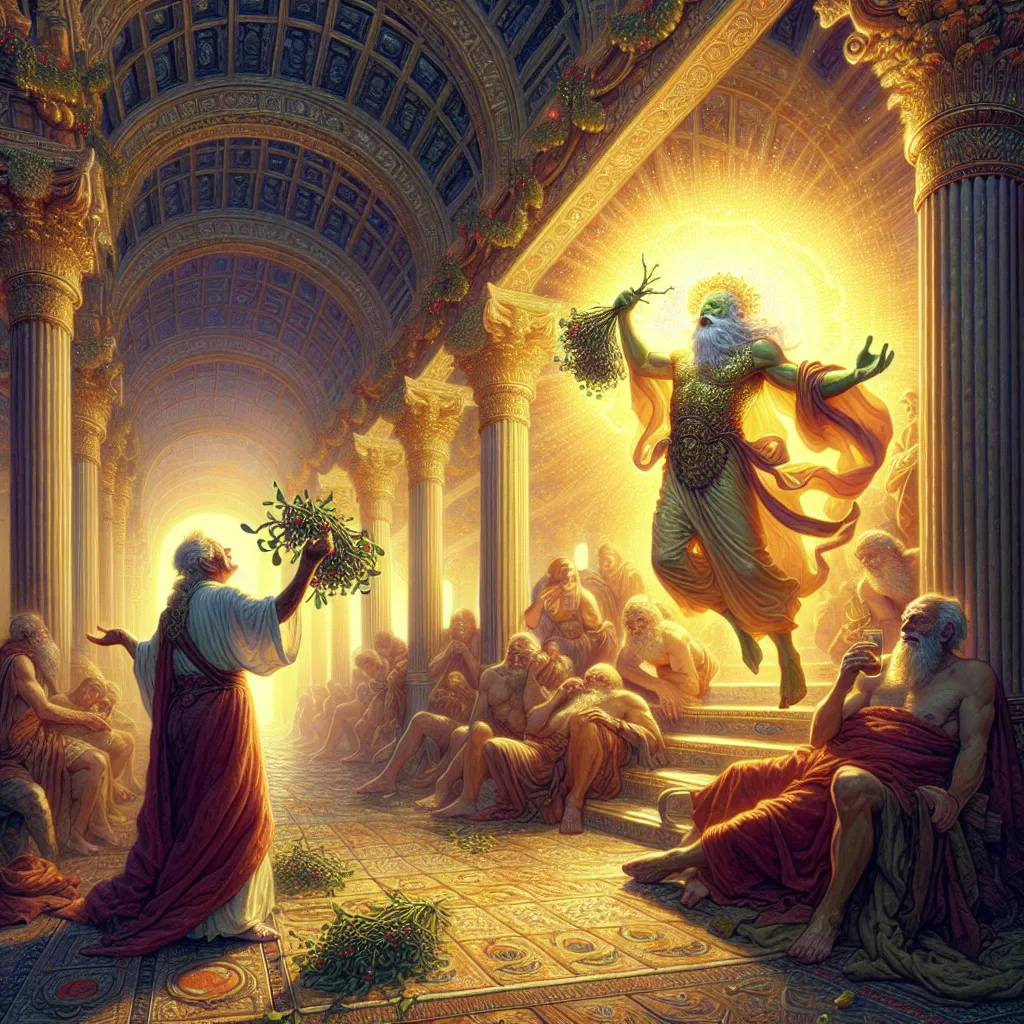
During a celebratory feast, where the gods marveled at Baldur’s newfound immunity, Loki, the trickster god, grew annoyed. Disguised as an old woman, he tricked Frigg into revealing her one omission. Loki then found a sprig of mistletoe and handed it to Baldur’s blind brother, Hodur, guiding his aim. The mistletoe struck Baldur, killing him instantly.
The death of Baldur cast a shadow over the nine realms. Amid the sorrow, Hermod, a brave god, volunteered to retrieve Baldur from the underworld. He embarked on a perilous journey, finally reaching Hel, who ruled the underworld. She agreed to release Baldur if every living thing mourned his death.
Hermod raced back, collecting the tears of grief from all beings. He succeeded until he encountered a giant who refused to weep. This giant was Loki in disguise, ensuring his trickery remained hidden.
Hermod’s mission failed due to Loki’s deceit. Left with no choice, the gods captured Loki, binding him with a poisonous serpent, ensuring he remained imprisoned until the end of days for his sinister actions.