Can Animals Really Grieve, or Are We Just Imagining It?
When Animals Bear the Weight of Grief Loosely Mirrored in Human Experience
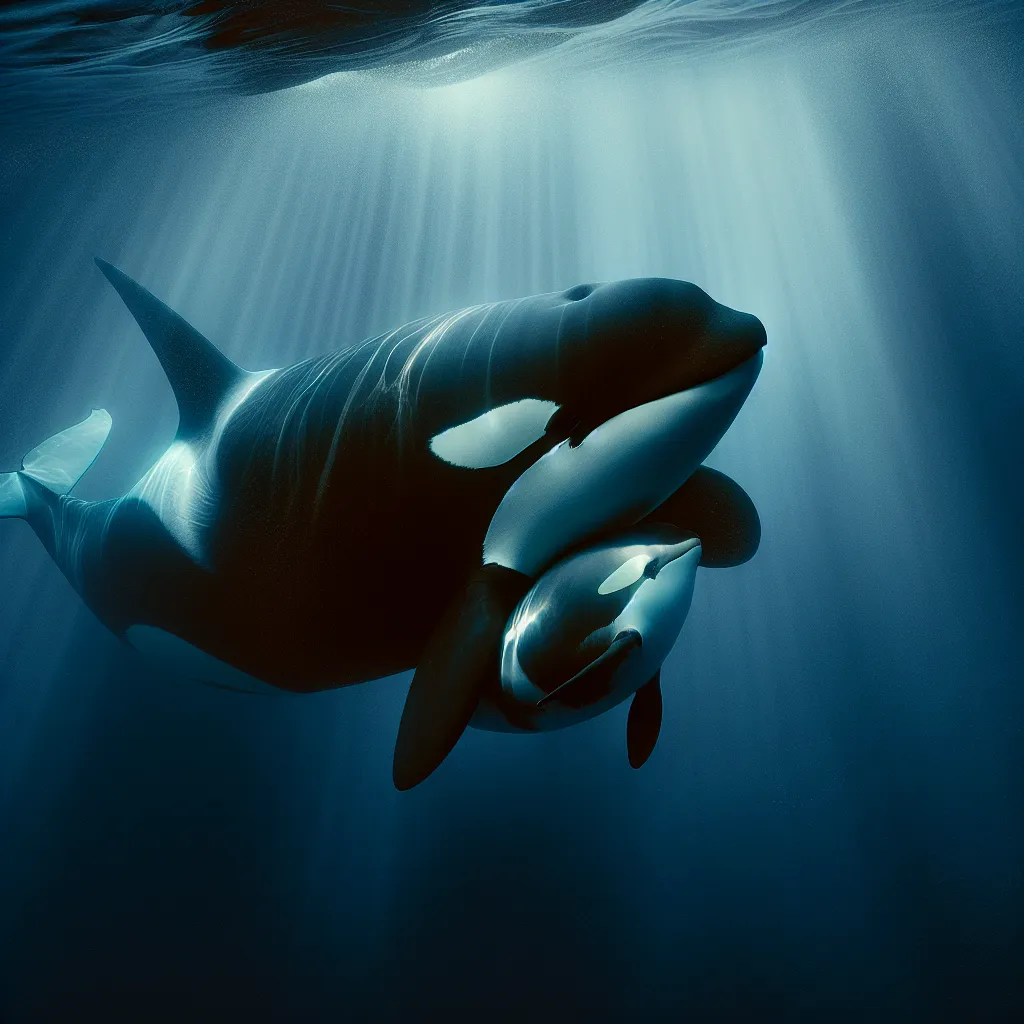
Back in 2018, an orca named Tahlequah gave birth, but her newborn daughter died within an hour. Instead of leaving her, Tahlequah carried her daughter’s body for 17 days, covering over 1,600 kilometers. She even dived to retrieve the body whenever it slipped away, although it was already deteriorating. This behavior was unusual since orcas generally don’t act this way. So, it raised a significant question: Was Tahlequah mourning, or just confused?
The idea that animals can grieve isn’t new. In 1871, Charles Darwin suggested that animals could experience a wide range of emotions, including grief. Yet, many scientists have been cautious about projecting human emotions onto animals. They considered that animals might show strange behaviors after a death for other reasons. For a long time, it was thought that humans were unique in feeling emotions while animals were just surviving.
Challenges to this notion began picking up steam in the 20th century. One notable example is Koko, a gorilla who had learned some sign language. When her kitten companion died, she expressed distress and later made signs for “cry,” ” sad,” and “frown” while looking at a photo of another kitten. This suggested that Koko might have felt grief.
There have been other touching stories too. In 2003, an elephant named Eleanor collapsed, and another elephant, Grace, tried to help her stand. After Eleanor died, several elephants gathered around her body, showing behaviors that resembled mourning. Elephants have even been observed carrying the remains of their deceased family members.
In another case from 2010, a giraffe calf with a deformed foot died after living for just four weeks. On the day the calf died, 22 female giraffes and four juveniles nuzzled the body. The calf’s mother stayed by its side for days, even after predators had scavenged it, indicating she was deeply affected.
Researchers have even started using scientific methods to assess how animals respond to death. In 2006, a study analyzed the stress hormones in baboon fecal samples. Female baboons who had lost a close relative had significantly higher stress hormone levels. They coped by increasing their grooming activities and broadening their social networks, which seemed to help them return to normal hormonal levels within two months.
Primates have also shown complex behaviors when dealing with the deaths of their offspring. Some mothers alternated between cannibalizing and caring for their dead children, suggesting conflicting emotions.
Our understanding of animal emotions, especially grief, is still very limited. More research is needed to better understand how animals experience these emotions. But for now, this raises a crucial question: Should we assume animals might be capable of grieving and treat them as such, or assume they don’t and risk causing harm? This debate has real implications, such as whether orcas should be kept in captivity or if dairy cows should be separated from their calves. Until we have more data, it’s a pressing moral dilemma.