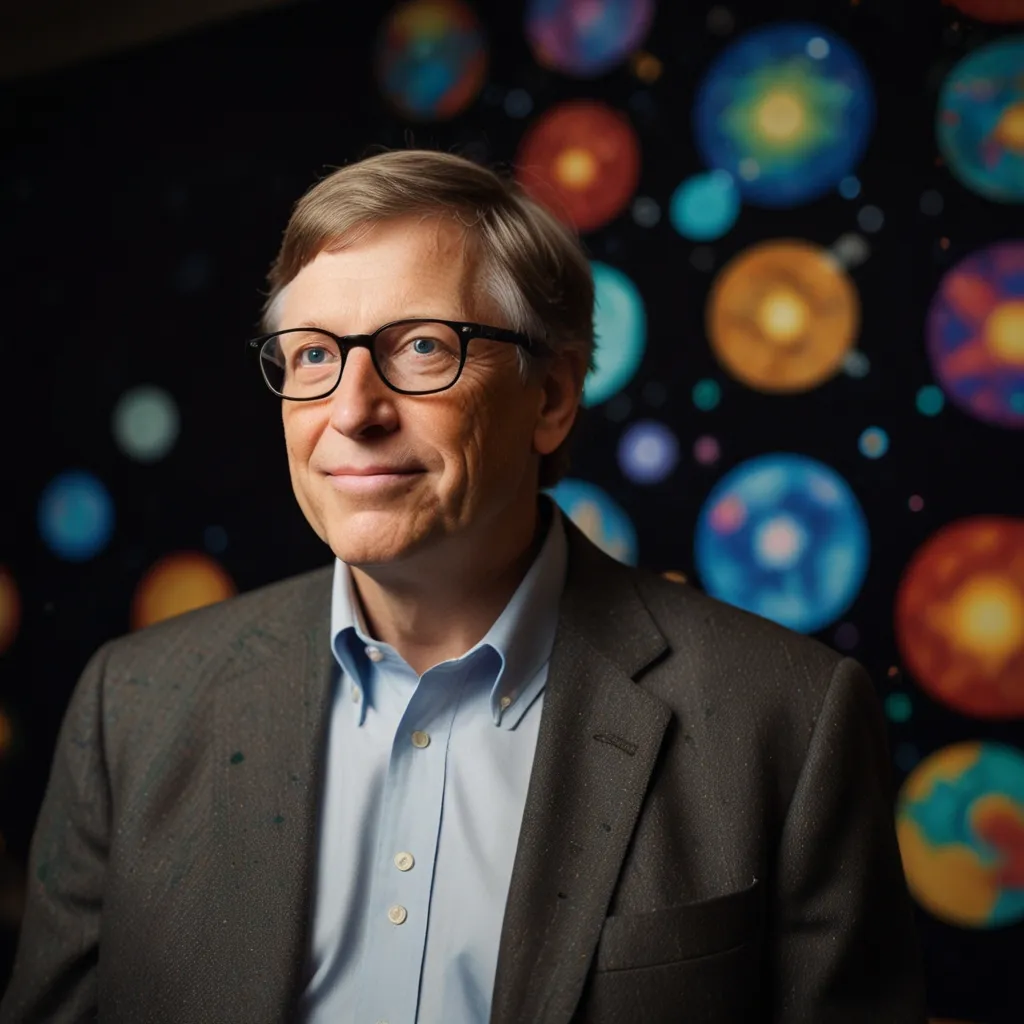
Imagine a universe where you’re as rich as Bill Gates, married to Kate Upton, and as admired as Oprah Winfrey. What if I told you there’s a parallel universe where all these things are true about you? While it may sound like science fiction to many, physicists embrace the idea of parallel universes through their theories.
Parallel universes aren’t just wild speculations. They’re rooted in serious theories like string theory and the many-worlds interpretation of quantum mechanics. String theory suggests the existence of ten dimensions, potentially giving rise to a multitude of universes. Although most of these would have properties so different that life couldn’t exist, the concept lays the groundwork.
Even more intriguing are the ideas behind the many-worlds interpretation. This theory, supported by big names in physics like Max Tegmark and Brian Greene, proposes that every decision splits the universe into different branches. In each branch, different outcomes unfold. In one version, you could be the president or as wealthy as Bill Gates. The idea stems from quantum mechanics, where particles exist in multiple states simultaneously until observed.
Hugh Everett, in his Ph.D. thesis in 1957, proposed that the wave function doesn’t collapse. Instead, each possible outcome creates a new universe. This means that for every decision you make, a new reality is born where alternate choices were made. This bold idea changes our understanding of reality, suggesting an endless number of parallel versions of ourselves.
The implications for our sense of self are profound. If each decision spawns a new version of you, what does it mean to be “you”? Physicist David Wallace argues that consciousness might be tied to a single thread of reality, but this isn’t something physics can currently explain.
Testing these theories is challenging. One thought experiment proposed by Max Tegmark, called quantum suicide, uses quantum principles to explore survival across parallel universes. In theory, your consciousness would always end up in the universe where you survive. However, this isn’t a practical method for proving the existence of parallel worlds.
Instead, Tegmark suggests we can test the many-worlds interpretation through advanced quantum experiments and quantum computing. If quantum mechanics holds up under these tests, we might have to accept the idea of parallel universes, regardless of how fantastical it seems.
In conclusion, while the concept of parallel universes challenges our understanding of reality, it remains a serious scientific hypothesis worth exploring. As our knowledge of quantum mechanics deepens, we might one day affirm that somewhere out there, another you is living a completely different life.