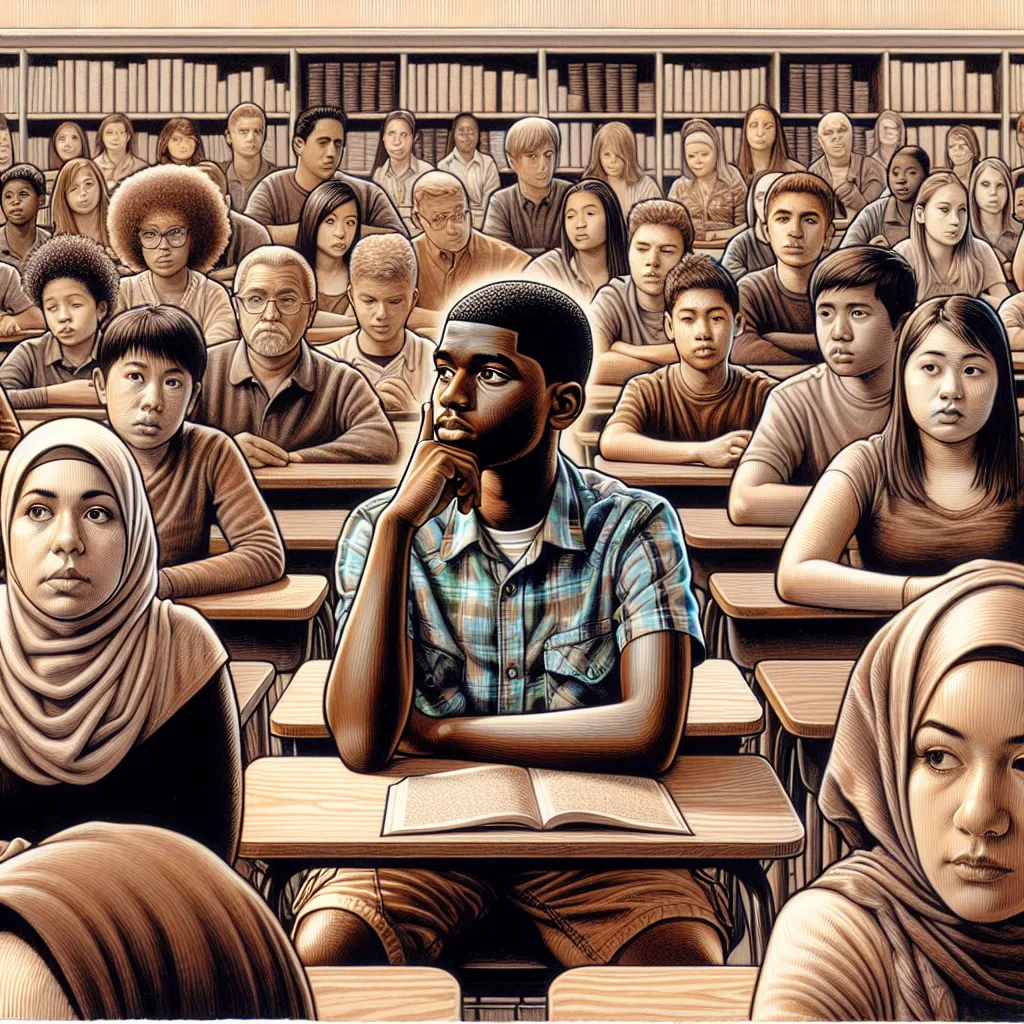
In 2007, researchers surveyed over 180 teachers to see if they held stereotypes about students from three racial groups. The results were telling and a bit unsettling. They labeled Black students as aggressive and stubborn, white students as selfish and materialistic, and Asian students as shy and meek. However, one stereotype seemed to stand out: teachers commonly saw Asian students as more industrious, intelligent, and gentle than the others.
At first glance, this stereotype might seem positive compared to the others. But actually, it can cause a surprising amount of harm—both to those it describes and those it doesn’t. This stereotype is known as the “model minority” myth. Versions of it emerged in the mid-20th century, initially to describe Chinese Americans. After World War II, it expanded to include Japanese Americans, who were praised for overcoming their mistreatment in U.S. incarceration camps and integrating into American society. Incarcerees were labeled as compliant, diligent, and respectful of authority. Over the decades, “model minority” became a label for many Asian populations in the U.S.
The full story is more complicated. During World War II, the U.S. government tried to “Americanize” Japanese Americans through English classes, patriotic exercises, and lessons on white American society. When incarcerees were released, they were encouraged to avoid their own cultural practices and integrate into white society. To make this transformation seem real, the government pushed media coverage to change the public image of Japanese Americans from suspected traitors to success stories. The term “model minority” first appeared in a 1966 article.
These articles did more than praise Asian Americans; they also criticized “problem minorities,” primarily Black Americans. Politicians threatened by the Civil Rights Movement used this narrative to discredit Black Americans’ demands for justice and equality. They painted a false picture of Asian American success to make struggling Black communities look inferior. This narrative drove a wedge between Black and Asian Americans, erasing their shared history of fighting oppression and pitting them against each other. It reinforced a racial hierarchy, with white Americans on top.
People who believe in the model minority stereotype often compare the imagined strengths and weaknesses of different racial groups. This type of thinking places value on how well those groups meet standards usually set by a white majority. The stereotype implies that marginalized groups that are compliant and respectful of white authority deserve tolerance, while those that challenge the status quo do not.
This stereotype also negatively impacts the Asian individuals it describes. Due to a psychological phenomenon known as stereotype threat, group members often feel pressured to avoid confirming negative stereotypes. This pressure can also arise around seemingly positive stereotypes, leading to poor performance. Teachers might overlook Asian students who are struggling because they assume they’ll naturally excel. Social programs for Asian communities are often cut or ignored because of the assumption that they need less support than other disadvantaged groups. The favorable image created by this stereotype makes it harder to recognize racially motivated violence and discrimination against Asian Americans.
Moreover, this stereotype lumps all Asians into one group, ignoring the diverse backgrounds and unique histories of discrimination within the community. While the model minority label might seem to benefit Asian populations initially, it ultimately reduces them to a one-dimensional image, preventing a deeper understanding of their history, struggles, and triumphs. Acknowledging and challenging these labels is essential for building coalitions across communities and eliminating harmful stereotypes for good.