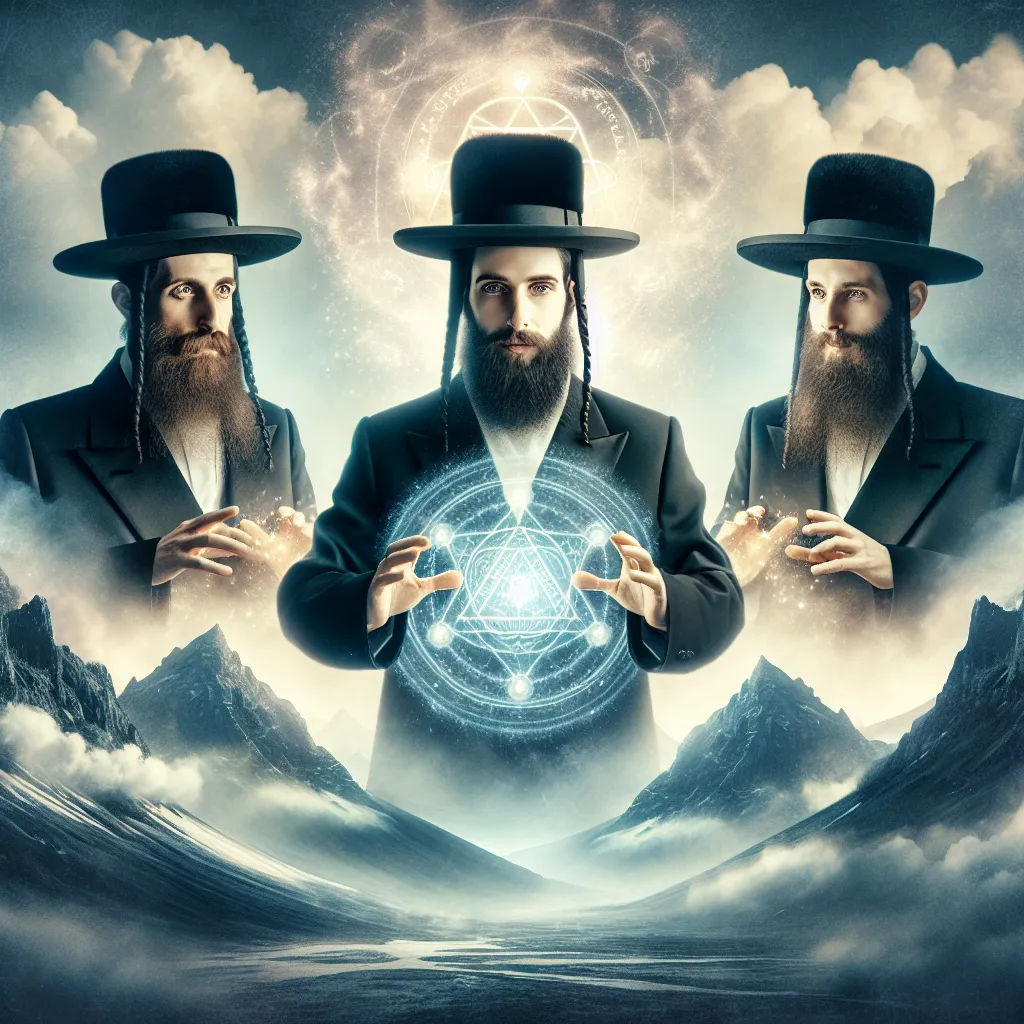
When people hear “Hasidism” or think about the Hasidic movement, they usually envision men in black hats and strict religious attire. Known as ultra-Orthodox Jews, these communities are often highlighted in Netflix series and movies. They are associated with rigorous, conservative religious practices. But many don’t realize Hasidism is also deeply mystical, rooted in the Kabbalah and Jewish mysticism.
The Hasidic movement, founded by Rabbi Israel ben Eliezer, better known as the Baal Shem Tov, is much more intricate than it first appears. Baal Shem Tov means “Master of the Good Name,” a title given to individuals who used mystical methods such as prayers, incantations, and herbs for healing. While these ideas might not commonly be linked to Jewish practice, history tells a more complex story. What set the Baal Shem Tov apart was his widespread acceptance in his community, catalyzing a movement that remains influential in the Jewish world today.
Born around 1698 in what is now southwestern Ukraine, the Baal Shem Tov wasn’t initially a standout figure. His early life remains somewhat mysterious. However, in the 1730s, he retreated to the Carpathian Mountains and had significant spiritual experiences. Upon returning, he settled in the village of Medzhybizh, where his spiritual insights and teachings began to attract followers.
Although the Baal Shem Tov did not write much himself, his teachings were documented by his disciples. They reveal a background steeped in Lurianic Kabbalah, a form of Jewish mysticism developed in the 16th century by Yitzhak Luria. Central to the Baal Shem Tov’s teachings were concepts like the divine contraction, where God creates space within his infinite nature to allow the world to exist.
Two major themes in Hasidic theology are the imminent presence of God in the world and a monistic cosmology. Unlike many Jewish thinkers who saw God as a distant entity, the Baal Shem Tov believed God’s presence filled the world. He taught that one could experience this divine presence through spiritual exercises and forms of prayer.
A core concept in Hasidism is “devekut,” usually translated as “cleaving to God” or “union with God.” For the Baal Shem Tov, this was a deeply personal experience attained through contemplative practices and prayer. Though detailed methods aren’t extensively documented, the Baal Shem Tov emphasized authentic devotion and personal spiritual experience.
This deep personal connection gave Hasidism a unique appeal. It allowed for a more intimate relationship with God, breaking away from the hierarchical structures that usually reserved mystical experiences for the elite. This democratization of religious experience threatened traditional Jewish authorities but also made the movement widely popular.
Despite opposition, especially in places like Lithuania where figures like the Vilna Gaon launched attacks against it, Hasidism spread rapidly across Eastern Europe. Today, Hasidic communities are found globally, from New York to Israel. They remain deeply mystical and strict in their religious observance, defying the notion that mysticism equates to liberal or relaxed religious practice.
Understanding modern Judaism requires knowledge of the Hasidic movement. Its blend of intense spirituality and observance remains a significant force in the Jewish world today. Whether you’re intrigued by its mystical elements or its history of tension and integration, Hasidism offers a fascinating glimpse into one of Judaism’s most enduring traditions.