How Ancient Religious Wisdom Can Transform Your Environmental Impact and Save Our Planet
Explore how ancient religious traditions offer practical frameworks for environmental stewardship. From Buddhist interconnectedness to Islamic balance, discover timeless wisdom for modern ecological challenges and sustainable living.
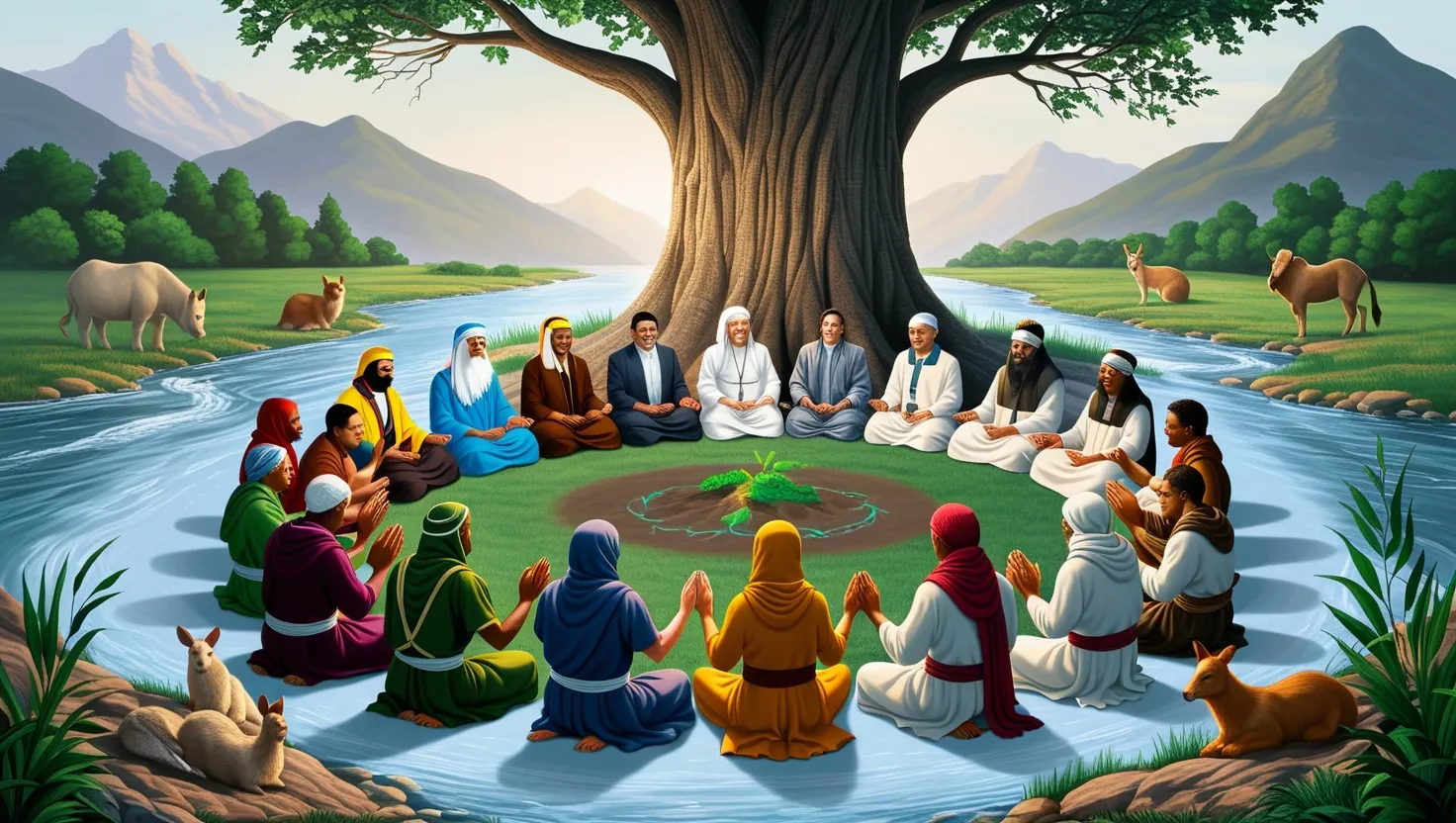
Let’s begin with a story—not the typical one about the environment as a resource or a problem, but a story about relationship. Across the globe, long before sustainable development became a buzzword, religious traditions have quietly gifted us with frameworks for living alongside—and caring for—the world that sustains us. These frameworks often remain hidden in plain sight, brimming with wisdom that can reshape our ecological future.
Picture this: in Haudenosaunee territory, every gathering starts with the Thanksgiving Address. It is a call and response, a centuries-old greeting to every part of creation, from the Earth and water to the animals and wind. Each is acknowledged as kin, each is thanked. This is not simply ritual; it builds a sense of responsibility, an understanding that we belong to a web of life. What happens when every morning begins with gratitude for the air you breathe and the soil beneath your feet? You might just start to act differently.
Buddhism offers another angle—one of interconnectedness. The idea that nothing exists in isolation, called Pratītyasamutpāda, is foundational. Imagine realizing that the harm you do to your surroundings eventually returns to you, because all things are woven together. Monks filter water not just for purity, but to avoid harming even the tiniest beings. This mindfulness of impact shapes living spaces, diets, and habits, asking: How much do you notice the small lives your actions affect?
Have you ever walked through a sacred grove in India? Hindu traditions protect entire forests and rivers by naming them as homes of the gods. The Ganges is not just water; it’s a goddess. Mountains like Nanda Devi are living deities. This is more than myth; it’s a conservation strategy. When you make something sacred, people treat it differently. Would you clear-cut a forest if you believed it was literally the home of divinity?
Islam teaches stewardship, or Khalifah. Humans are seen as caretakers, not conquerors. The Quran insists on balance—Mizan—and warns against waste. Early Islamic societies set aside protected zones called Himā for grazing and water, long before national parks existed. These were not just legal decisions but acts of faith. How might we all act if we believed the Earth was a loan, not an inheritance?
Christianity, too, has roots in stewardship. Genesis tells us to tend and keep the garden. Saint Francis famously preached to birds, calling all creatures his brothers and sisters. Today, Christian groups lead movements for climate justice, framing environmental protection as a moral duty. What would it look like if loving your neighbor meant loving the Earth itself?
Jainism takes environmental respect to another level, with its principle of Ahimsa, or non-violence. Jains avoid harming any life, even plants, whenever possible. Monks walk barefoot to avoid crushing insects and eat only what is harvested without killing entire plants. Their lives are lessons in restraint. What would a world look like if we all minimized our harm, not just in word, but in deed?
Each tradition challenges the idea that nature is just a resource. Instead, they offer models of respect, responsibility, and restraint.
Here’s a famous block quote to reflect on:
“The Earth does not belong to us. We belong to the Earth. All things are connected like the blood that unites us. We did not weave the web of life; we are merely a strand in it.” — Chief Seattle
Let’s pause for a question: How would your daily life change if your faith or philosophy taught you that every living thing has rights?
Across religions, the notion of rights for nature is not new. Indigenous cosmologies often recognize trees, rivers, and animals as relatives. This is not just poetry; it is law—customs and rules designed to keep people and the environment in balance. When you believe you are borrowing the Earth from future generations, rather than inheriting it from ancestors, your approach to land and resources shifts. Do you ever think of yourself as a temporary caretaker, rather than an owner?
Buddhist monasteries keep gardens and manage forests with the same care they give to their people. They ask: What will happen if I take too much? What will be left for others? This mindfulness is contagious. Imagine a world where every community asks itself these questions before making big decisions.
Hindu worship often takes place outside, under trees, beside rivers. The outdoors is not a backdrop, but a participant in sacred life. Sacred groves remain islands of biodiversity, protected not by law but by reverence. What would happen if every city had sacred groves—places where people went to connect, reflect, and remember their place in the world?
Traditional Islamic societies managed water as a shared trust. Wells and springs were protected, not for profit, but for the common good. This was not charity; it was justice. If you woke up tomorrow and saw every resource as a shared trust, how would you act toward your neighbors?
Christian communities are rediscovering the power of creation care. Churches are planting trees, reducing waste, and advocating for policies that protect vulnerable communities from pollution. They argue that caring for creation is not optional for people of faith. What small action could you take today to care for your piece of the Earth?
Jainism’s ascetics, who own almost nothing and eat only what is freely given, are not relics of the past. They are living examples of radical simplicity. Their lives challenge us to ask: How much is enough? Could you imagine living with less, if it meant less harm to the world?
These traditions do not offer easy answers. They offer hard questions—questions that might change how you see the world and your place in it.
Let’s consider another block quote:
“In nature, nothing exists alone.” — Rachel Carson
Here’s a question for you: When was the last time you noticed your connection to the natural world, not just as a user, but as a participant?
Indigenous traditions remind us that reciprocity is not just a good idea—it’s a way of life. If you take from the land, you give back. This could mean planting trees, offering prayers, or simply leaving some for others. This is not just about survival; it’s about respect.
Buddhist teachings about mindfulness encourage us to slow down and notice. Not just what we do, but why we do it. When you choose to eat, to travel, to consume, do you see the invisible threads connecting your actions to the world? How would your choices change if you did?
Hinduism’s sacred rivers are not just symbols; they are living, breathing systems. People who live along the Ganges do not just worship her; they depend on her for life. When people see the river as mother, not pipeline, how does that change how they fight pollution?
Islam’s teachings about balance and justice extend beyond human communities to the natural world. If every act of waste is seen as a sin, every act of conservation as a virtue, how does that shape daily life? Can you imagine a world where wastefulness is taboo?
Christian leaders often remind us that the poor and vulnerable are the first to suffer from environmental degradation. If caring for creation is a way of loving your neighbor, what new responsibilities does that place on your shoulders?
Jainism’s commitment to non-violence asks more of us than we might be comfortable with. If you considered every choice for its harm, not its benefit, how would your life look? Could you live without the things that cause suffering to others, even in small ways?
Each tradition invites us into a conversation—not just with each other, but with the world around us. They do not promise easy fixes. They do not offer checklists. They offer questions, challenges, and new ways of seeing.
Here’s a final block quote to ponder:
“The greatest threat to our planet is the belief that someone else will save it.” — Robert Swan
Let’s close with a question: What small change could you make today, inspired by the wisdom of these traditions, to live more lightly on the Earth?
After all, perhaps the real wisdom is not in any one tradition, but in the willingness to listen—to each other, and to the world itself. That listening might just be the beginning of a better story.