How Did Neoplatonism Shape Islamic Thought into a Mystical Journey?
The Eternal Dance: Neoplatonism's Echoes in Islamic Mysticism and Philosophy
Neoplatonism has long been a powerhouse of influence on Western religions. Originating in late antiquity, figures like Plotinus and Proclus shaped its central ideas. This ancient philosophy remarkably echoed through Christianity, Judaism, and Islam. Let’s zoom in on how it found a substantial foothold in Islamic thought, from metaphysics to mysticism.
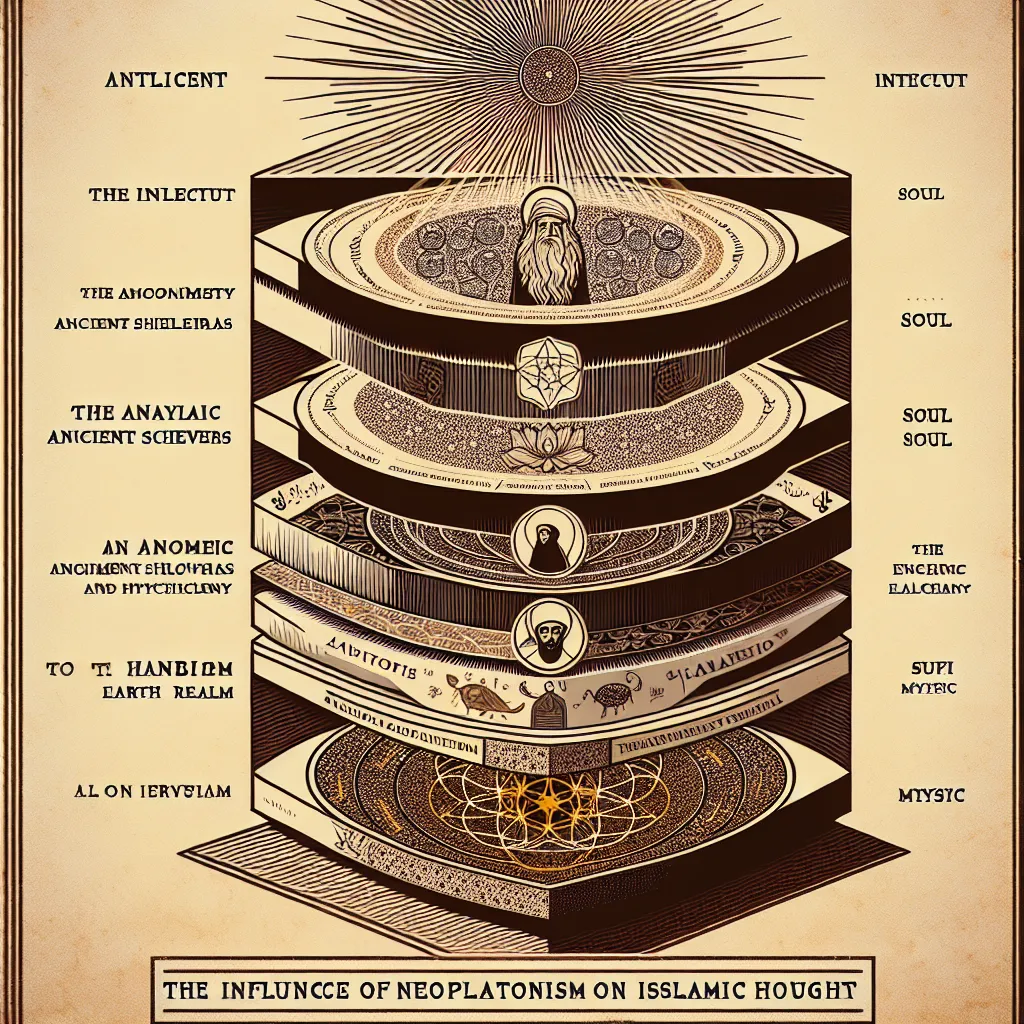
Neoplatonism paints a layered structure of existence, starting from the highest reality called “the One,” flowing into the “Intellect” or “Nous,” and then into the “Soul” before cascading into the material universe. Existence is seen as a journey from the One, through various levels of reality, back to the One. A return trip, inward and upward, becomes the pinnacle of human experience.
Islamic intellectual history provides a fascinating glimpse into this philosophical integration. After being exposed to translated Greek texts during the Abbasid Caliphate, Islamic thinkers like Al-Kindi, Al-Farabi, and Avicenna began seeing the parallels between Neoplatonism and Islamic teachings. Avicenna’s notion of God as the “Necessary Being”—the prime existence from which all other beings derive—has clear Neoplatonic shades. He described a series of intellects emanating from this necessary being, remarkably similar to the Neoplatonic framework.
Sufism, or Islamic mysticism, takes these ideas even deeper. Take Ibn Arabi, for example, who portrays the cosmos as God’s self-disclosure. This aligns seamlessly with Neoplatonism’s concept of ascending back to the divine source. The faithful Sufi turns inward, seeking annihilation in God’s reality, an echo of Plotinus’ mystical union with the One.
Throughout Islamic tradition, these philosophical ideas are not just confined to esoteric circles but permeate even the mainstream. Gazali’s “The Niche of Lights” likens divine reality to layers of light emanating from a singular source, reflecting Neoplatonic thought beautifully.
From philosophy to mysticism, Neoplatonism’s concepts have deeply influenced Islamic thinkers, who saw truth revealed both in ancient teachings and in Islam. This dynamic fusion has enriched the tapestry of Islamic metaphysics, theology, and mysticism, proving that ancient ideas can transcend time and culture to find new life in different traditions.