What Mystical Secrets Did Hermes Trismegistus Leave for Us to Discover?
The Mystical Blend of Magic, Philosophy, and Divine Wisdom in Human History
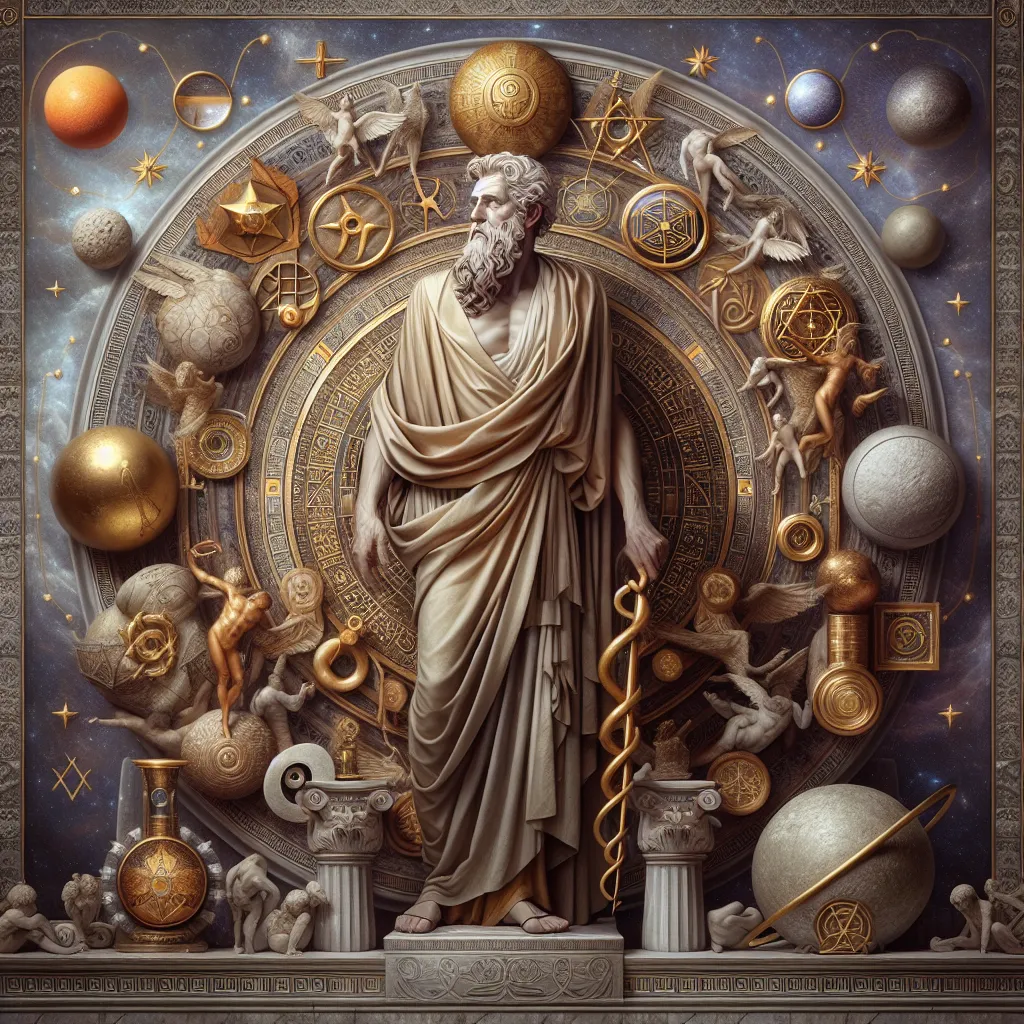
Hermes and Hermeticism—ever heard of them? These names pop up in history, religion, and philosophy, but many of us have only a vague notion about what they signify. If you think Hermeticism is all about magic or the Greek god Hermes, you’re not entirely wrong. However, there’s a lot more depth to this ancient mystical movement.
Hermeticism has intrigued philosophers and mystics for centuries. From figures like Proclus to Muslim philosophers and Renaissance thinkers like Marsilio Ficino, it’s had quite an influence. You’ve probably got that spiritual aunt who’s into all this “weird” stuff—Hermeticism is very much her jam. But how exactly has Hermeticism shaped the history of religion and philosophy? Turns out, quite a lot, which is why I’m dedicating this piece to unraveling this fascinating subject.
First and foremost, Hermeticism is a mystical, religious, and philosophical movement tied to an ancient collection of writings believed to be authored by Hermes Trismegistus. This tradition originated in Egypt during the Hellenistic and Roman periods, spanning roughly from the conquest of Alexander the Great in the late 4th century BCE to the 4th century CE.
Hermes Trismegistus is an enigmatic figure. He’s associated with several myths and legends, making him rather elusive. But it’s generally agreed that Hermes Trismegistus and the Hermetic texts have their roots in Egypt during the Hellenistic era. This was a time when Greek and Egyptian cultures were blending, particularly in religious contexts. Many Greek gods were merged with Egyptian deities, one notable example being Hermes combined with the Egyptian god Thoth.
Thoth was a popular deity in the Egyptian pantheon, associated with wisdom, writing, and the occult. Hermes in Greek mythology served similar roles, making their synthesis logical. The resulting figure, Hermes Trismegistus—often referred to as “thrice great”—became linked with a vast corpus of writings attributed to him.
Now, let’s get into the Hermetic writings themselves. These texts, collectively known as the Hermetica, are usually divided into two main categories: the technical and the philosophical Hermetica. The technical writings cover topics like magic, astrology, and alchemy. Meanwhile, the philosophical texts delve into more abstract, speculative ideas.
These categories are modern constructs, though. The ancient Hermetic followers probably didn’t make such distinctions. But this division helps us navigate through these ancient writings. Most Hermetic texts revolve around the mystical and spiritual development of the individual. They were probably used by initiates seeking higher spiritual truths and enlightening ascents into divine realms.
The Hermetic texts are layered with complex metaphysical and cosmological teachings. At their core is the concept of a single, unifying God—a monotheistic touchstone in a polytheistic world. Humans, seen as miniature versions of the cosmos (microcosms), hold the potential to ascend spiritually to divine levels, reuniting with this singular God.
However, the Hermetica isn’t always consistent. Some texts praise the physical world as a manifestation of God, while others deem it a prison to be escaped. These contradictions might seem confusing, but scholars today view them as reflective of different spiritual stages for initiates. Early stages focus on understanding the world, while advanced stages aim for the ineffable knowledge of divine truths.
The influence of Hermeticism is vast, spanning from early Christianity to medieval Islamic philosophy and Renaissance Europe. Early Christians saw Hermes as a sage, while Islamic thinkers often identified him with the prophet Idris. During the Renaissance, the rediscovery of the Corpus Hermeticum in Latin boosted Hermetic ideas in Europe, significantly impacting Western esotericism.
Today, Hermeticism is loosely tied to any esoteric wisdom or occult knowledge. Though modern scholars recognize Hermes Trismegistus as a mythical figure, the writings attributed to him remain profoundly influential. They bridge a rich tapestry of magic, astrology, alchemy, and divine wisdom woven through human history.
In summary, the teachings of Hermes Trismegistus and the Hermetic texts are more than relics of the past. They continue to inspire and shape modern spiritual and philosophical landscapes. Perhaps, diving deeper into Hermeticism can offer us not just insights into ancient wisdom but also a way to connect with universal truths that transcend time and space.