Back in 2014, the rise of the Islamic State shocked the world with their brutal crimes against religious minorities, especially targeting the Yazidis in the Sinjar Mountain region. This led many to ask, “Who are the Yazidis?” and “What is the Yazidi religion?”
The Yazidis are an ethno-religious community closely tied to the Kurdish people of northern Iraq. By “ethno-religious,” we mean their faith and ethnicity are so intertwined they cannot be separated. Being Yazidi is determined by birth; the tradition does not accept converts. This stands in contrast to the Western, often Christian-centric view of religion as separate from ethnicity or politics.
The origin of the name “Yazidi” is debated. Some link it to the Persian word “Yazad,” meaning “divine being,” while others trace it back to Yazid Ibn Mu’awiya, the second Umayyad caliph. Yazidism has been largely an oral tradition with no sacred texts, passed down through generations by religious leaders. As a result, there are varied understandings of its basic tenets and practices.
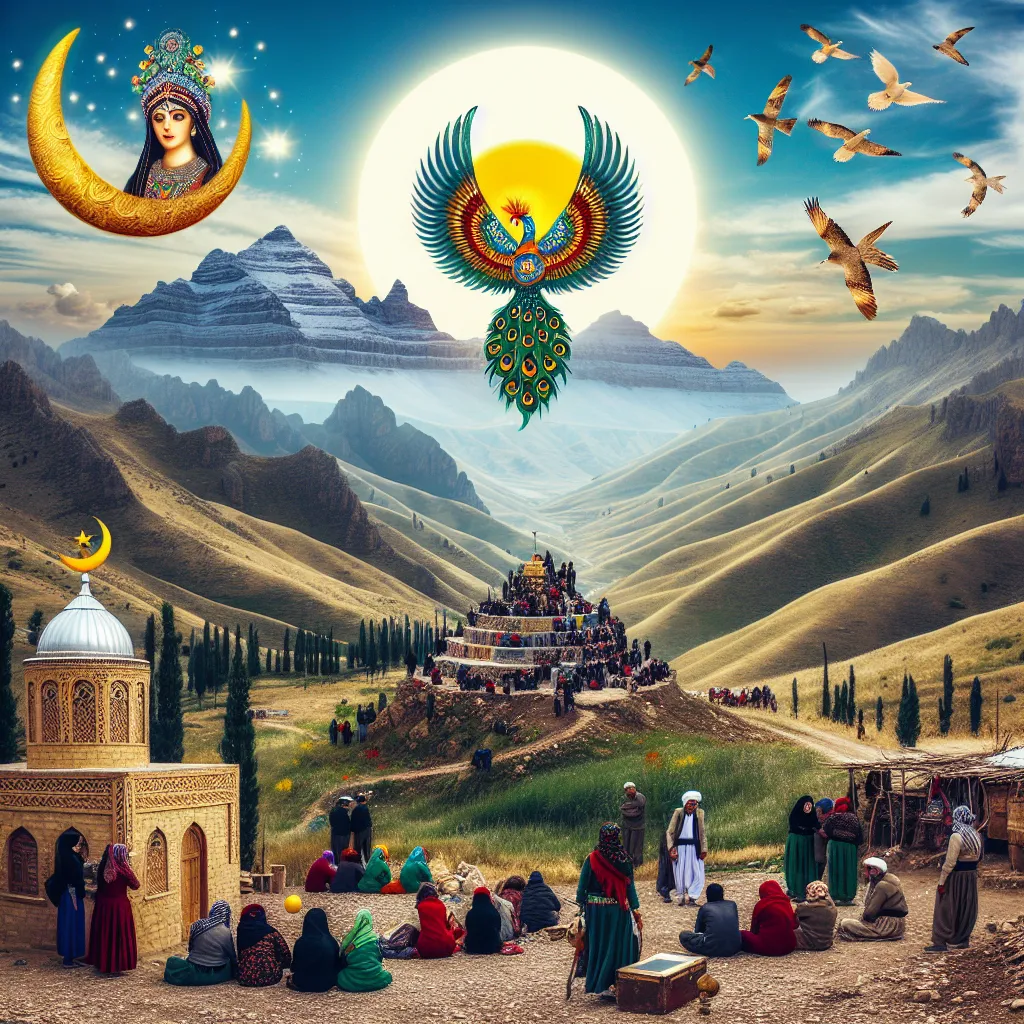
Yazidism is commonly described as a monotheistic faith, believing in one God known by names such as Xwede and Allah. This God is seen as so transcendent that He leaves earthly matters to seven angels, the most significant being Melek Taus, or the Peacock Angel. He is a central figure in Yazidi iconography. Another key symbol is the Sun, representing God’s creative power, which makes Yazidis pray facing the Sun.
Yazidi beliefs also include reincarnation, differing from the heaven-and-hell concept in other monotheistic religions. The origins of Yazidism are unclear, but the religion shares mythological elements with the Abrahamic faiths and traces its lineage to Adam and a miraculously born son named Shehid Ibn Jerr.
Historically, Yazidism first appeared as a Sufi order founded by Sheikh Adi Ibn Musafir in the 12th century. He initially lived in Baghdad and later moved to the Kurdish mountains, establishing the Adawiyya Sufi order in Lalish. Over time, the isolated geography and unique practices led the community to develop its distinct religion, separate from mainstream Islam. Sheikh Adi remains a significant figure, with his tomb in Lalish serving as a pilgrimage site.
The Yazidi community is structured into a caste system, including Murids, Pirs (Elders), and Sheikhs (Masters). This hierarchal system has played a significant role in their religious practices. Yazidism places more emphasis on traditional practices and taboos rather than strict theological doctrines. For example, marrying outside the religion or across castes is highly frowned upon.
The Yazidi new year is celebrated in April, but the most important festival is the Jamiyya or the feast of assembly, held over seven days to honor Sheikh Adi. During this time, Yazidis perform religious rites, listen to hymns, and gather as a community.
Throughout history, Yazidis have faced persecution, often by Muslim empires. During the Ottoman era, their treatment varied, sometimes tolerated, often oppressed. The conflation of Melek Taus with the devil by Christians and Muslims added to their persecution, culminating in the genocide by the Islamic State in 2014. This event drastically reduced their population in the Sinjar region, leading to a significant diaspora, primarily in Europe.
Living in new regions has sparked debates about integrating into these societies while maintaining religious traditions. One major change is the allowance for Yazidis to learn to read and write, a significant shift from tradition to adapt to modern needs.
Yazidism, a complex and diverse religion, continually evolves while holding onto its unique identity. It offers a glimpse into the rich tapestry of religious minorities in the Middle East today.