What Can Ancient Myths Teach Us About Halloween's Spooky Traditions?
Embracing Ancient Fears: From Egyptian Afterlives to Pandora's Catastrophes
With Halloween approaching, it’s that time of year when we dive into the dark and eerie aspects of existence. Halloween is a unique tradition where we explore our fascination with death, monsters, and the concept of evil.
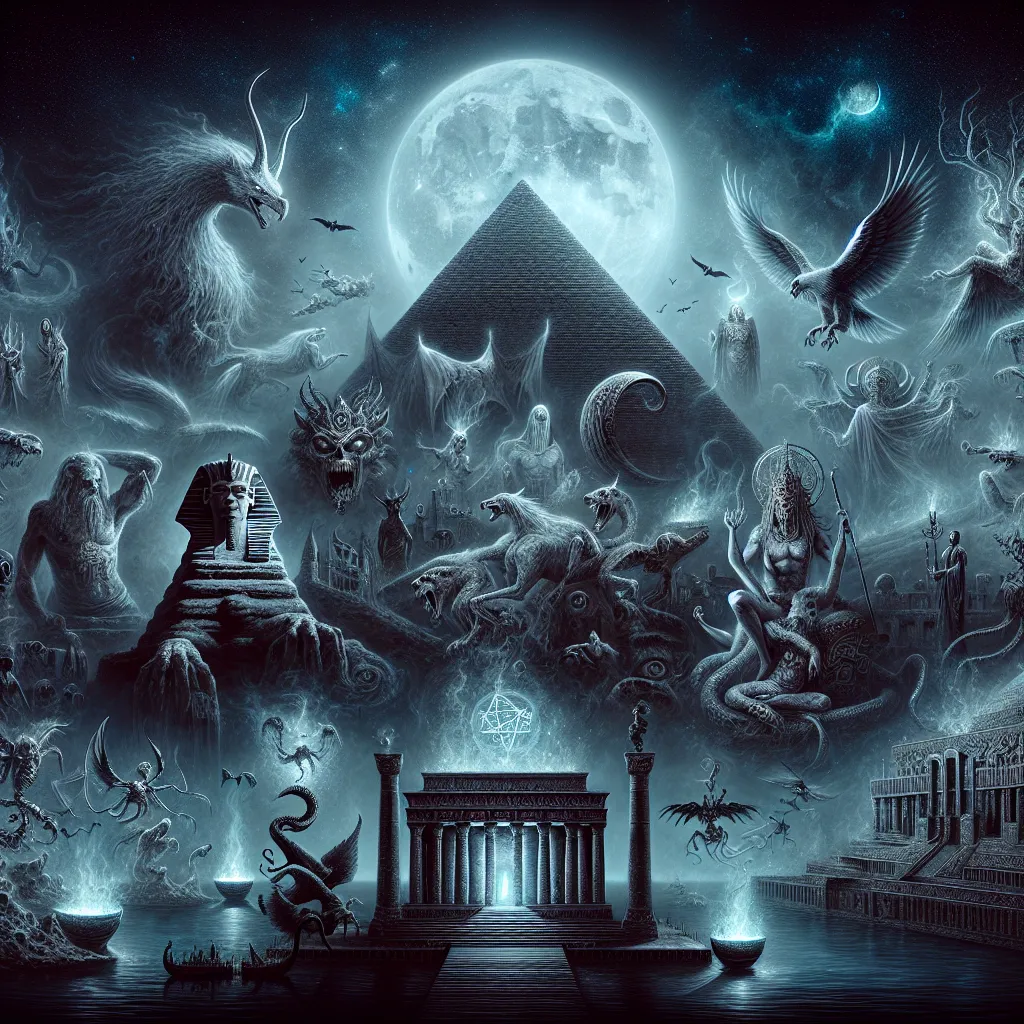
Let’s start in ancient Egypt, where death was a monumental event. The Egyptians built grand structures like pyramids with the aim of defeating death itself. They believed death wasn’t the end but a transition to another world. The afterlife, seen as a mirror to our world, was something they meticulously prepared for. They would mummify bodies, preserving them so that the soul could recognize and return to its body. The journey to paradise in the Field of Reeds involved crossing fiery lakes and battling monsters. Even after these trials, a soul had to face a final judgment, where its heart was weighed against the feather of Ma’at, the goddess of truth and justice. A heavy heart meant being fed to a fearsome beast, the soul-eater, while a light heart granted eternal bliss.
Next, let’s wander into ancient Greece, where the myth of Pandora explains how evil entered the world. Pandora, created by the gods, opened a forbidden box out of curiosity, unleashing all forms of evil. This myth highlights themes of temptation and catastrophic consequences. The Greeks also had an underworld ruled by Hades, a place where souls resided without judgment or hope for paradise, a stark contrast to other belief systems.
In the Indian traditions of Hinduism and Buddhism, there’s a concept of reincarnation. Your actions in this life determine your next incarnation, based on karma. The ultimate goal is to escape the cycle of death and rebirth, achieving liberation known as moksha.
Turn now to Persia and Zoroastrianism, where the world is seen as a battleground between the forces of good and evil. Ahura Mazda represents goodness, while Angra Mainyu embodies darkness and evil. This dualistic view of the world is crucial, as believers strive to push back against darkness and restore the original perfection of the world. This ideology probably influenced the later concepts of the devil in Christianity and other monotheistic religions.
Across various ancient cultures, death, evil, and the afterlife are explored in unique ways. From Egypt’s soul journey and deadly monsters to Pandora’s box and the dual deities of Zoroastrianism, humanity has always grappled with these themes. As we embrace Halloween and its spooky tales, we reflect on these deep-rooted fears and their mythological expressions.
Next time, we’ll delve into the Judeo-Christian and Islamic perspectives on evil and the devil. Until then, keep pondering these ancient mysteries.