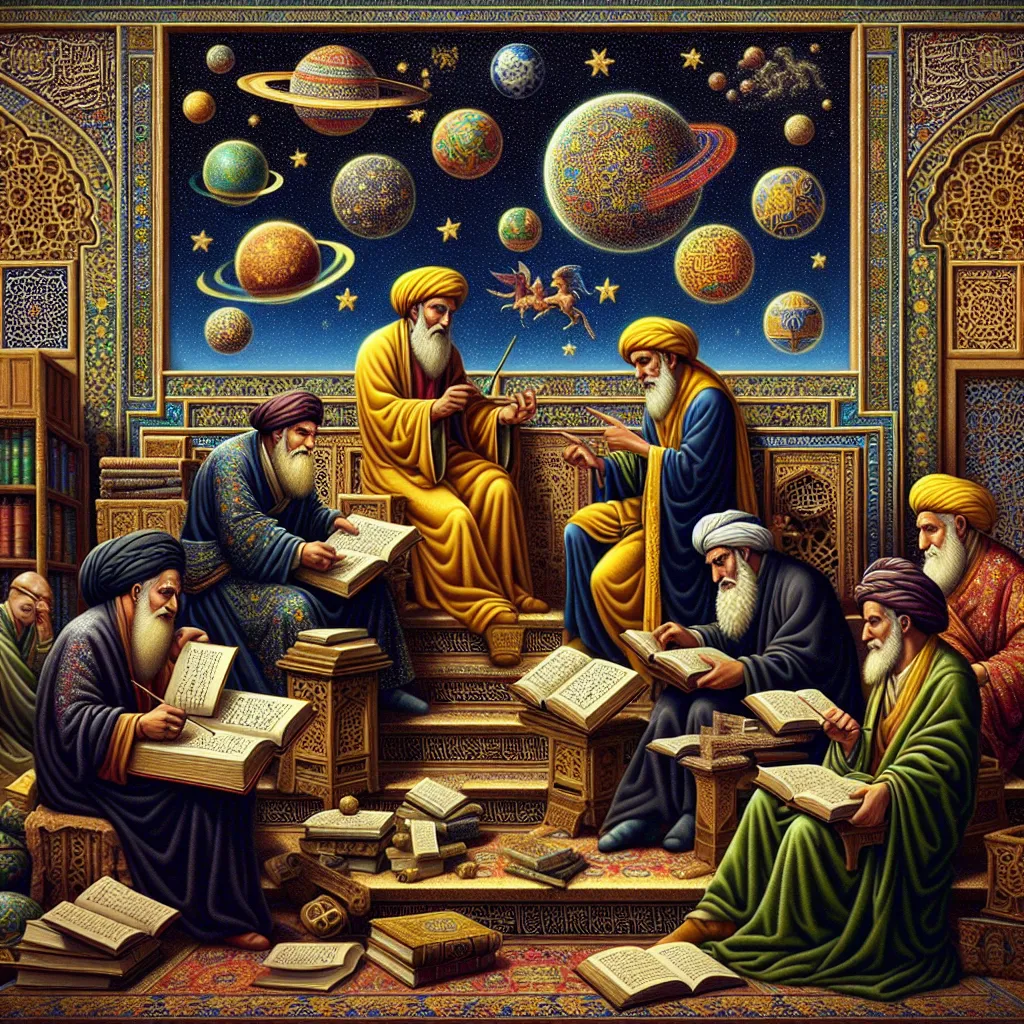
In past episodes of this series, we began our exploration of the captivating realm of Islamic occult sciences. We delved into talismanic magic, early Islamic astrology, and planned to examine books like the Hakim and the Latin-titled Picatrix. Yet, the Shams al-Ma’arif—known as “The Book of the Sun of Knowledge”—stands out. This mysterious book splits opinions: some view it as a spiritual guide, while others fear it as a cursed text that invites evil forces just by owning it.
So, what exactly is the Shams al-Ma’arif, who wrote it, and what does it contain?
The Shams al-Ma’arif is an extensive text that acts like an encyclopedia of historical Islamic occult practices. It covers everything from talismans and magic squares to the science of Arabic letters and how to summon Jinn. This book is attributed to Ahmad al-Buni, a 13th-century Sufi master, often described in popular culture as a magician. However, when we dig deeper, the story of al-Buni and the book complicate.
Little is known about al-Buni’s life. He hailed from North Africa, specifically from a place in modern-day Algeria. He lived mainly in Egypt and was a contemporary of the famous Sufi mystic Ibn Arabi. Al-Buni was primarily known as a Sufi teacher rather than a magician. Intriguingly, many of his teachings parallel Ibn Arabi’s theories, particularly those involving the magical properties of Arabic letters.
Al-Buni’s writings, now referred to as the “Corpus Bunianum,” mostly discuss Sufi practices and esoteric knowledge. Some of his works delve into occult topics but always within a Sufi framework. A crucial text here is the Shams al-Ma’arif, but it is distinctively different from the infamous version known today.
The modern Shams al-Ma’arif, known as “The Great Sun of Knowledge,” surfaced around the 17th century. This version is essentially a compilation, borrowing elements from al-Buni’s original works and other later contributions. The infamous reputation likely stems from this later version, not the original medieval scripts.
Within the Shams al-Ma’arif, one finds a mix of Sufi spirituality and practical occult instructions. It speaks extensively on the powers of Arabic letters, numbers, and their applications. For example, magic squares created from these letters supposedly carry protective and beneficial powers. The text also elaborates on the Divine Names of God, Jinn summoning, and the creation of talismans, all rooted in complex metaphysical correspondences.
Sufism is deeply woven into the fabric of this text, often focusing on invoking divine power for protection rather than summoning darker forces. Despite this, the book has gained an infamous reputation over time, often viewed as a dangerous grimoire or a book of black magic.
So, why has the Shams al-Ma’arif garnered such a sinister reputation today?
Several factors contribute to this. The 20th century saw a shift toward rationalism within the Islamic world, often deeming esoteric practices as superstition. This, combined with the de-esoterization of al-Buni’s writings, stripped the text of its Sufi core, reducing its spiritual context.
Nevertheless, the Shams al-Ma’arif remains a fascinating blend of esoteric knowledge and spiritual practice. While it elicits fear and awe, it also offers intriguing insights into the occult traditions of the Islamic world. Whether viewed as a spiritual guide or a forbidden tome, its impact on the Western appreciation of mystical sciences is undeniable.