How Different Religious Cultures Transform Grief Into Healing Through Ancient Death Rituals
Explore how different religious cultures approach death and mourning through Hindu cremation rituals, Tibetan Buddhist practices, Mexican Día de Muertos, Jewish Shiva, and Ghanaian fantasy coffins. Discover meaningful ways to honor loss and find comfort in diverse traditions.
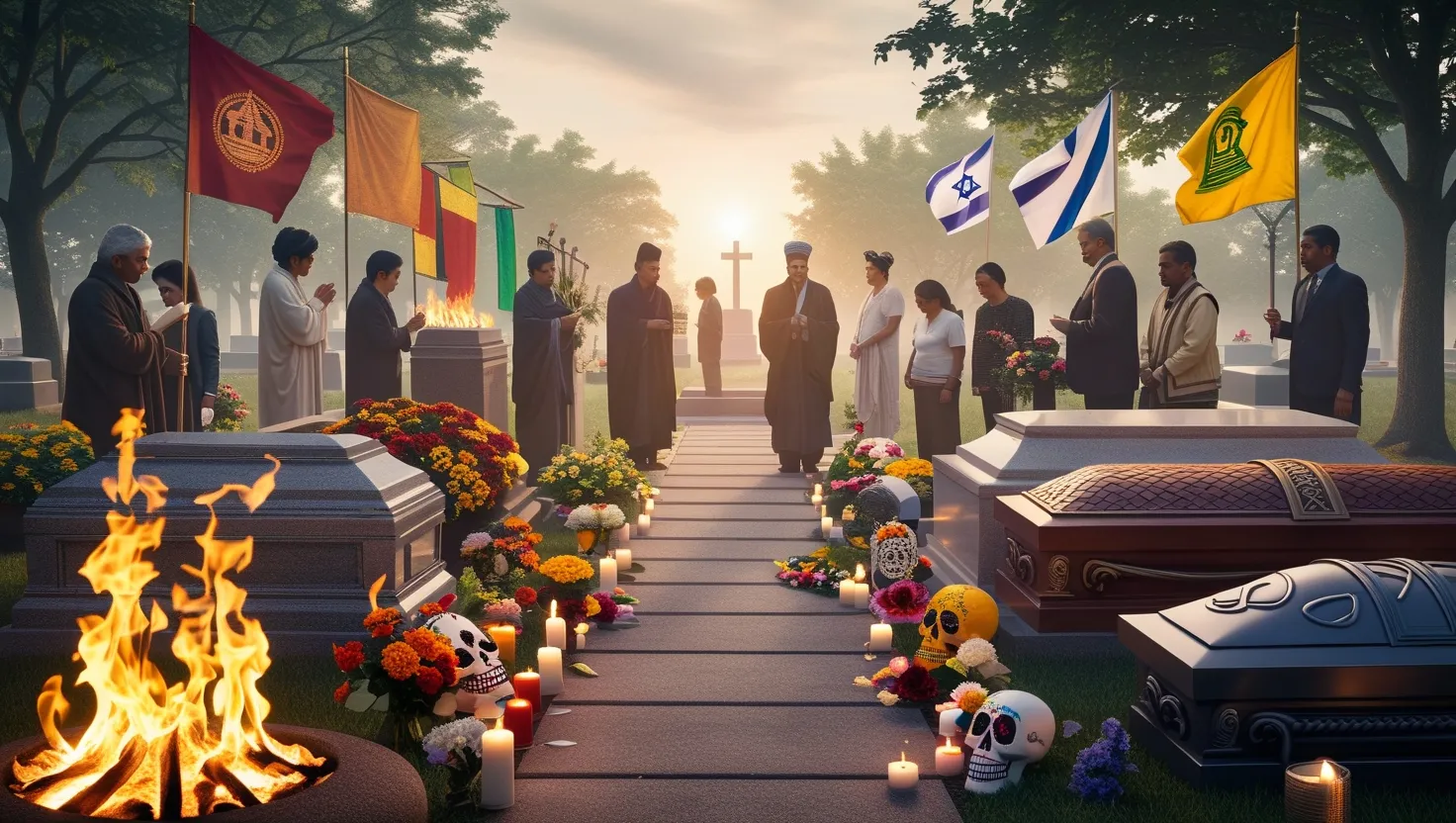
Death is never a distant abstraction; it touches each of us, yet the ways we respond are shaped by centuries of tradition, belief, and imagination. Across cultures, the end of a life is rarely met with silence or mere resignation. Instead, communities build rituals around it, offer vivid stories, and carve out spaces for grief and remembrance. Even in the most personal sorrow, we find ourselves drawn into ancient patterns of meaning—sometimes comforting, sometimes challenging, always nuanced.
How do we find our footing in those first hours after loss, or weeks later when life seems to demand a return to normal? I’ve spent much time reflecting on how different religious cultures answer these questions, and I’m often struck by the peculiar beauty and logic of practices that might seem foreign or even unsettling at first glance.
When I consider Hindu Antyeshti, I can’t help but be reminded of how the visible drama of cremation, with its sacred fire, asserts the impermanence of the body. Here, grief isn’t just a private ache; it’s woven into a structured series of rituals that stretch over nearly two weeks. People gather, not simply to mourn, but to assist the soul’s journey—chanting, making offerings, and at the end, shifting the community’s focus away from the rawness of loss towards the idea of rebirth or liberation. There’s a pragmatic element to this rhythm: it gives mourners something to do, a schedule when the rest of the world might feel as though it’s stopped. It’s a lesson in how ritual can hold a family through the unimaginable, transforming helpless grief into active, purposeful care for both the living and the dead.
“The life of the dead is placed in the memory of the living,” Marcus Tullius Cicero once wrote. This assertion feels particularly apt watching how Hindu rites link individual mourning to cosmic cycles. Why should grief be allowed to remain formless, threatening to overwhelm? By carefully marking each day and each step, the community both acknowledges the sorrow and insists on its transformation.
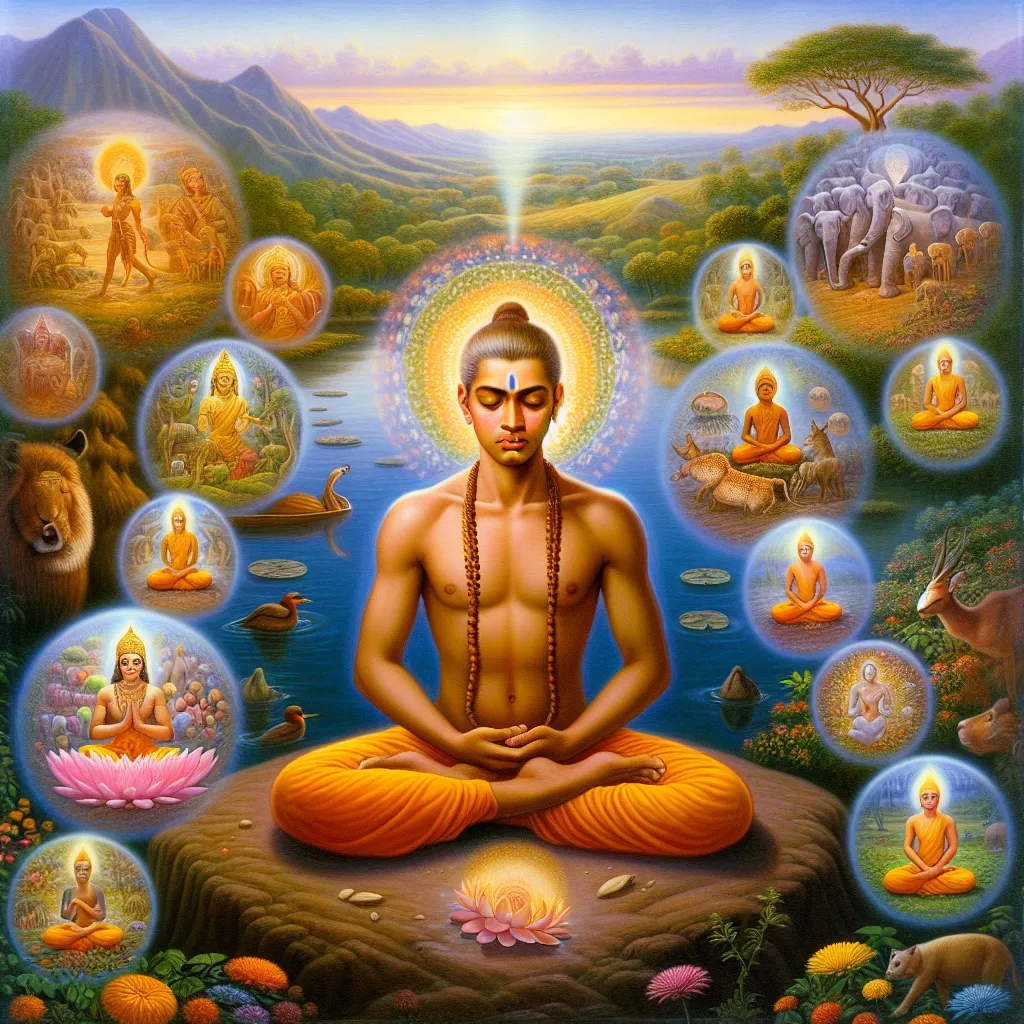
Tibetan Buddhism offers, perhaps, the most explicit training for the moment of death. The Phowa practice, with its idea of “mind transference,” encourages the dying and their loved ones to meet death not as an enemy, but as a transition to be approached with awareness. In the intermediate Bardo state, practitioners say, the mind is unmoored—capable of either confusion or clarity. That’s why survivors engage in merit-making: charitable acts, prayers, and rituals designed not only to aid the departed but also to help those left behind loosen the grip of attachment. “Grief is the price we pay for love,” it’s been said, but Tibetan teachings invite us to see grief itself as another attachment—neither shunned nor indulged, but understood with compassion.
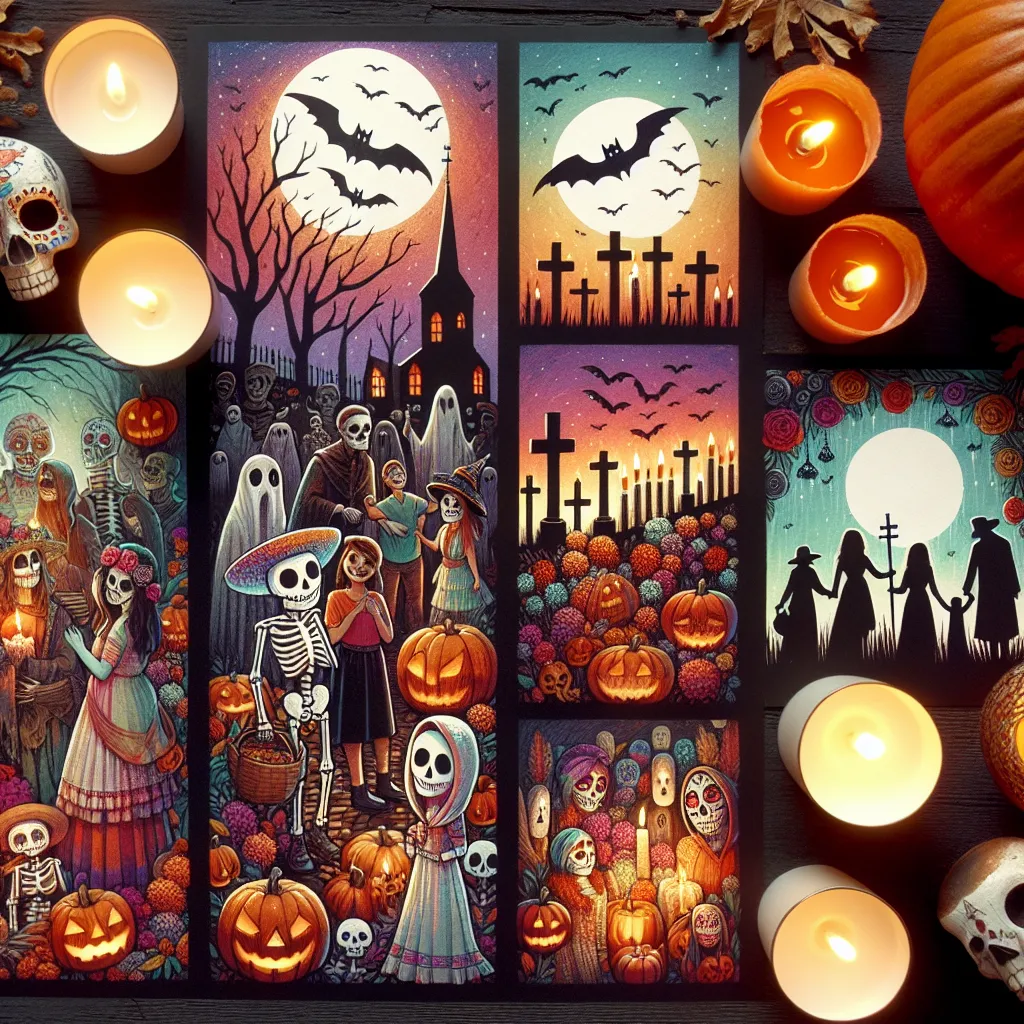
Have you ever wondered what it would be like if our culture didn’t associate mourning primarily with sadness? Día de Muertos in Mexico flips conventional expectations entirely. Rather than keeping sorrow behind closed doors, families open them wide—building bright altars at home, decorating graves, and telling stories that mix laughter with tears. The marigolds and sugar skulls aren’t just decorations; they’re invitations for the departed to join the celebrations, reminders that love and memory transcend the border between living and dead. There’s an odd relief in seeing how humor is used here: jokes, music, and even satirical poems directed at death itself. In this world, death isn’t sanitized or hidden away; it’s a guest of honor.
“To live in hearts we leave behind is not to die,” Thomas Campbell’s words echo through the music and feasting of Día de Muertos. Loss is present, but it’s been domesticated, made less fearsome by transforming grief into connection. I sometimes think about what would happen if more societies took this approach, letting laughter mix with longing, and memory with merriment.
Jewish mourning practices, especially during Shiva, go in a different direction—the creation of a sacred pause. For seven days after burial, mourners stay at home, and the community comes to them. There’s no pressure to move on or to hide tears. Normal routines are suspended: mirrors are covered, business set aside, even personal grooming is downplayed. The structure doesn’t just honor the dead; it gives mourners permission to feel, to remember, and to be cared for by others. It asks: What support do you need when the ordinary world feels both too fast and too indifferent?
In this ritual, the role of community can’t be overstated. Friends and relatives bring food, but also their presence—helping to anchor grief that otherwise might feel adrift. The last day of Shiva ends with a short walk outside, a symbolic return to the flow of life, but the transition is gentle, acknowledging the lingering ache. Does your own culture or family have ways to hold space for mourning, or do you feel rushed back into daily life?
Perhaps the most visually striking tradition I’ve come across is the fantasy coffins of Ghana. Imagine a funeral procession where the casket itself is a flamboyant sculpture—a fish for a fisherman, a car for a driver, a shoe for a cobbler. These aren’t mere novelties; they represent a deeply held belief that life continues elsewhere, and that a person should be celebrated for who they were, not just for having been. The funerals become public affirmations of identity and accomplishment, filled with dancing, music, and even a touch of competition over whose coffin best captured their spirit.
“Death ends a life, not a relationship,” as Mitch Albom put it. In Ghana, the fantasy coffin tradition keeps relationships alive, at least in memory. There’s a playful, even defiant rejection of uniformity here—a refusal to let the dead become anonymous.
What do all these practices have in common beneath their surface differences? I see a shared insistence that death, while universal, doesn’t have a single meaning. Every community builds its own language for loss—sometimes through solemnity, sometimes through joy, and often through a mixture of both. Ritual turns chaos into order, even if only for a brief period.
Rituals also act as a bridge—connecting individual sorrow to a wider story. In moments when everything seems to have changed, these customs whisper, “Others have walked this path before you.” Some traditions offer answers—Heaven, reincarnation, liberation. Others admit uncertainty but promise that remembrance itself is a kind of survival.
Is there a best way to mourn? Probably not. What matters, I think, is the recognition that grief is both deeply personal and profoundly collective. The hardest part of death is often the fear of forgetting, of disappearing. Religious practices, in their variety, all work against that fear. They create echoes—sometimes loud and exuberant, sometimes soft and solemn—reminding us that the bonds of love and memory stretch across time and distance.
If you could choose, how would you want your own life to be honored? Would you prefer ceremony and solemnity, or laughter and music? Or maybe something entirely your own? The diversity of religious ritual reveals that there isn’t a single right answer—just a rich array of possibilities for holding onto meaning, even as we let go.
As poet Mary Elizabeth Frye once advised, “Do not stand at my grave and weep; I am not there, I do not sleep.” Perhaps the greatest gift these traditions offer is not certainty about what comes next, but the freedom to remember, to mourn, and sometimes to celebrate, in whatever way speaks most deeply to our own hearts.