Islam often gets unfairly linked to violence and war by many because of media focus on Middle East instability and terrorist events, compounded by a lack of understanding. This misunderstanding underscores the need for proper education on Islam’s diverse traditions. The approach to war in Islam is layered and deep, and terms like Jihad are frequently oversimplified.
Scholars have always debated the legitimacy of violence in Islam. Opinions have spanned a spectrum from strict to lenient over centuries. Today, we’re shedding light on a particular tradition from West Africa that champions peace over violence, associated with a notable scholar, al-hajj Salim Sawari.
Islam has a deep-rooted presence in West Africa, where countries like Senegal and Mali have significant Muslim populations. But historically, Muslims in this region often lived alongside non-Muslim rulers. This mingling stirred debates among scholars about interactions with non-Muslims, including trade, missionary work, and the use of Jihad.
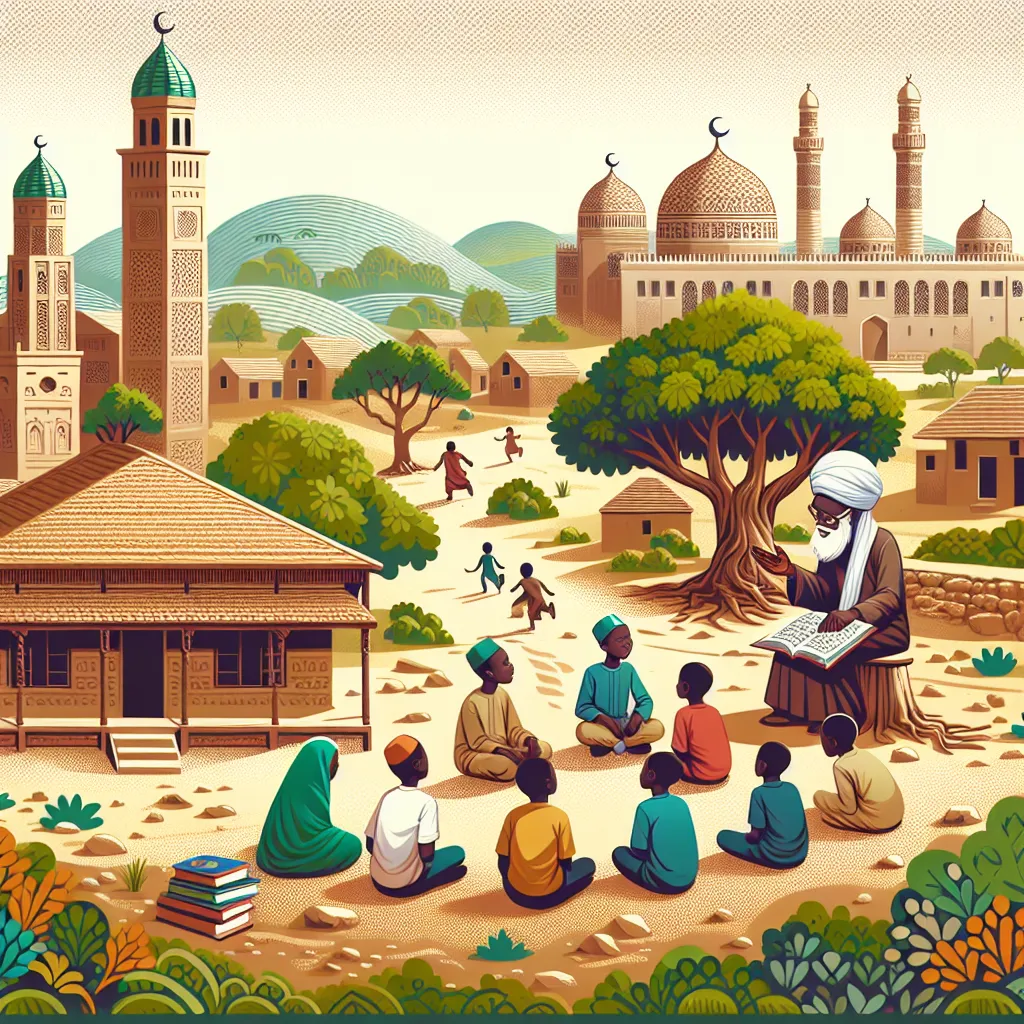
Al-hajj Salim Sawari, an influential Muslim cleric from Mali, advocated for non-violence and peaceful coexistence. He earned respect for his wisdom and his remarkable feat of completing the pilgrimage to Mecca seven times. Though there’s debate on the specifics of his life, his teachings on peace and tolerance have left a lasting legacy.
Sawari argued against armed Jihad as a means for conversion, promoting instead education and positive interactions. He believed in engaging with non-Muslims through peaceful means and setting a good example, upholding the Quranic principle of no compulsion in religion.
His teachings influenced the yakanke clerical community which spread his non-violent ethos across West Africa. This peaceful approach also found support among the Qadiri Sufi order, which played a significant role during conflicts such as the French colonization of Senegal.
In contrast to other leaders who opted for armed resistance, figures like ahmadu Bamba, inspired by Sawari’s legacy, emphasized education and non-violence. Bamba, a key figure in West African history, promoted peaceful ways of dealing with colonial oppression, mirroring Sawari’s approach.
The legacy of figures like Sawari and Bamba illustrates a pacifist trend within Islam that values education and peaceful coexistence. Their teachings continue to resonate, influencing contemporary discussions on religious tolerance and peace in West Africa.
West Africa’s unique approach to religion and state relations showcases a model where diverse groups live together harmoniously. This balance might well trace back to the foundational work of scholars like Sawari, whose principles still shape the region’s social fabric today.