Who Were the Unsung Heroes Behind India's Fight for Freedom?
Epic Journey of India's Fight for Freedom Through Unyielding Resilience and Unity
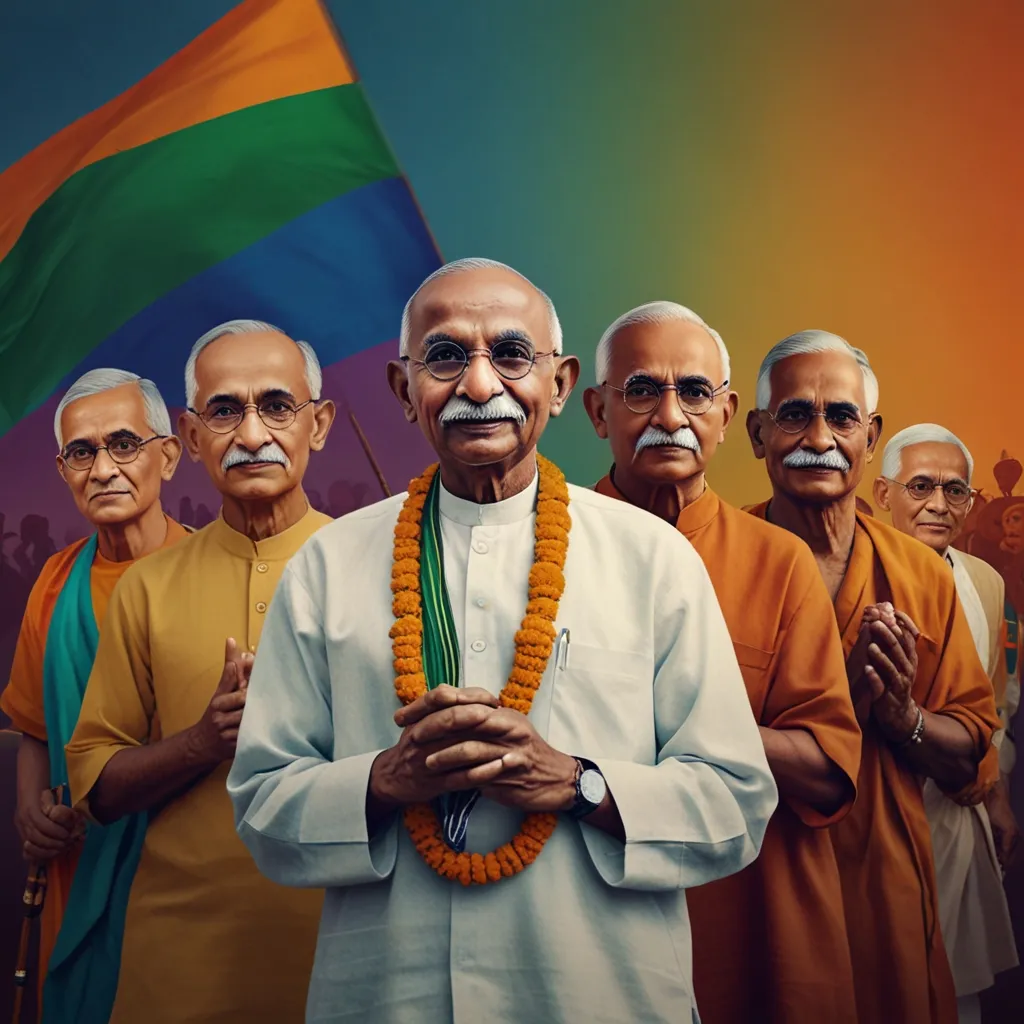
The Indian freedom movement was a monumental journey that saw incredible efforts from people across the spectrum. From the 19th century to the mid-20th century, India experienced numerous movements that finally led to breaking free from British rule. The driving force behind this historic struggle were iconic leaders whose efforts significantly shaped the country’s destiny.
Mahatma Gandhi, hailed as the ‘Father of the Nation,’ was a central figure in this movement. Educated in England, Gandhi brought back his vision to India in 1915, advocating strongly for self-rule. He introduced the powerful idea of non-violent resistance, known as “Satyagraha,” which sparked movements around the globe. His notable campaigns, such as the Salt March in 1930 and the Quit India Movement in 1942, mobilized huge national support.
Jawaharlal Nehru, who became the first Prime Minister of independent India, also played a crucial role. He was deeply involved in politics before independence and worked to establish the Indian National Congress as a major political force. Nehru’s dream of a secular, socialist India continues to influence the country today.
Subhas Chandra Bose, or Netaji, took a different route, pushing for independence through armed struggle. He led the Indian National Army (INA) against the British during World War II, inspiring many to take up arms for freedom. Even though success eluded him, his efforts left an indelible mark on India’s fight for independence.
Sardar Patel, known as the ‘Iron Man of India’, was key to integrating the princely states into a united India after independence. His commitment to unity was vital in forming the Indian administrative services.
Many other heroes, though less celebrated, played significant roles in the freedom struggle. Surya Sen led the daring 1930 Chittagong armoury raid and was hanged for his revolutionary activities. Matangini Hazra, who championed Gandhian principles, led a crowd to seize the Tamluk Police Station in 1942 and continued to chant “Vande Mataram” even after being fatally injured.
Ram Prasad Bismil, a patriotic poet and founder of the Hindustan Republican Association, was involved in major conspiracies against the British and was executed in 1927. Bagha Jatin, a leader for the Jugantar party, died fighting the British in 1915. Bir Tikendrajit Singh, the prince of Manipur, and Pingali Venkayya, the designer of the Indian flag, also made significant contributions.
Other notable figures include Durgawati Devi who helped freedom fighters escape after assassinating a British official, Tirot Sing Syiem and Rani Gaidinliu from Manipur who resisted British rule, and Begum Hazrat Mahal, a key figure in the 1857 rebellion. Aruna Asaf Ali, Tirupur Kumaran, and Birsa Munda also played essential roles, each leaving a legacy of bravery and sacrifice.
The struggle for independence was tough, spanning generations and culminating in vast movements from 1919 to the early 1940s. Under British rule, conditions worsened, poverty rose, and life expectancy dropped, fueling the resistance for more representation and control.
Formed in 1885, the Indian National Congress initially backed British rule but grew into a nationalist force pushing for independence. Gandhi’s leadership turned it into a mass movement striving for “swaraj” or self-rule, mainly through non-violent means. Significant campaigns like the Non-Cooperation Movement in 1920 and the Quit India Movement in 1942 dealt serious blows to British control.
When India and Pakistan were partitioned in 1947, it marked the end of British rule, despite the ensuing violence. The legacy of these famous leaders and unsung heroes continues to shape modern India, embodying the spirit of resilience and unity.