Is Salt the Secret Ingredient to Spark a Revolution?
A Grain of Rebellion: Gandhi’s Salt March Against Colonial Chains
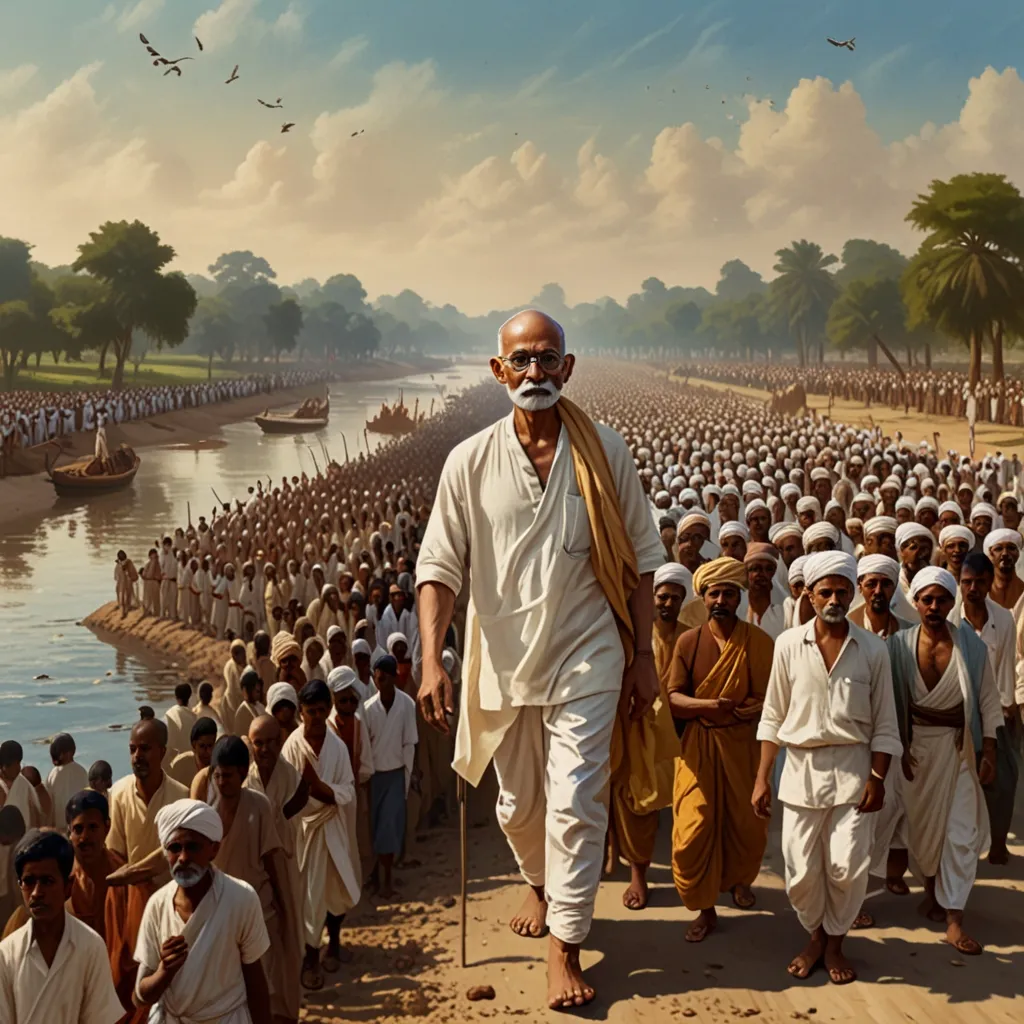
Back in 1930, Mahatma Gandhi led the iconic Salt March, and it ended up being a game-changer for the Indian independence struggle. Over 24 days, Gandhi and his followers hoofed it from Sabarmati Ashram to Dandi, and this wasn’t just a scenic walk. It was a bold act against the British salt tax, which had been tickling the nerves of Indians for ages.
So why was salt such a big deal? Well, it was a staple for the Indian diet, vital for preserving food and health. But the British slapped on a hefty tax, making this essential mineral pricey for many folks. Gandhi saw the salt tax as a symbol of British exploitation and cruelty. To make his point, he decided to hit them where it hurt and make salt the centerpiece of his protest.
The march kicked off on March 12 with Gandhi and a small squad of minimalists. They trekked through the villages of Gujarat, picking up allies like a snowball gathers snow. By the time they rolled into Dandi on April 5, their party had ballooned. Gandhi’s message was simple and fierce: Indians should be able to make and sell their own salt without British meddling.
On April 6, Gandhi and his crew picked up some sea salt, breaking the law in broad daylight. They weren’t tossed into the clink right away, but this act of rebellion set off a widespread civil disobedience movement. Gandhi urged everyone to make their own salt and stick it to the Brits. The Salt Satyagraha caught on like wildfire.
Predictably, the British went full-force. Thousands of protesters got arrested, including Gandhi in early May. But the movement didn’t fizzle out. There was a major face-off at the Dharasana saltworks, led by Sarojini Naidu. On May 21, thousands of peaceful protesters were beaten up by the police, and this brutality made headlines around the globe.
The Salt March wasn’t just a moment; it was a movement that truly ignited public opinion and united Indians from all walks of life. The global outrage at British actions only further isolated the British Raj and gained momentum for the Indian cause. The march also underscored the strength of nonviolent resistance, a tactic that would later inspire worldwide movements.
After Gandhi got out of jail in January 1931, he entered talks with Lord Irwin, the Viceroy of India. The Gandhi-Irwin Pact was signed on March 5, 1931, and while it didn’t end British rule immediately, it was a big step towards self-rule and set the stage for future negotiations.
Even today, the Salt March stands as a powerful symbol of resistance against oppression. It showed that small acts of defiance could grow into major movements. Gandhi’s dream of a free India, without the shackles of colonial rule, was an inspiring beacon for millions. The march to Dandi wasn’t just a protest—it was a step towards freedom and self-determination.
In the end, the Salt March etched itself into the annals of Indian history. It brought the harsh realities of British rule into the light and showcased the Indian spirit’s resolve for freedom. Gandhi’s leadership and the widespread support for the Salt March paved the way for India’s independence in 1947. The legacy of this march continues to spark fights for justice and freedom across the globe.