Can Modi's Third Term Truly Balance Progress and Controversy in India?
Navigating India's Future: Modi's Monumental Impact Versus Mounting Criticisms
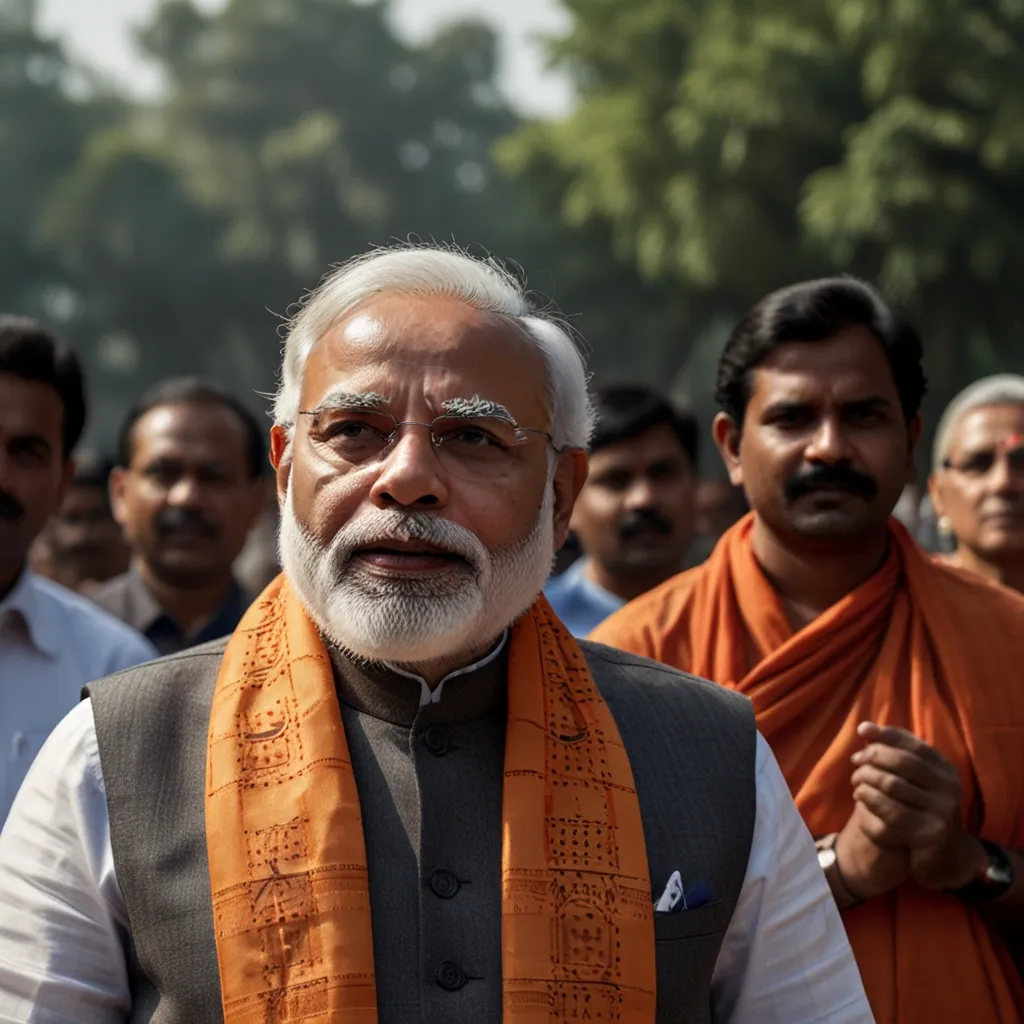
Narendra Modi, the current Prime Minister of India, kicked off his third term on June 9, 2024. His political journey dates back to the early 1970s when he joined the Rashtriya Swayamsevak Sangh (RSS), a right-wing group pushing for Hindu dominance in India. Modi first caught everyone’s attention during the Gujarat riots in 2002, which saw the loss of over 1,000 lives, mostly Muslims. Despite the uproar, his governance in Gujarat was lauded for its fast-paced economic growth and development.
Modi’s rise didn’t stop there. He led the Bharatiya Janata Party (BJP) to victory in both the 2014 and 2019 general elections, with campaign promises centered on economic development, national security, and social welfare. This combination struck a chord with many voters, propelling him further.
One of Modi’s hallmark initiatives is the “Gujarat model,” which highlights infrastructure, industry, and innovation. This approach has been scaled nationally through projects like the Pradhan Mantri Ujjwala Yojana, providing free cooking gas connections to underprivileged families, and the Pradhan Mantri Jan Dhan Yojana, aiming to bring every Indian into the banking system. These programs have notably uplifted the living standards, especially in rural India.
Under Modi, healthcare has also seen significant upgrades. The Ayushman Bharat program, launched in 2018, stands as the world’s biggest healthcare initiative, offering affordable and top-notch healthcare to over 50 crore Indians. Global health organizations have praised this effort towards universal health coverage.
But Modi’s tenure hasn’t been without its share of criticism. Some believe his leadership has strained India’s democracy and worsened conditions for religious minorities, especially Muslims, who feel increasingly sidelined. The surge in Hindu nationalism under his rule has sparked accusations of sectarianism and Islamophobia. The government’s actions against dissenters and press restrictions have also raised eyebrows, with instances of people being arrested over tweets and media outlets facing heavy controls.
Despite these controversies, Modi remains highly popular, boasting approval ratings around 78 percent, making him the most favored major leader globally. His charm and assertiveness have garnered admiration from many who view him as a robust and capable leader. Nevertheless, critics argue that his authoritative tendencies and the rise of a personality cult could be regressive for India.
Entering his third term, Modi is likely to continue prioritizing technology, infrastructure, and international relations, building on his past accomplishments to further establish India as a global giant. Though his leadership stirs strong feelings both domestically and internationally, Modi’s influence, backed by devoted supporters and steadfast critics, undeniably shapes the nation’s course.