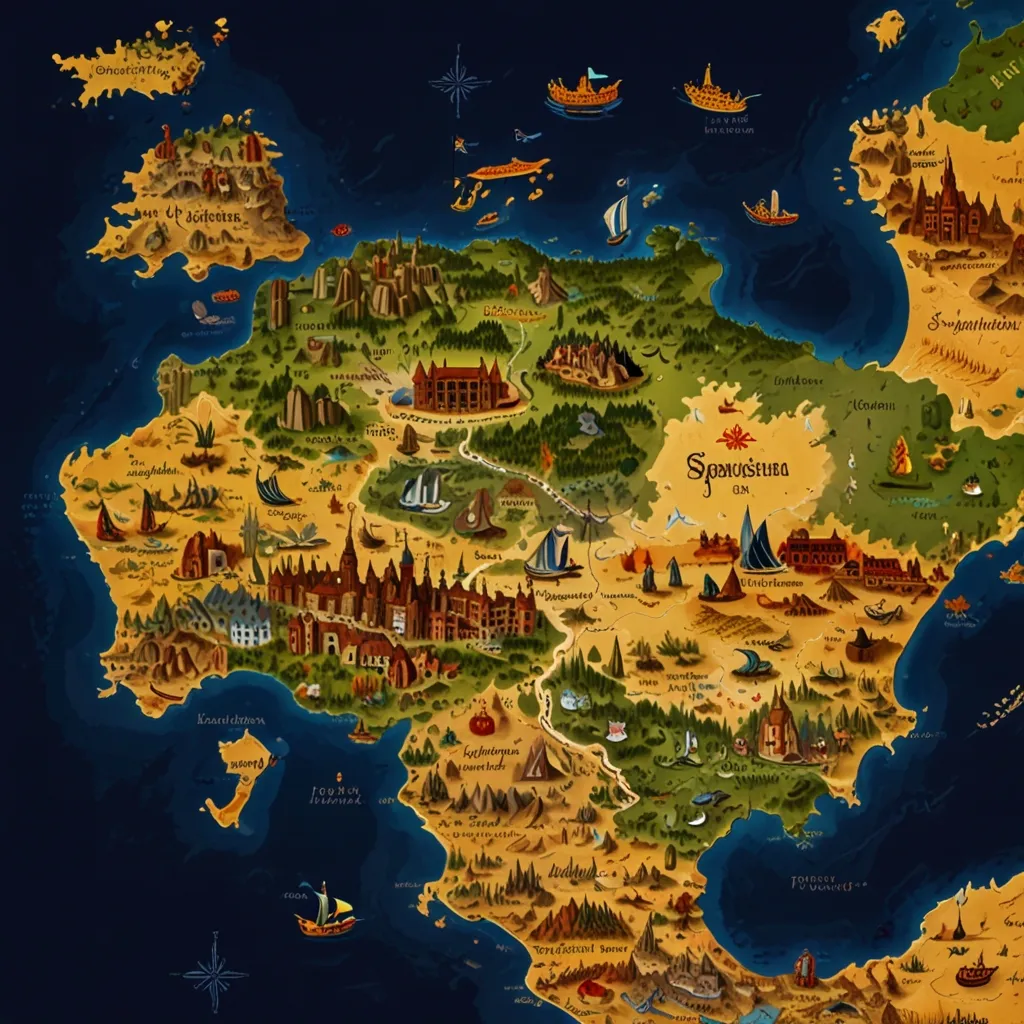
Let’s talk about something wild: the Spanish Empire. At its peak, this empire controlled around 7.5 million square miles, which is essentially 133% of the world. Pretty insane, right?
The Spanish Empire, also known as the Hispanic monarchy or the Catholic monarchy, wasn’t just about expansion in the West. Their ambitions stretched from Italy to Asia, and they even had stakes in the Netherlands. They started quite humbly in Europe but quickly rose to become one of the earliest global superpowers with a massive influence on history.
Now, the story starts with two key regions in present-day Spain: the crown of Castile and the crown of Aragon. When their heirs tied the knot, they didn’t just merge their families; they merged economic and military power, marking the real beginning of the Spanish Empire. Not long after, they captured Granada, the last Muslim stronghold in Iberia, and with that, their reign truly began.
Instead of sticking to the Mediterranean, Spain and its partner Portugal looked westward to circumvent the Turkish-controlled spice route through Constantinople. This was a game-changer. Enter Christopher Columbus – the man with grand ideas and dodgy geography skills. When the Spanish Crown funded his explorations in 1492, hoping he’d just disappear, he ended up discovering the New World. And boom, Europe found a new continent to ravage.
This led to the Treaty of Tordesillas, a big deal in two respects. First, it was history’s first attempt to divide the world legally rather than by military strength. Second, it set the precedent for Western colonialism, giving Spain the rights to colonize from Brazil to Asia.
Spain’s military prowess was top-notch, inheriting some of the best strategies from Europe, which meant the native populations in the Americas didn’t stand much of a chance. Add European diseases to the mix, and the takeover was swift. Spain was able to plunder the New World, bringing back crops like maize and potatoes, which in turn bolstered their population and enabled even faster colonization.
At one point, the Spanish Crown even ruled over England and Ireland (from 1554 to 1558) and later took over Portugal and its territories, merging multiple empires into one. But massive empires come with massive headaches. Local rulers often did whatever they wanted with no oversight, especially in the New World. Conquistadors exploited natives brutally, working them to death in mines and plantations for gold and silver. Despite or perhaps because of this cruelty, Spain became incredibly wealthy – think $3.63 trillion in today’s value from New Spain alone, and that’s not counting other territories.
This wealth funded Spain’s wars and helped spread its Catholic faith. Sounds great, right? Well, here’s where things go belly up. Spain got too comfortable swimming in silver and didn’t diversify its investments. They didn’t bother much with agriculture or other trades, heavily relying on resources from their colonies.
Meanwhile, other Western countries diversified and invested in trade and manufacturing, building robust economies. Spanish elites lazily imported food rather than growing it. Excessive spending on wars, inefficient governance, and poor policies slowly drained their wealth and power. While Spain seemed dominant on the surface, it was rotting from the inside.
Ironically, the gold and silver they sent to other Western countries strengthened those rival economies, further weakening Spain. Eventually, their wealth dried up, and so did their power. The once-mighty empire found itself bankrupt and outpaced by European rivals on the verge of industrialization.
But let’s think about the larger lesson here. Spain had the potential to stay a superpower for centuries, but they didn’t plan for the long term. They became complacent, heavily relying on one source of wealth without diversifying or thinking ahead. Think of it like modern-day financial management. Just because your finances are great now doesn’t mean they’ll always be. Planning and diversifying is key to long-term stability – something the Spanish Empire overlooked.
In the end, there’s a lot to take away from the rise and fall of the Spanish Empire. They left a lasting impact on European industry and the world and set the stage for future empires. Without their precedent, Europe would look drastically different today.