What Secrets Lurk in Yale's Unsolvable Book?
The Mysterious Manuscript That Refuses to Reveal Its Secrets
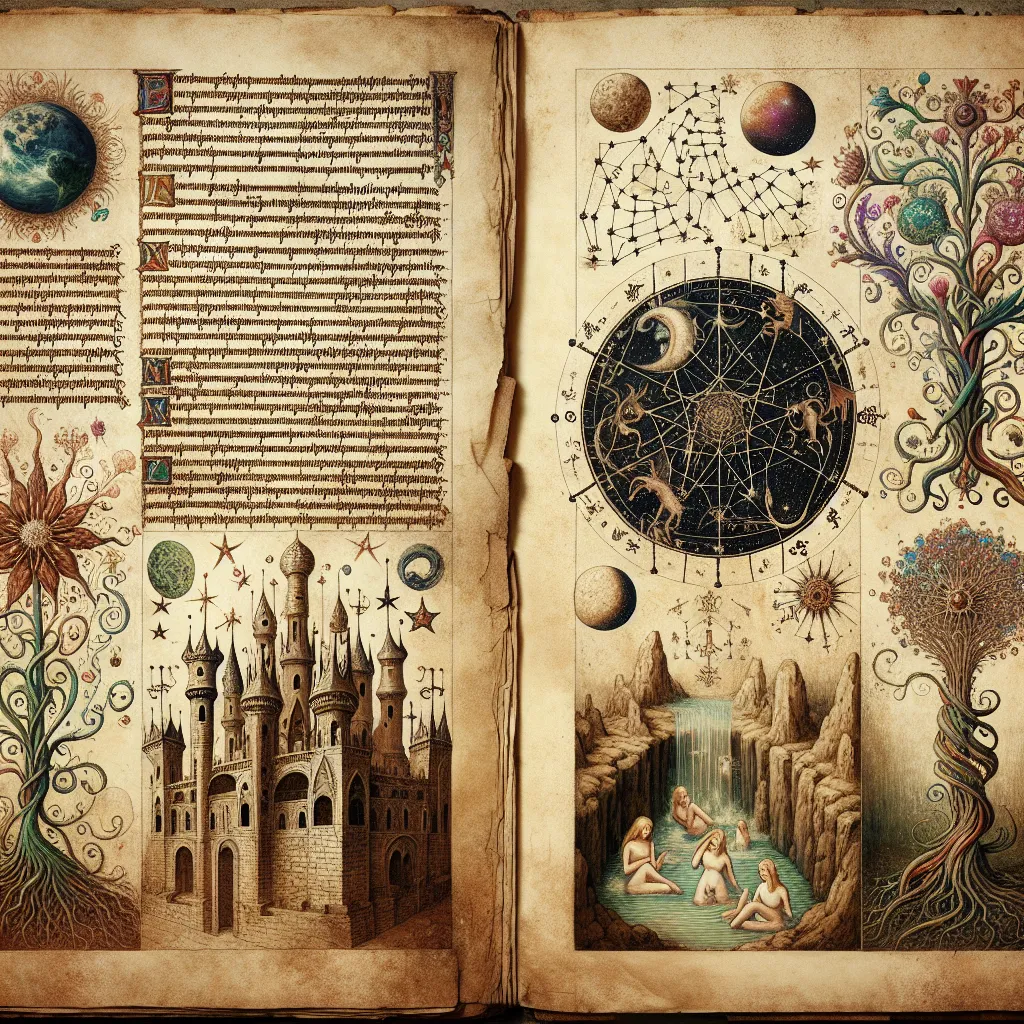
Tucked away in Yale University’s Beinecke Rare Book and Manuscript Library is a singular, peculiar book—a 240-page mystery known as the Voynich manuscript. Dating back to around 1420, it leaves everyone baffled. Its pages, made of vellum, are adorned with looping handwriting and otherworldly illustrations. You’ll find drawings of real and imaginary plants, floating castles, bathing women, astrology diagrams, and whimsical suns and moons with faces.
The manuscript owes its name to Wilfrid Voynich, a Polish bookseller who discovered it at a Jesuit college in Italy in 1912. Voynich was immediately puzzled by the book. Who penned these enigmatic pages? What stories do the bizarre words and colorful drawings aim to tell? Intrigued, he bought the manuscript and eventually took it to the U.S., where it continues to baffle experts.
Cryptologists suggest the writing seems like a real language, but one that’s entirely unknown. The letter patterns in the manuscript hint at consistent linguistic rules, unlike random letter arrangements. The varied style and height of the letters, some borrowed from other scripts and others entirely unique, add to the enigma. Taller letters, called gallows characters, and lavish scroll-like decorations embellish the text, creating a visual delight amidst the confusion.
The manuscript seems to have multiple scribes, with another hand responsible for the vibrant illustrations. Over a century of study has presented three main theories about the text. One theory suggests it’s written in a secret code, crafted to hide obscure meanings. Another surmises it could be an elaborate hoax, meant to deceive a gullible buyer—perhaps even concocted by Voynich himself. The third proposes it’s an actual language but in an unknown script, potentially created by medieval scholars attempting to document a spoken but unwritten language.
Despite no one being able to read the manuscript, many speculate about its contents. Some think it might be an encyclopedia of the culture that produced it. Others believe it could have been written by the 13th-century philosopher Roger Bacon or the 16th-century mystic John Dee. There are even theories involving Italian witches or Martians.
Recent scientific advances shed a bit of light on this puzzling book. Carbon dating confirmed its age, and historians traced its path back to 1612, possibly owned by Holy Roman Emperor Rudolf II and then passed to his physician, Jacobus Sinapius. Linguists have tentatively identified a few words, such as “Tauran” for Taurus and “Centaurun” for the Centaurea plant.
What awaits us inside this mysterious manuscript? Could it be the dream journal of a 15th-century artist, a collection of nonsensical scribblings, or the lost knowledge of a vanished culture? The mystery persists, and the manuscript keeps us guessing.