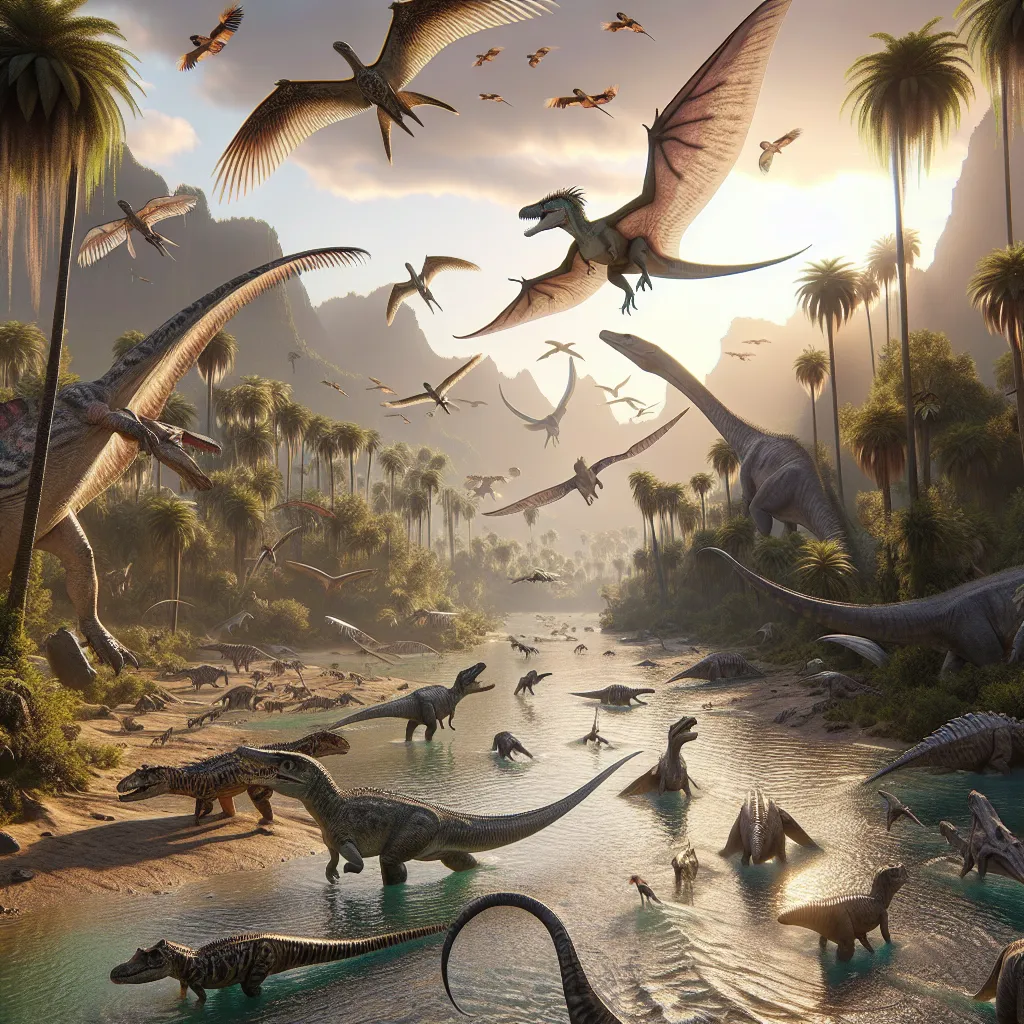
The Sahara Desert, one of the harshest places on Earth today, wasn’t always a relentless, sandy expanse. Let me take you back 100 million years to the Mid-Cretaceous period. Picture a gigantic river system flowing from modern-day Egypt to Morocco. Imagine continents that hadn’t settled in their current positions, with extreme temperatures and ferocious storms shaping a very different world. Dinosaurs ruled the land, pterosaurs filled the skies, and colossal marine reptiles and sharks swam in warm seas. Early mammals, our tiny ancestors, lived overshadowed by these incredible creatures.
In this world, northern Africa’s River of Giants was a perilous place. Unlike most ecosystems, where being at the top of the food chain is a lonely affair due to limited prey, this river system teemed with aquatic prey, sustaining a diverse range of apex predators. Thanks to copious fossils in the Kem Kem Beds, we know that predators here had unique head and body shapes, perfectly adapted for hunting various aquatic prey. This specialization allowed them to thrive without much competition for food from land predators.
Prey in the river system faced attacks from every direction, including from above. Enormous flying reptiles, like the Alanqa Saharica with wingspans reaching nine meters, snatched fish and small animals with their long slender jaws. The waterways were patrolled by at least seven different crocodile-like predators, including the ten-meter-long Elosuchus. Alongside these were multiple T-rex-sized theropods, living in surprising harmony in the predator-packed environment.
Reigning supreme was the Spinosaurus, a 15-meter-long giant even longer than the T-rex. With its muscular hind legs, flexible tail, and broad feet, Spinosaurus was built for an aquatic life. Its two-meter-high sail likely served as a warning of its formidable size and possibly played a role in mating displays. Its long slender jaws, equipped with conical teeth, were perfect for grabbing slippery prey from the water. The Spinosaurus and its ecosystem are truly unique in the annals of life on Earth.
But like all stories, this one also ended. Around 93 million years ago, rising sea levels submerged the Kem Kem region. Millions of years later, a combination of asteroid impacts, volcanic eruptions, and drastic climate changes led to a mass extinction, wiping out the dinosaurs, pterosaurs, and many other species. This cataclysm cleared the way for the rise of new birds, larger mammals, and eventually, humans. All that remains of those magnificent predators are fossils, silent witnesses to a once-thriving world.