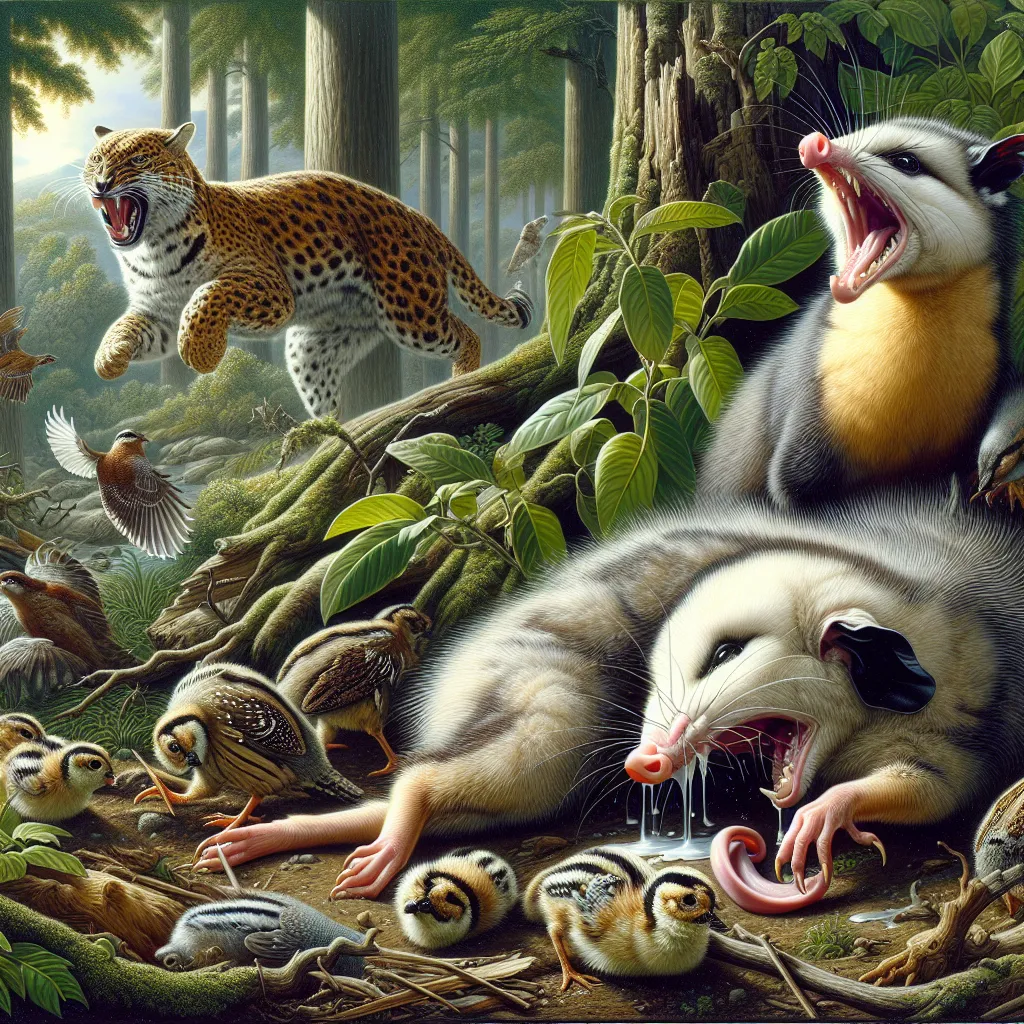
Imagine you’re under attack by a fierce predator. With no way out, you do what any brave possum would: you freeze, stick out your tongue, drool, and release a foul-smelling liquid. The attacker, utterly disgusted, lets go and moves away, leaving you to revive and stroll off after a while. This dramatic act of survival is common in nature. From ants and amphibians to sharks and chickens, many animals play dead to stay alive. Known as “playing possum,” this tactic is scientifically called tonic immobility (TI).
TI varies by species and situation. For instance, some animals will produce a stench or assume odd postures to add to the effect. Others may play a different strategy; for example, quail chicks freeze while their siblings scatter when a cat approaches, increasing their chances of survival. Cats themselves have their own version. Feline mothers immobilize their kittens by pinching the back of their necks, termed “clipnosis,” making it easy to carry them.
The roots of these strategies lie in the parasympathetic nervous system, the system in charge of resting and digesting. In possums, this system drastically drops their heart rate, slows respiration, and lowers body temperature during TI. Dopamine, a neurotransmitter, also plays a role. Flour beetles with lower dopamine levels tend to play dead more often. Blocking dopamine receptors can extend the time they stay “dead.”
Maintaining this act isn’t a walk in the park. The animals have to constantly assess their environment to know when it’s safe to wake up. For instance, chickens can sense when a predator is watching them. Researchers found this out by using a stuffed hawk, noting that the chickens recovered from their immobility faster when the hawk wasn’t looking directly at them.
Interestingly, TI isn’t just for defense. The sleeper cichlid lies motionless at the lake bottom, looking like dead prey. When scavengers come to investigate, it ambushes them. Some animals even employ TI for mating. Male nursery spiders offer silk-wrapped insects to attract females, who may eat the males. By playing dead during this ritual, they can revive and increase their chances of mating while the female is distracted.
However, knowing the secrets of TI can backfire. For instance, orcas in California can flip young great white sharks to induce TI, causing them to suffocate as they need to move to breathe. Humans also use this trick by stroking a shark’s sensitive snout and turning it upside down, inducing TI long enough to tag, unhook, or perform surgeries on the shark. Still, there’s a danger: TI can interfere with respiration and cause stress, so it should only be used when necessary.
Humans aren’t immune to TI either. People can freeze in fear during traumatic assaults. Understanding this involuntary defense mechanism helps in interpreting why some victims don’t fight or flee. This insight into TI in animals not only explains their weird behaviors but also sheds light on human responses to extreme stress.