What Can a Speck of Dust Teach Us About Cancer and Immortality?
Discover the Immortal Cells That Ignited a Scientific Revolution
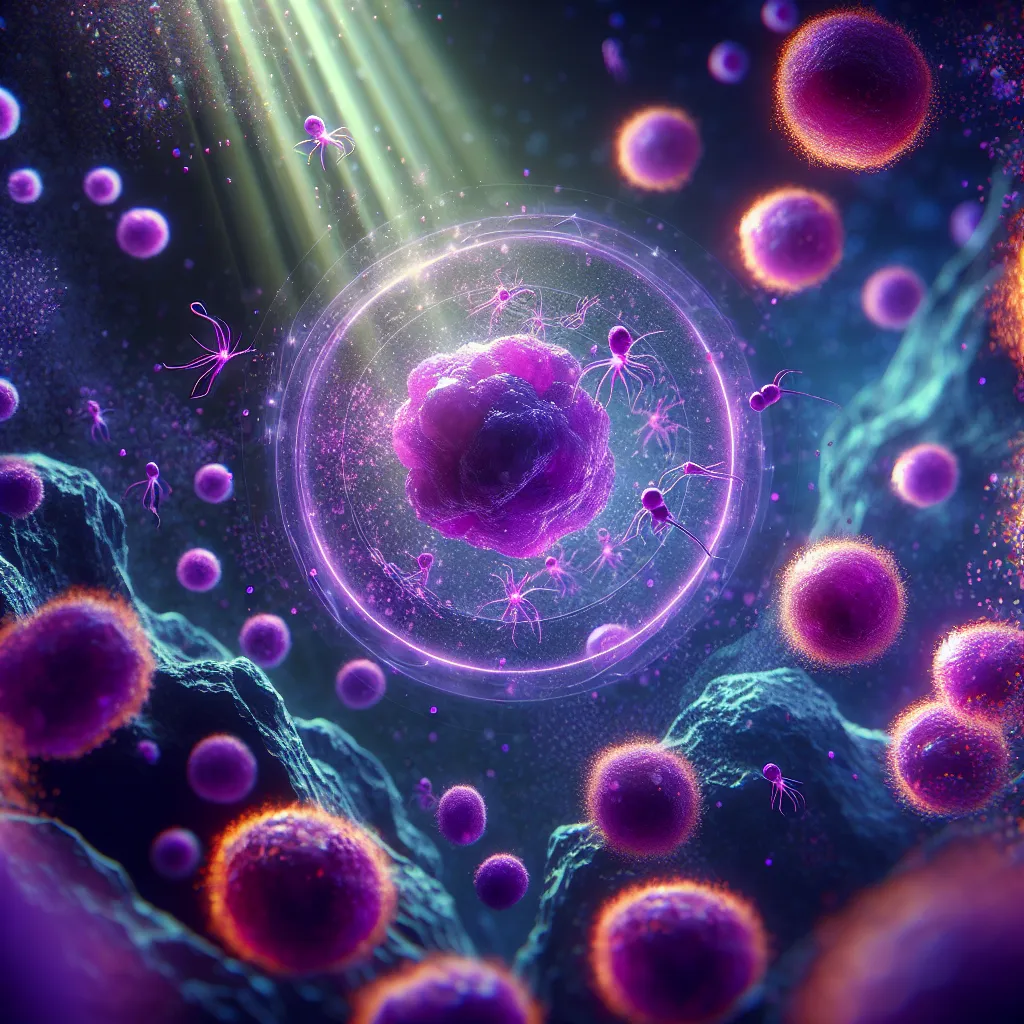
Imagine something so tiny it could float on a speck of dust yet holds the secrets to cancer, virology, and genetics. That’s what we find with HeLa cells, trillions of lab-grown human cells that have revolutionized science.
Let’s rewind a bit. Scientists need to grow human cells in labs to study how diseases develop and to test new treatments. For consistent results, they require large populations of identical cells that can replicate over years. Before 1951, all attempts at growing human cells failed after a few days. But then, a breakthrough occurred.
A scientist named George Gey received a sample from a peculiar tumor. The cells, shiny and purple, kept dividing endlessly. Even when individual cells died, new generations emerged. This gave rise to the first immortal human cell line, named “HeLa” after Henrietta Lacks, the woman whose tumor provided the sample. Sadly, Henrietta passed away from aggressive cervical cancer not long after her cells were harvested.
The mystery of HeLa cells lies in their immortality. Normal human cells have self-destruct mechanisms after about 50 divisions to prevent genetic errors. Cancer cells defy these signals, dividing uncontrollably. Yet, most die off outside the human body. Not HeLa cells, and we still can’t fully explain why.
Dr. Gey sent HeLa samples to labs worldwide, spurring a scientific revolution. HeLa cells became vital in numerous studies, from polio vaccine development by Jonas Salk to research on diseases like measles, HIV, and ebola. The discovery that human cells have 46 chromosomes came from HeLa research.
HeLa cells have traveled to space and were even the first to be cloned. They helped discover telomerase, an enzyme aiding cancer cells in evading destruction. The link between HPV and cervical cancer, along with the corresponding vaccine, also emerged thanks to HeLa cells.
The impact of HeLa is monumental, with countless scientific papers and breakthroughs credited to these resilient cells. Henrietta Lacks’ contribution continues to shape science, even if she never knew about her immortal cells.