Is Today’s Music Shaping Our Character or Sowing Chaos?
Ancient Greek Insights on Music's Power Over Our Lives and Moods
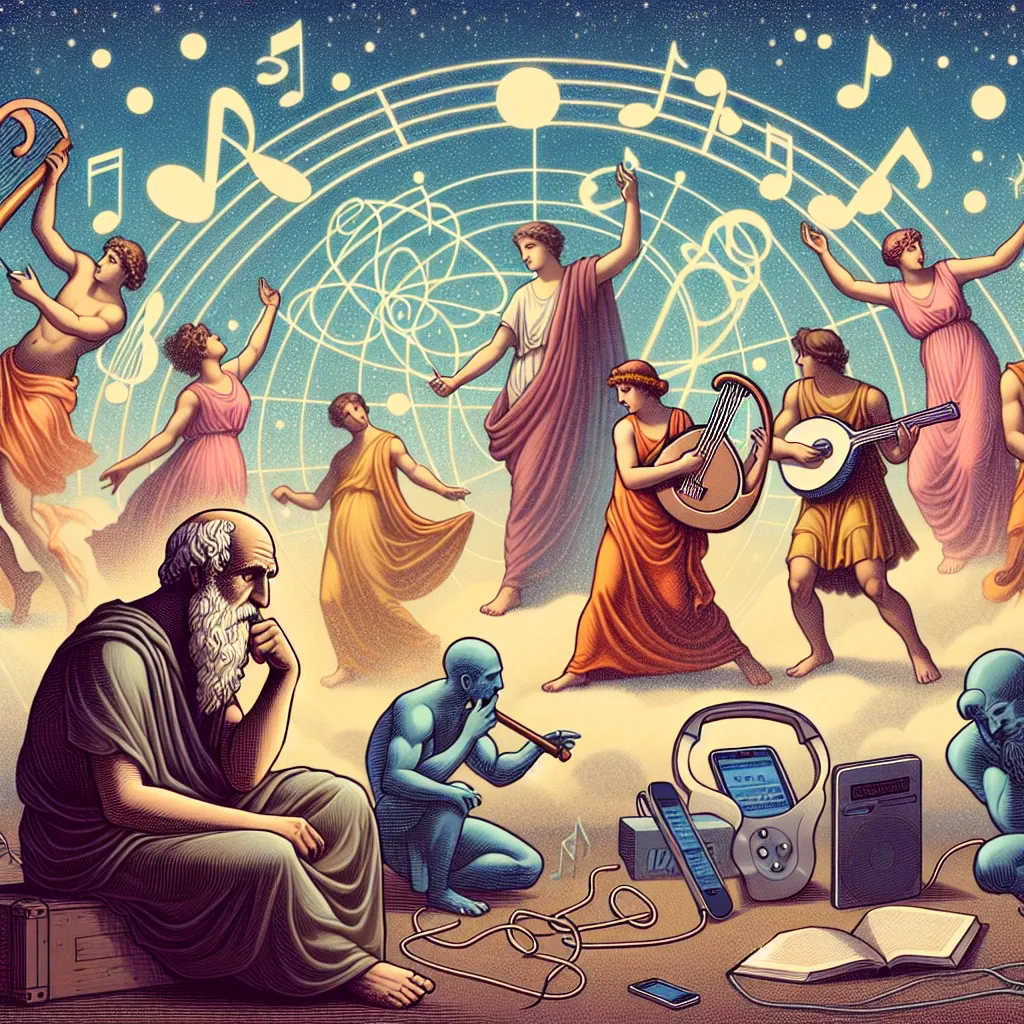
We live in a world where music is more than just background noise. It’s woven into our lives in many ways. We use it for worship, storytelling, celebrating, working out, and expressing emotions. We even use music just because it feels good. The connection to music isn’t new; people have been obsessed with it for thousands of years. Take the Ancient Greeks, for instance—they had lyres and tunics instead of MP3 players and jeans, but their love for music was just as intense, if not more.
To grasp how integral music was in Ancient Greek society, we must dip into their mythology. The Greeks believed human creativity was ignited by divine inspiration from the Muses, a group of goddesses. While there’s debate over their exact number, nine is the generally accepted figure today. Each Muse had her own realm of expertise, covering everything from song and dance to history and astronomy. It might seem odd to bundle history and astronomy with artistic pursuits, but to the Greeks, these were vital elements of a cultured life.
Interestingly, the word “music” comes from the word “Muse.” For the Greeks, music was the canvas for creativity. Love poems, epic tales of heroes, dances, and theatrical performances were all intertwined with music. Even history was told through song. They believed the universe itself was a symphony, with each star and planet producing its own unique sound as it moved through space.
Music had more practical roles too. The Greeks saw it as the thread connecting all things, a concept they called harmonia, which is the root of our word “harmony.” Music was used medicinally to treat ailments, to accompany athletes, and to keep workers in sync during monotonous tasks. Fundamentally, music was everywhere.
One of the most profound beliefs about music in Ancient Greece was its effect on personal ethos, which refers to one’s character and moral compass. Plato, a towering figure in Greek philosophy, argued that music could shape a person’s ethos. Some types of music could incite aggression, while others could calm and civilize. Plato believed only certain kinds of music could nurture virtues like intelligence, self-discipline, and bravery. He was vehemently against any music that strayed from these norms, fearing it would lead to moral decay and chaos.
In modern times, this argument pops up whenever new musical trends emerge, like jazz, punk, or rap. So, what would Plato think of the music we listen to today? Is it uplifting our ethos or dragging us into chaos? It’s worth pondering.