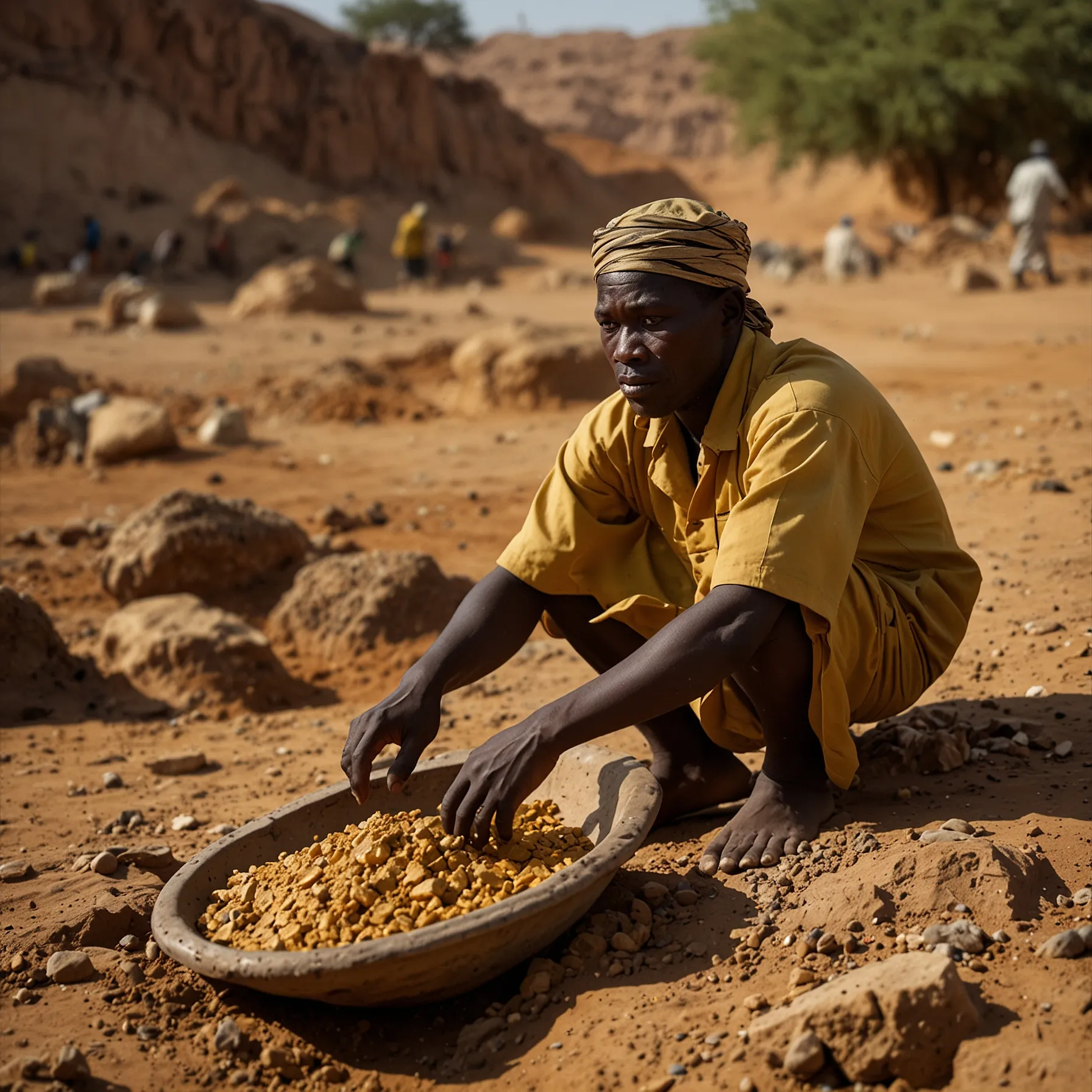
Gold is undeniably one of Earth’s most prized treasures, with just a kilogram fetching upwards of $55,000. In 2020, Mali churned out about 71.2 tons of it. Yet, Mali’s earnings from this gold were a mere $850 million, far short of what the actual value represents. This discrepancy hints at deeper, systemic issues, not just limited to Mali, but extending to other gold-rich African nations like Mauritania, Senegal, Guinea, Côte d’Ivoire, Ghana, Burkina Faso, and Niger. At the heart of this problem lies a tangled web of greed and corruption, spanning individuals, corporations, and entire nations.
Despite having significant gold reserves, Mali struggles with inadequate mining and export infrastructure. The government, seeking to cash in on this golden opportunity, grants mining licenses to multinational corporations in exchange for tax revenues. Ideally, these taxes should fund development projects, boost the economy, and provide essential services such as healthcare and education. However, this is often far from reality. Government corruption and a lack of genuine investment in public well-being severely hinder progress.
Foreign corporations exploit Mali’s desperate need for tax revenue by locking the government into unfavorable yet legal agreements. In some contracts, for example, corporations are exempt from paying taxes for the first five years, costing the country millions. Moreover, mining licenses permit these companies to export ‘samples’ without registering them or paying taxes. Although these samples should be small, the lack of specific limits allows for unwarranted large-scale exports.
But it doesn’t stop there. The multinational giants also indulge in sly tactics to avoid paying the taxes they owe. They channel profits through a maze of global tax havens that are nearly impossible to trace. By overstating their operating costs, such as management and licensing fees paid to subsidiaries in low-tax countries, they effectively shrink their taxable income to almost nothing.
Meanwhile, these corporations buy gold on the black market from local, unlicensed miners who are off the government’s radar. They acquire this gold at rates significantly below market value, then falsely declare to the government that they bore massive mining expenses. Given the lack of oversight, verifying these claims is next to impossible for Mali’s tax authorities, leading to even greater revenue losses for the country. Some businesses even go so far as to bribe officials to smuggle gold across borders, primarily to the UAE, where it’s re-exported to Europe, America, and Asia with no questions asked about its origins.
In 2016, Mali’s official records showed $200 million in gold exports, but the UAE reported receiving over $1.5 billion worth of gold from Mali. This stark difference highlights the scale of gold smuggling and its devastating impact on legitimate tax revenues.
This vicious cycle perpetuates the exploitation and economic malaise. While more than half of Mali’s population languishes below the international poverty line, their country’s wealth fills the coffers of foreign corporations and corrupt officials. Thus, the promise of Mali’s gold remains unfulfilled, trapped in a corrupt system that benefits everyone but the country’s citizens.