How Plants Secretly Communicate: 5 Groundbreaking Discoveries That Reveal Nature's Hidden Language
Discover how plants communicate through chemical signals, underground networks, and memory. Learn the shocking science behind plant conversations that's changing biology forever.
What if I told you that the green life filling our world is whispering, warning, and even waging war—all without a sound we can hear? When I step into a forest or even glance at the weeds in my backyard, I’m peering into a world that pulses with communication. It’s a world that, for most of my life, I overlooked. The discoveries in plant communication haven’t just changed the textbooks; they’ve upended how I, and many others, see the living world itself.
“Look deep into nature, and then you will understand everything better.”
—Albert Einstein
How do plants “talk” when they have no mouth, no ears, not even a nervous system as we know it? It turns out, plants are master communicators, using chemistry, networks, memory, sound, and even subtle electrical impulses. Let’s pull back the layers on five breakthroughs that show just how alive and interactive this hidden world is.
I remember learning about the volatile organic compounds, or VOCs, and suddenly, it became obvious: plants aren’t just reacting blindly to what happens to them. Imagine a sagebrush getting nibbled by an insect, releasing a bouquet of chemicals into the air. Downwind, a tobacco plant “smells” this warning and starts preparing its own chemical defenses before the threat even arrives. That’s anticipation. That’s community. The realization sank in for me that plants don’t just passively endure; they collaborate for survival.
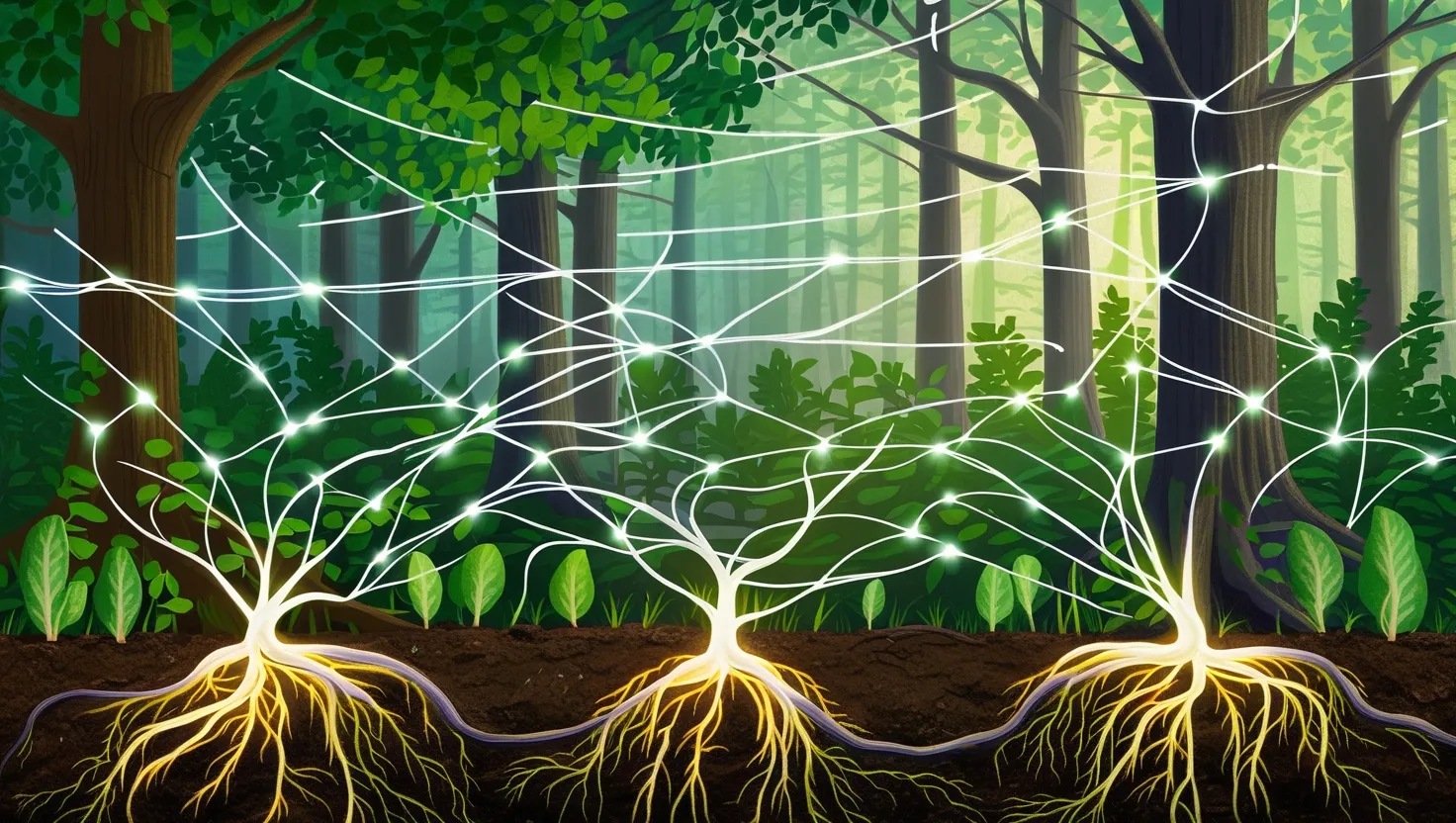
But the communication doesn’t stop at the air. Underground, an entirely different internet exists—built not by humans, but by fungi. These mycorrhizal networks weave through the forest floor, linking roots in a web of exchange. I find it incredible that a tree basking in sunlight can share sugars with its shaded neighbor or send out distress signals about drought or insects. If you could follow a strand of mycorrhizal fungi, you’d see nutrients and information flowing through the soil, connecting what looked like separate organisms into one living society. This cooperative behavior isn’t what we typically see in the “survival of the fittest” narrative. Instead, plants build communities that support even the weakest members—seedlings and elders alike.
“Everything in nature invites us constantly to be what we are.”
—Gretel Ehrlich
One of the most surprising discoveries for me was that plants can learn. The sensitive plant, Mimosa pudica, is famous for folding its leaves at the slightest touch. But if touched repeatedly without harm, the plant stops responding—almost as if it’s learned the difference between a threat and a false alarm. And here’s the kicker: this “memory” can last for weeks. There’s no brain, no neurons, and yet the plant remembers. That raises the question: what else can plants “know” or remember that we haven’t even imagined?
Sometimes, I wonder, do plants hear? Not in our sense, but the story of corn roots growing toward the faint vibrations of running water, as well as plants bolstering their defenses when they sense the chewing sounds of caterpillars, suggests that plants are attuned to their soundscape. Vibration, it turns out, is another language in the plant kingdom. Roots seem to “listen” for the best places to grow, and leaves might brace themselves when they “hear” their neighbors in distress. The idea that plants eavesdrop on the world around them—sound, touch, light, chemistry—makes me think of them as highly sophisticated in their own sensory universe.
There’s a darker side to this, too. Some plants play “dirty” in their quest for space and resources. Consider the black walnut tree. It releases juglone, a toxin that seeps into the soil, suppressing the growth of would-be competitors nearby. This chemical warfare, known as allelopathy, gives the walnut tree a monopoly in its patch. When I walk by stands of these trees with bare soil beneath, I realize this isn’t by chance—it’s strategy.
“Nature never deceives us; it is we who deceive ourselves.”
—Jean-Jacques Rousseau
What really pushes the boundaries of our thinking is the recent evidence for electrical and hormonal signaling inside single plants themselves—almost like a primitive nervous system. When a leaf is damaged, the signal zips through the plant, warning other leaves to prepare their defenses. Here, plants use glutamate, the same amino acid that carries signals in animal brains, to relay this message. Waves of calcium ions travel cell to cell, helping coordinate the plant’s response. It begs the question: is intelligence only in brains, or can it exist in these distributed, decentralized forms?
If we linger on this for a moment, it’s hard not to ask: do plants make decisions? When roots choose to grow toward certain nutrients or away from toxins, when a tree “decides” to send more sugars to its kin rather than to strangers, we see something that looks like choice. Maybe not conscious, but far from mechanical.
Is it possible that we’ve been underestimating these living beings simply because their ways are so different from ours?
What fascinates me most about these discoveries is the implication for how ecosystems are managed. If plants cooperate and share resources, what does this mean for agriculture or forestry? Could “plant communication” help crops fend off pests more naturally, or help forests recover from stress?
“Between every two pine trees there is a door leading to a new way of life.”
—John Muir
Another intriguing angle is the idea that plants can “hear” each other’s stress. Japanese researchers recently filmed Arabidopsis plants glowing in response to airborne signals from nearby damaged leaves. This isn’t just theory or indirect observation; it’s real-time evidence of responses happening as we watch. Imagine a field of crops acting as a single organism—one plant detects a threat and instantly, its neighbors activate their defenses.
The further down this rabbit hole I go, the more questions arise. Could plants “warn” us about environmental dangers? Could we “listen” to their chemical chatter to detect early signs of ecosystem stress or disease?
And what of the concept of plant consciousness? Some researchers now argue that plants exhibit a kind of awareness—responsive, adaptable, and purposeful. While their experience of the world is certainly nothing like ours, it’s also not nothing. The complexity of their communication and memory hints at the possibility of forms of intelligence we’re only beginning to recognize.
Just think about what this means for our place within the living world. Rather than standing above nature, are we a part of a huge, ongoing conversation, one we barely understand?
“The clearest way into the Universe is through a forest wilderness.”
—John Muir
As I reflect on these advances, the traditional image of plants as mute, static background fades away. Instead, I see an active, chatty network of life—sharing, warning, learning, and sometimes competing. The forest is no longer silent; the fields are no longer passive. Each blade of grass, each seedling, each towering oak is part of a living chorus.
What discoveries in plant communication have surprised you the most? Do you now see the trees and grass outside your window a little differently?
If we listen closely, perhaps we’ll recognize that communication surrounds us—not in words, but in scents, signals, and the silent wisdom of nature. The hidden world of plant communication is real, it’s ongoing, and it’s waiting for us to finally pay attention.