science

How Did a Newlywed’s Kitchen Accident Revolutionize First Aid?

From Wedding Woes to Household Heroes: The Unexpected Journey of Earle and His Iconic Band-Aid
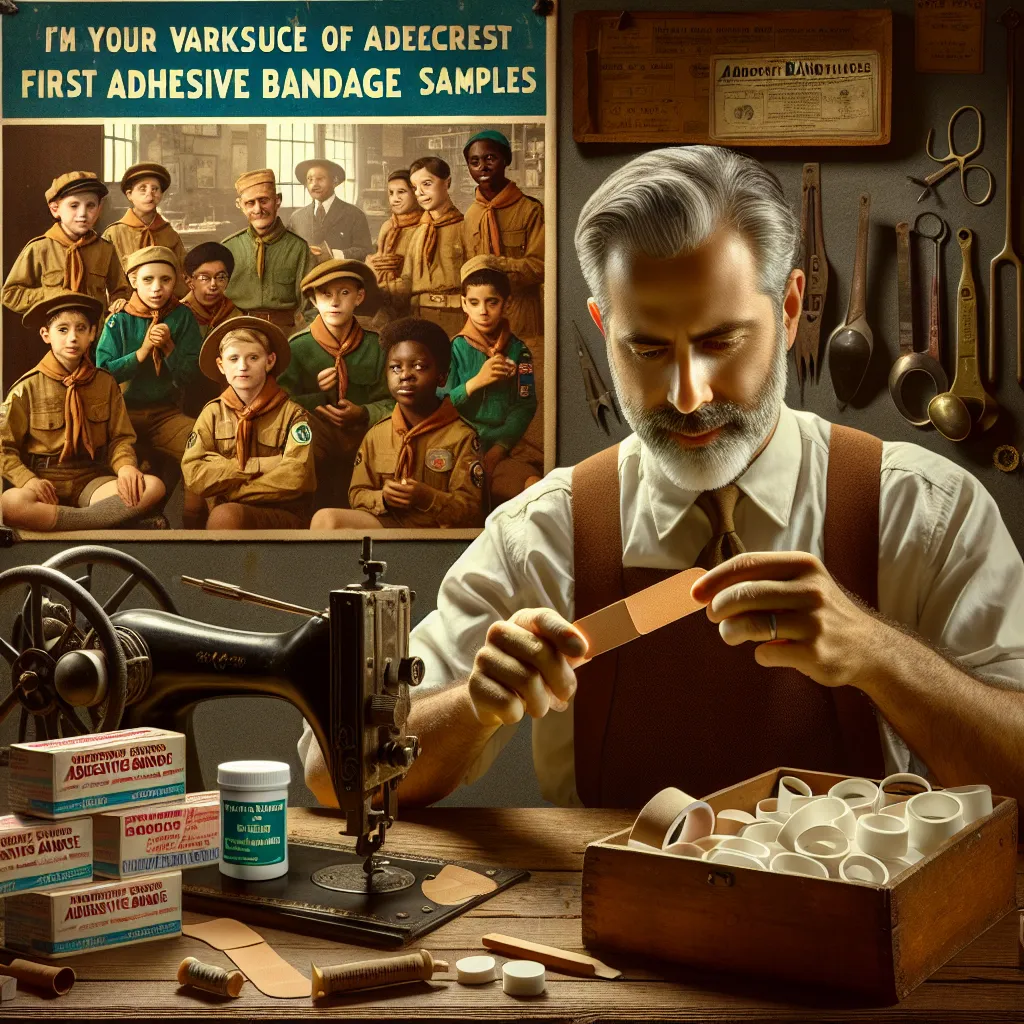
How Did a Newlywed’s Kitchen Accident Revolutionize First Aid?

In the bustling 1920s, Johnson and Johnson was already making a name for itself with its groundbreaking sterile cotton gauze dressings. These dressings were sealed against germs, a first in the industry. Earle Dickson, an employee at the company, had just gotten married. His new wife had a knack for getting minor cuts and burns during her daily chores.

The gauze dressings from Johnson and Johnson were too large for these small injuries. Earle, thinking on his feet, cut a small piece of the sterile gauze and attached it to her finger with an adhesive strip. He found himself making these small bandages so often for his wife that he decided to come up with a better solution.

Earle created a method to produce these bandages more efficiently. To prevent the adhesive parts from sticking together, he lined them with a crinoline fabric. This clever innovation did not go unnoticed by Johnson and Johnson, and they began producing Earle’s invention.

To introduce this new product to the public, they made a smart marketing decision. They started distributing free Band-Aids to Boy Scout Troops all across America. This strategy worked wonders, and Band-Aids quickly became a household staple.

Since then, it’s estimated that Johnson and Johnson has produced more than 100 billion Band-Aids, solidifying their place in first-aid history.




Similar Posts
Blog Image
Is the Smartphone in Your Pocket Ready to Meet Its Quantum Overlord?

Unlocking the Extraordinary: How Quantum Computing Transcends the Smartphone Era

Blog Image
Could a Father's Love for Milkshakes Lead to the Invention That Changed How We Sip?

Bending Challenges into Innovations: How a Father's Love Revolutionized the Way We Drink

Blog Image
What Happens When a Band of Fierce, Free-Willed Cossacks Faces a Choice Between Two Empires?

Beneath the Bloody Sunset: The Unyielding Spirit of 17th-Century Cossacks

Blog Image
Quantum Dots: Tiny Particles, Huge Impact - The Future of Tech and Medicine

Quantum dots are tiny semiconductor crystals with unique optical properties. These nanoparticles emit specific light colors based on their size, making them valuable in displays, solar cells, and medical imaging. Their tunable characteristics and versatility drive innovations in energy efficiency, diagnostics, and environmental monitoring, showcasing their significant impact across various fields.

Blog Image
5 Physics Experiments That Changed How We See Reality: From Quantum to Gravity

Meta Description: Discover 5 revolutionary physics experiments that changed our view of reality. From quantum mechanics to gravity, explore how these groundbreaking tests transformed science. Learn more now.

Blog Image
What Mind-Blowing Science Myths Are You Still Believing?

Unveiling the Deceptions Behind Popular 'Science Facts'